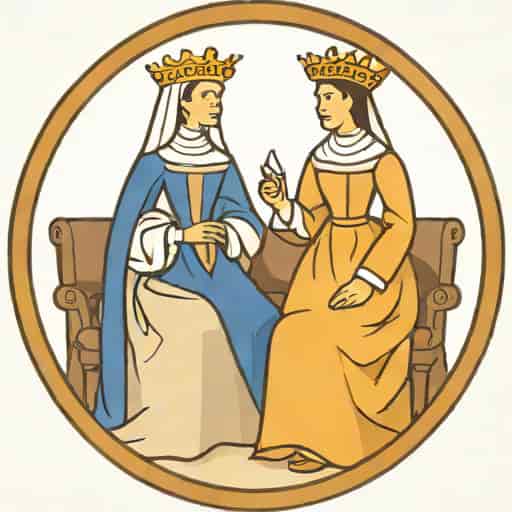
Noblewomen in the Middle Ages lived lives shaped by privilege, duty, and strict social expectations. While they enjoyed advantages that peasant women did not, such as education, wealth, and relative comfort, their freedom was still limited by gender roles and patriarchal authority. How noblewomen were treated in the Middle Ages depended greatly on their family status, marital situation, and historical period, but their lives were closely tied to politics, land ownership, religion, and family alliances.
Social Status of Noblewomen
Noblewomen belonged to the upper levels of medieval society, which included royalty, aristocrats, and landed gentry. Their status came from birth or marriage rather than personal achievement. As members of noble families, they were expected to uphold family honor and strengthen political alliances.
Although noblewomen ranked above commoners, they were still legally and socially subordinate to men. Fathers, husbands, or male guardians usually made major decisions on their behalf. Even queens and high-ranking ladies often ruled indirectly or only under special circumstances.
Education and Intellectual Life
Compared to most medieval women, noblewomen had greater access to education. While they rarely attended formal schools, many were taught at home or in convents. Education focused on practical and social skills rather than academic learning.
Subjects Noblewomen Learned
- Reading and writing, often in Latin or French
- Religious instruction and scripture
- Household management
- Music, embroidery, and arts
- Basic arithmetic for estate management
Some noblewomen became highly educated and even contributed to literature, theology, or correspondence. However, intellectual ambition was often discouraged, especially if it conflicted with expected domestic roles.
Marriage and Family Expectations
Marriage was one of the most defining aspects of a noblewoman’s life. Noble marriages were rarely based on love. Instead, they served political, economic, and social purposes. Young girls were often betrothed in childhood and married in their teens.
Once married, a noblewoman was expected to be loyal, obedient, and devoted to producing heirs. Childbearing was both a duty and a risk, as childbirth carried a high mortality rate during the Middle Ages.
Roles Within Marriage
- Producing legitimate heirs
- Managing the household and servants
- Representing the family socially
- Supporting her husband’s political interests
Despite these limitations, some noblewomen gained influence through marriage, especially if they married powerful lords or kings.
Legal Rights and Property Ownership
The legal treatment of noblewomen varied across regions and time periods. In general, women had fewer legal rights than men, but noblewomen sometimes had more protections than lower-class women.
In certain cases, noblewomen could inherit land, especially if there were no male heirs. Widows often had more legal independence and could manage estates, make contracts, and act as guardians for their children.
Legal Limitations
- Limited control over inherited property
- Dependence on male guardians
- Restrictions on legal testimony
Despite these restrictions, some noblewomen became powerful landholders, particularly during periods of war or when their husbands were absent.
Daily Life and Responsibilities
The daily life of a noblewoman involved managing a large household. This included supervising servants, organizing food storage, overseeing clothing production, and ensuring the smooth operation of the estate.
Noblewomen also played important roles in hospitality. Hosting guests, arranging feasts, and maintaining social networks were essential to family status and political alliances.
Religious Life and Spiritual Influence
Religion played a central role in medieval life, and noblewomen were expected to be pious. Many spent significant time in prayer, charity, and church activities. Some chose a religious life in convents, which offered an alternative path to marriage.
Convents could provide noblewomen with education, leadership opportunities, and a degree of independence not always available in secular life.
Religious Roles of Noblewomen
- Patronage of churches and monasteries
- Participation in pilgrimages
- Leadership roles as abbesses
Political Influence and Power
Although medieval society limited women’s formal political roles, noblewomen often exercised power behind the scenes. They acted as advisors, diplomats, and regents during their husbands’ absences or when heirs were underage.
Queens and high-ranking noblewomen sometimes ruled territories, negotiated treaties, or commanded loyalty from vassals. Their influence depended largely on personal skill, family connections, and circumstances.
Treatment During War and Conflict
War deeply affected the lives of noblewomen. While men went to fight, women were often left to manage estates and defend castles. In some cases, noblewomen organized defenses or negotiated surrenders.
However, war also exposed noblewomen to danger. They could be taken hostage, forced into political marriages, or displaced from their homes.
Social Expectations and Limitations
Noblewomen were expected to embody ideals of modesty, obedience, and virtue. Their behavior reflected not only on themselves but on their entire family. Reputation was crucial, and accusations of immorality could have serious consequences.
These expectations limited personal freedom, even for wealthy and influential women.
Comparison With Other Social Classes
Compared to peasant women, noblewomen lived more comfortable lives with access to education and servants. However, peasant women often enjoyed more practical independence through labor and trade.
Compared to noblemen, noblewomen had fewer legal rights and less direct authority, but they sometimes wielded influence through family and marriage.
Changing Treatment Over Time
The treatment of noblewomen in the Middle Ages was not static. Over several centuries, attitudes toward women, inheritance laws, and education gradually evolved. Late medieval noblewomen sometimes enjoyed greater visibility and influence than their earlier counterparts.
These changes laid early foundations for later discussions about women’s rights and social roles.
How noblewomen were treated in the Middle Ages was shaped by a complex mix of privilege and restriction. While they lived with material comfort and social status, their lives were governed by strict expectations related to marriage, family, and obedience. Despite these limitations, many noblewomen exercised influence in education, religion, estate management, and politics. Their experiences reveal a nuanced picture of medieval society, where power and constraint often existed side by side.