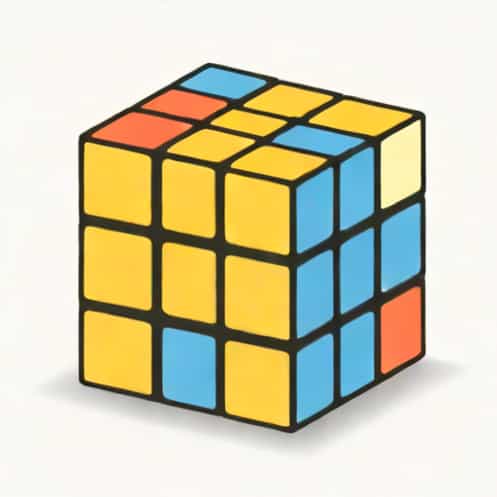
Learning how to solve a Rubik’s Cube can feel confusing at first, especially for kids who are just getting started. The colorful cube looks like a puzzle with endless possibilities, and many children think it requires magic or genius-level intelligence. In reality, solving a Rubik’s Cube for kids is all about following simple steps, practicing patience, and having fun along the way. With the right approach, children can build confidence, improve problem-solving skills, and enjoy the satisfaction of completing this classic puzzle.
Why the Rubik’s Cube Is Great for Kids
The Rubik’s Cube is more than just a toy. It helps kids develop logical thinking, memory, and concentration. When children learn how to solve a Rubik’s Cube, they practice following instructions and recognizing patterns.
For kids, the cube also teaches persistence. It shows that big problems can be solved by breaking them into smaller steps.
Skills Kids Can Learn
- Problem-solving and critical thinking
- Hand-eye coordination
- Patience and focus
- Confidence after completing a challenge
Understanding the Parts of a Rubik’s Cube
Before learning how to solve a Rubik’s Cube for kids, it helps to understand how the cube works. A standard Rubik’s Cube has six sides, each with a different color.
Even though it looks like there are many small pieces, the cube is made up of three main types of pieces.
Types of Cube Pieces
- Center pieces These never move and show the color of each side
- Edge pieces These have two colors
- Corner pieces These have three colors
The center pieces are important because they tell you what color each side should be when solved.
Starting with the First Layer
The easiest way to solve a Rubik’s Cube for kids is using the beginner layer-by-layer method. This method focuses on solving one layer at a time.
The first goal is to complete one side, usually the white side, and make sure the edges match the center colors.
Making the White Cross
Kids should start by finding the white center. Then they match white edge pieces with the correct center colors.
At this stage, it is okay to take time and think. There is no need to rush.
Completing the White Corners
Once the white cross is done, the next step is to place the white corner pieces. This completes the entire first layer.
When the first layer is finished, kids will see one full color on top and matching colors on the sides.
Solving the Middle Layer
The middle layer can feel tricky, but it becomes easier when broken into small steps. Kids should focus on moving the correct edge pieces into the middle without messing up the first layer.
This step teaches kids to plan ahead and follow simple move patterns.
Tips for the Middle Layer
- Keep the completed first layer on top
- Look for edge pieces without the top color
- Move one piece at a time
With practice, kids will recognize where each piece needs to go.
Understanding Simple Cube Moves
When learning how to solve a Rubik’s Cube for kids, moves are often written using letters. This may sound confusing, but kids do not need to memorize many moves at once.
Each letter simply means turning one side of the cube.
Basic Move Meanings
- R Turn the right side
- L Turn the left side
- U Turn the top side
- D Turn the bottom side
Parents or teachers can explain these moves slowly and let kids practice turning the cube freely.
Solving the Last Layer Step by Step
The last layer is where many kids feel stuck, but it does not mean they did something wrong. This layer is solved in stages, not all at once.
Even if the cube looks messy, it can still be solved.
Making the Top Cross
Kids should first try to make a cross on the top layer, even if the colors are not matched yet. This is a big milestone.
Matching the Top Edges
Once the cross is formed, the next step is to match the edge colors with the center pieces. This helps align the top layer.
Placing the Final Corners
The final step is moving the corner pieces into the correct positions. They may need to be twisted carefully.
When the last corner is solved, the entire cube will be complete.
Keeping It Fun for Kids
Solving a Rubik’s Cube should feel like a game, not homework. Kids learn best when they are relaxed and curious.
Encouragement is more important than speed.
Ways to Make Learning Enjoyable
- Practice for short periods
- Celebrate small achievements
- Let kids explore the cube freely
- Solve together as a team
Even learning one step at a time is progress.
Common Mistakes Kids Make
When learning how to solve a Rubik’s Cube for kids, mistakes are normal. Many children think they must start over if something goes wrong.
In reality, most mistakes can be fixed by reversing a few moves.
Helpful Reminders
Kids should remember that the cube is designed to be solved. Every mixed cube has a solution.
Patience and practice matter more than talent.
How Long Does It Take to Learn?
Every child learns at a different pace. Some kids may solve their first cube in a day, while others may need several weeks.
The important thing is consistency.
Encouraging Progress
Regular practice, even five to ten minutes a day, can make a big difference. Over time, kids will start recognizing patterns and moves.
Learning how to solve a Rubik’s Cube for kids is a rewarding journey that builds confidence and problem-solving skills. By using a simple step-by-step method, understanding the parts of the cube, and practicing patiently, children can master this colorful puzzle.
More than just solving the cube, kids gain a sense of achievement that can inspire them to tackle other challenges with the same positive attitude.