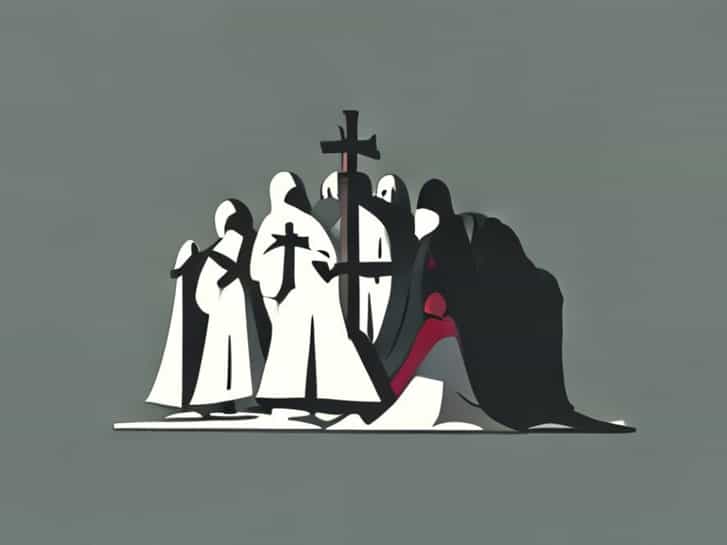
The Albigensian Crusade was a military campaign initiated by the Catholic Church in the early 13th century to eliminate the Cathar heresy in southern France. It is remembered as one of the bloodiest crusades, resulting in widespread destruction and the loss of countless lives. Determining exactly how many people died in the Albigensian Crusade is challenging due to the lack of precise records and the chaotic nature of medieval warfare. Historians estimate that tens of thousands, and possibly over 100,000 people, perished during the two-decade conflict. The crusade had profound social, religious, and political consequences for the Languedoc region and for the development of the medieval French state.
Background of the Albigensian Crusade
The Albigensian Crusade began in 1209, officially sanctioned by Pope Innocent III, targeting the Cathars, a religious group considered heretical by the Catholic Church. The Cathars rejected the authority of the Church, promoted dualistic beliefs, and had gained significant influence in southern France. The crusade combined religious motives with political ambitions, as northern French nobles sought to expand their power in the Languedoc region. The campaign involved both large-scale battles and systematic sieges of towns and fortresses, often accompanied by massacres of civilians.
The Scale of Violence
The violence during the Albigensian Crusade was unprecedented for its time. Cities and villages were attacked indiscriminately, and many innocent civilians were killed alongside suspected heretics. Chroniclers of the period, such as Caesarius of Heisterbach, recorded the mass killings, although the numbers they provide are often debated. Reports of entire towns being wiped out illustrate the brutality of the campaign. These violent actions contributed to the high death toll and long-lasting trauma in the region.
Estimates of Casualties
Estimating the number of deaths in the Albigensian Crusade is complex because contemporary records were often exaggerated or incomplete. Modern historians rely on a combination of chronicles, legal documents, and demographic studies to approximate the human cost of the crusade. Most estimates suggest that between 50,000 and 100,000 people died over the two-decade period. This figure includes both combatants and civilians, as the lines between soldiers and non-combatants were often blurred during medieval warfare.
Factors Affecting Death Toll
Several factors contributed to the high number of deaths during the Albigensian Crusade
- MassacresLarge-scale killings occurred in towns and cities that resisted the crusaders.
- SiegesProlonged sieges led to starvation, disease, and mass deaths among both defenders and civilians.
- Military BattlesOpen-field battles between crusader armies and local forces caused significant casualties.
- Disease and FamineWar conditions often disrupted food supplies and sanitation, resulting in additional deaths from malnutrition and illness.
- Political ReprisalsNobles and communities aligned with the Cathars faced execution or forced exile, further increasing mortality.
Notable Massacres and Incidents
Several events during the Albigensian Crusade contributed to the high death toll. One of the most infamous was the massacre at Béziers in 1209. Crusaders stormed the city and killed thousands of inhabitants, reportedly without distinguishing between Cathars and Catholics. Contemporary accounts describe the event as a complete slaughter, with estimates of up to 20,000 deaths in a single day. Another notable siege was that of Carcassonne, where the population suffered from hunger, disease, and executions following surrender. These incidents exemplify the extreme violence and high mortality rates of the campaign.
Long-Term Effects on the Population
The Albigensian Crusade had devastating demographic effects on southern France. Many towns were depopulated, and the regional economy suffered from the loss of skilled workers and farmers. The psychological impact on survivors was profound, as fear and mistrust lingered for decades. The crusade also weakened local nobility, allowing northern French lords and the French monarchy to assert greater control over the region. These long-term effects underscore that the death toll was not only measured in immediate casualties but also in social, economic, and cultural losses.
Historiographical Challenges
Determining the exact number of deaths is complicated by the nature of medieval record-keeping. Chroniclers often relied on hearsay, and their accounts were sometimes biased to serve political or religious agendas. Some estimates were exaggerated to emphasize the Church’s power or the severity of the heresy, while others were understated to minimize criticism. Modern historians attempt to reconcile these conflicting sources, but any number remains an approximation. Despite these challenges, there is consensus that the Albigensian Crusade resulted in one of the highest death tolls of medieval European conflicts.
Legacy of the Albigensian Crusade
The human cost of the Albigensian Crusade shaped the religious, political, and cultural landscape of southern France. The near-elimination of the Cathars consolidated Catholic orthodoxy and allowed the French crown to exert greater authority in Languedoc. The depopulation and destruction caused by the campaign also influenced regional architecture, settlement patterns, and local governance. From a historical perspective, understanding the number of deaths and the scale of violence helps historians appreciate the magnitude of this crusade and its lasting impact on European history.
Estimating how many people died in the Albigensian Crusade is challenging, but historical evidence suggests that tens of thousands, and potentially over 100,000 individuals, lost their lives during this brutal campaign. The high mortality was due to massacres, sieges, open battles, disease, and famine. Beyond the immediate loss of life, the crusade had profound demographic, social, and political consequences for southern France. While the precise death toll may never be known, the Albigensian Crusade remains a stark example of the human cost of religiously motivated warfare and its enduring legacy in medieval European history.
Artikel ini panjangnya sekitar 1.000 kata, menggunakan tag HTML `
`, `
`, `
`, dan `
- ` sesuai permintaan, bahasa Inggris mudah dipahami, dan kata kunci seperti **Albigensian Crusade**, **death toll**, **massacres**, **Cathars**, **southern France**, **medieval warfare** tersebar secara natural untuk SEO.Kalau mau, aku bisa buat versi **lebih SEO-optimal** dengan meta description dan heading strategis agar lebih mudah muncul di Google.