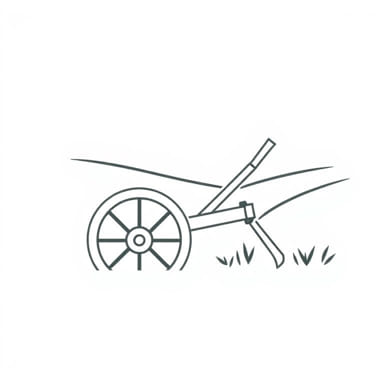
Early agriculture transformed human society, but it was the development of tools like the moldboard plow that allowed farming to evolve into a more productive and sustainable practice. Early farmers faced many challenges, especially when trying to cultivate harder soils in temperate regions. The moldboard plow emerged as a revolutionary innovation that not only made it easier to work the land but also increased agricultural yields and supported growing populations. Understanding how the moldboard plow impacted early farmers reveals its vital role in shaping agricultural civilizations across Europe and beyond.
Origins of Early Agriculture
Transition from Hunting to Farming
Human societies began shifting from hunting and gathering to settled agriculture around 10,000 years ago, during the Neolithic Revolution. In regions such as the Fertile Crescent, early farmers cultivated wheat, barley, and legumes. These early agricultural communities used rudimentary tools made of stone or wood, such as digging sticks and basic hoes, which were sufficient for soft, fertile soil.
However, as agriculture spread to other parts of the world especially the heavier, clay-rich soils of northern Europe these simple tools proved inadequate. The need for more efficient plowing techniques drove the invention and adaptation of better farming implements, eventually leading to the development of the moldboard plow.
Challenges with Early Soil Conditions
In areas with loamy or thick soil, especially where rainfall was more abundant, traditional wooden scratch plows failed to penetrate deeply or turn the earth efficiently. Soil compaction and poor aeration limited crop growth, and the land became exhausted more quickly. These conditions required a new solution one that could break up the soil, turn it over, and prepare it for planting.
The Emergence of the Moldboard Plow
What Is a Moldboard Plow?
The moldboard plow consists of several key parts:
- Share: A cutting blade that slices into the soil.
- Moldboard: A curved surface that lifts and turns the soil over.
- Beam and Handles: Used to guide the plow through the field, usually pulled by oxen or horses.
This design made it possible to not just cut into the soil but also to turn it completely, burying weeds and crop residue while exposing fresh soil. This process improved aeration, moisture retention, and weed control, all of which were vital for successful crop production.
When and Where It Was Invented
The moldboard plow likely originated in China as early as the 3rd century BCE, but it became especially influential in Europe during the early Middle Ages, around the 6th century CE. Its introduction coincided with a period of agricultural expansion and population growth in northern and western Europe.
Impact on Early Farmers
Greater Productivity and Food Surplus
The moldboard plow allowed farmers to cultivate previously unusable lands, especially in the wetter and denser soils of northern Europe. This led to increased yields and more consistent harvests. For the first time, communities could produce a surplus of food, which in turn supported larger populations and more permanent settlements.
This surplus also laid the foundation for more complex societies, as not everyone needed to farm. Some people could specialize in crafts, trade, governance, or religious roles, accelerating the development of social and economic systems.
Expansion of Arable Land
Before the moldboard plow, much of the land was unsuitable for farming. With this tool, farmers could clear forests, drain wetlands, and cultivate land that had previously been too difficult to manage. This expansion of arable land was especially important in medieval Europe, where increasing populations required more food and resources.
Environmental and Social Implications
While the moldboard plow improved efficiency, it also had environmental consequences. Turning the soil more deeply could lead to erosion if not managed carefully, especially on slopes. Additionally, the ability to cultivate more land contributed to deforestation and habitat loss.
On a social level, the moldboard plow helped establish a more hierarchical agricultural system. Wealthier landowners who could afford animals and equipment controlled more land and hired laborers or serfs to work it. This dynamic contributed to the development of feudal systems in parts of Europe.
Animal Labor and Technological Evolution
Oxen and Horses as Power Sources
The moldboard plow required more power than earlier tools, leading to a greater reliance on animal labor. Oxen were initially used for their strength and endurance, but horses eventually became the preferred choice due to their speed and efficiency when harnessed properly using innovations like the padded horse collar and horseshoe.
These changes significantly increased the area a single farmer could cultivate in a day, further enhancing the productivity of early agricultural systems.
Innovations That Followed
The moldboard plow also inspired further improvements in agricultural technology:
- Wheeled plowsmade it easier to adjust depth and guide the plow across fields.
- Iron plowswere introduced to replace wooden parts, offering greater durability and better cutting ability.
- Multiple-share plowsallowed farmers to plow more rows at once, saving time.
Each of these developments built upon the moldboard’s original concept, adapting it to meet the demands of growing populations and new types of farming.
Long-Term Historical Significance
Role in Medieval Agriculture
During the medieval period, especially between the 9th and 13th centuries, the moldboard plow was central to the Agricultural Revolution in Europe. It allowed for the three-field crop rotation system, which improved soil fertility and ensured that more land could remain productive throughout the year.
This innovation directly contributed to the rise of towns and cities by enabling rural populations to grow and trade their surpluses. As food became more abundant, economies diversified and literacy, commerce, and urban culture began to flourish.
Symbol of Agricultural Advancement
The moldboard plow stands as a symbol of the transition from primitive subsistence farming to more advanced and organized agricultural systems. Its influence extended well beyond its invention, shaping the economies, political systems, and landscapes of entire civilizations.
Even today, modern plows retain the same basic principles introduced by the moldboard plow cutting, lifting, and turning soil to prepare it for planting. Though the tools have evolved with modern machinery, the legacy of the moldboard design remains embedded in contemporary farming practices.
The moldboard plow was more than just a farming tool it was a catalyst for change in early agricultural societies. By enabling farmers to work heavier soils and produce more food, it transformed economies, supported population growth, and paved the way for more complex civilizations. For early farmers, this innovation solved practical challenges and opened the door to long-term prosperity and societal development. In understanding how the moldboard plow affected early farmers, we see a clear example of how technology can reshape not only the land but also human history.