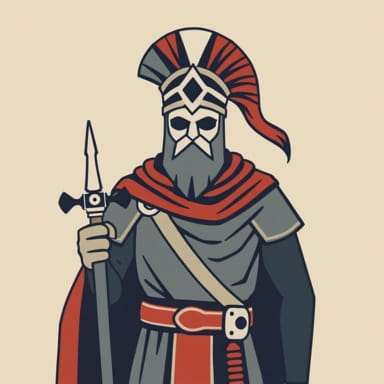
During the height of the Ottoman Empire, the Janissaries formed one of the most elite and feared military units in the world. Their origins, however, were rooted in a unique and controversial recruitment system that involved transforming young boys, often taken from non-Muslim families, into loyal soldiers of the sultan. The process of becoming a Janissary was far from voluntary, yet it provided a pathway to power, privilege, and education for many. Understanding how a person became a Janissary reveals much about the structure, politics, and society of the Ottoman Empire.
The Devshirme System: A Foundation of Recruitment
Definition and Purpose
The primary method through which a person became a Janissary was thedevshirmesystem, also known as the blood tax or child levy. This system was instituted in the 14th century by Sultan Murad I as a way to create a corps of soldiers entirely loyal to the Ottoman state and sultan. The key idea was to take Christian boys from the Balkans and Anatolia, convert them to Islam, and train them from a young age for military or administrative service.
Eligibility for Selection
Under thedevshirmesystem, Ottoman officials traveled periodically to Christian villages to collect boys who met specific criteria. The process included:
- Targeting boys between the ages of 8 and 18.
- Selecting boys with physical strength, good health, and intelligence.
- Favoring those who were orphans or from poorer families, though wealthy families were not entirely exempt.
- Ensuring the boys were not the only sons of their families in some cases, to avoid disrupting village demographics entirely.
These boys were taken from their homes, often under coercion or force, and marched to the capital or designated training centers. Despite the trauma, some families saw this as an opportunity for their sons to gain a better life within the Ottoman system.
Conversion and Assimilation into Islam
Religious Transformation
Upon arrival, the boys were converted to Islam. This step was crucial, as Janissaries were to be loyal only to the sultan and the Islamic state. The conversion was accompanied by instruction in Islamic beliefs, rituals, and values. It marked a spiritual and cultural break from the boys’ former identities.
To reinforce this break, they were forbidden from contacting their families or returning to their villages. Their previous Christian identities were systematically erased as they were integrated into the Islamic and Ottoman worldview.
Language and Cultural Training
The boys were also taught the Turkish language, Ottoman customs, and court etiquette. This immersion prepared them not only to fight in the military but to function as administrators, guards, and even advisors within the palace structure. Cultural assimilation was just as important as military training in molding the ideal Janissary.
Rigorous Training and Discipline
Physical and Military Preparation
Those selected for the Janissary corps underwent intense physical training. This included:
- Drills in archery, swordsmanship, and hand-to-hand combat.
- Endurance exercises such as long marches and swimming.
- Use of firearms and cannon warfare as technology advanced.
Janissaries were required to maintain peak physical condition. Their discipline and skill in battle were legendary and contributed to Ottoman military dominance across regions for centuries.
Hierarchy and Brotherhood
Life within the Janissary corps was communal and highly structured. New recruits began as apprentices and gradually rose through ranks. Senior Janissaries mentored younger ones, enforcing discipline and loyalty. Brotherhood was encouraged through shared barracks, meals, and rituals.
Janissaries were expected to remain celibate and unmarried during their early years of service, though this rule relaxed over time. The strict military lifestyle reinforced loyalty and reduced distractions that could interfere with duty.
Privileges and Power
Social Mobility and Status
Becoming a Janissary was paradoxically a path to upward mobility, despite the involuntary nature of recruitment. Successful Janissaries could achieve great wealth, prestige, and influence. Some advanced to high-ranking positions such as provincial governors, military commanders, or even viziers (ministers).
Janissaries received regular salaries and could enjoy certain tax exemptions. Their elite status set them apart from ordinary soldiers and civilians. Over time, their privileges expanded, making membership in the corps increasingly desirable even to Muslims who were initially excluded.
Political Influence
As their power grew, Janissaries began to play a significant role in Ottoman politics. They could influence or even determine the succession of sultans. Their political involvement reached a point where sultans feared their disapproval. While this influence demonstrated their strength, it also contributed to internal instability in later centuries.
Reforms and Decline of the Janissary Corps
Corruption and Recruitment Changes
By the 17th century, the originaldevshirmesystem began to break down. Muslim families started enrolling their children into the Janissary corps, and bribery became common. The strict standards of the past were replaced by political favoritism and nepotism.
This change diluted the discipline and effectiveness of the Janissaries. Their role shifted from elite warriors to more of a privileged class with entitlements but less military skill.
The Auspicious Incident
The decline of the Janissaries reached a breaking point in 1826, when Sultan Mahmud II decided to disband the corps entirely. In what became known as the Auspicious Incident, thousands of Janissaries were killed or imprisoned after they revolted against proposed military reforms.
This event marked the end of the Janissary institution, but its legacy as a unique military and social experiment continues to captivate historians today.
Becoming a Janissary in the Ottoman Empire
To become a Janissary was to undergo a complete transformation religious, cultural, and personal. Through thedevshirmesystem, Christian boys were taken from their homes, converted to Islam, and trained to become elite soldiers and administrators. While the process was involuntary and could be traumatic, it also offered the promise of power and prestige within one of the greatest empires in history. Over time, the Janissaries evolved from disciplined warriors into a powerful political force, whose eventual corruption and dissolution reflect both the strength and complexity of the Ottoman system. Their story remains a compelling example of how military institutions can shape, and be shaped by, the societies they serve.