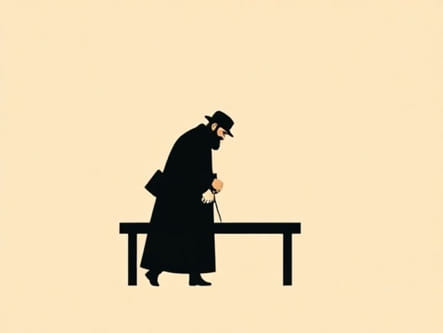
Set in the turbulent streets of 19th-century St. Petersburg,Crime and Punishmentby Fyodor Dostoevsky remains one of the most important psychological novels in world literature. The narrative plunges deeply into the human psyche, chronicling the descent of a conflicted young man who commits a calculated murder and is later tormented by guilt. Dostoevsky’s exploration of morality, justice, and redemption resonates across time and culture, making the book a cornerstone in literary and philosophical discussions. Rich with philosophical undertones, the novel asks haunting questions about the nature of good and evil, responsibility, and the consequences of ideological extremism.
The Protagonist Raskolnikov’s Inner Turmoil
At the heart ofCrime and Punishmentlies Rodion Romanovich Raskolnikov, a former student living in abject poverty. He believes he is intellectually superior, capable of making decisions that transcend conventional morality. This belief leads him to rationalize the murder of a pawnbroker, whom he sees as a parasite on society. However, his internal world quickly unravels after the act.
Raskolnikov’s psychological conflict is intense and continuous. On one hand, he clings to his philosophical justification for the crime, insisting that extraordinary men have the right to transgress moral boundaries for the greater good. On the other hand, his humanity surfaces, bringing with it guilt, paranoia, and emotional isolation. This duality forms the basis for much of the novel’s philosophical depth.
The Split Self
The name Raskolnikov itself is derived from raskol, a Russian word meaning split or schism. This represents the protagonist’s fragmented consciousness and ideological conflict. He tries to emulate figures like Napoleon, who he believes acted outside the bounds of conventional ethics. But unlike such figures, Raskolnikov is not immune to remorse. His internal contradiction is both the engine of the novel’s plot and a profound commentary on the limitations of utilitarian logic when applied to human life.
The Moral Landscape of St. Petersburg
St. Petersburg in the novel is not just a backdrop but a reflection of Raskolnikov’s mind grim, chaotic, and claustrophobic. The urban environment magnifies his anxiety and moral confusion. Crowded tenements, oppressive summer heat, and decaying buildings parallel his spiritual degradation. Dostoevsky uses the city to symbolize the spiritual crisis gripping not just the individual but society as a whole.
The Role of Poverty and Desperation
Poverty plays a critical role in shaping the novel’s moral universe. It is not simply a condition but a crucible in which characters’ true natures are revealed. Raskolnikov’s crime is rooted partly in economic desperation, but more deeply in ideological despair. He struggles to find meaning in a society where economic hardship and moral decay are widespread. Characters like Marmeladov and his daughter Sonia demonstrate alternative responses to suffering resignation, sacrifice, and faith rather than rebellion and arrogance.
Sonia The Light in the Darkness
Sofia Semyonovna Marmeladova, or Sonia, serves as a moral compass in the story. A young woman driven to prostitution to support her family, Sonia embodies humility, faith, and unconditional love. Her suffering, unlike Raskolnikov’s, is borne with quiet dignity. Through Sonia, Dostoevsky introduces the idea of Christian redemption. Her belief in salvation through suffering stands in stark contrast to Raskolnikov’s radical ideas.
It is Sonia who eventually leads Raskolnikov to confession and spiritual awakening. Her unwavering compassion and her reading of the story of Lazarus symbolize the possibility of rebirth, even for those who have strayed far from morality. In a world rife with corruption and despair, Sonia represents hope, forgiveness, and spiritual truth.
The Role of Punishment
One of the novel’s central themes is the distinction between legal and psychological punishment. Raskolnikov is not immediately caught by the law. Instead, his real punishment begins with the act of murder. The psychological toll is immense insomnia, fever, hallucinations, and paranoia consume him. This internal suffering underscores Dostoevsky’s belief that true punishment comes from within and that confession is a pathway to redemption.
The Importance of Confession
Confession inCrime and Punishmentis not just an admission of guilt; it is a spiritual turning point. When Raskolnikov finally confesses, it marks the beginning of his moral regeneration. He accepts responsibility and begins to embrace humility. The confession allows him to re-enter the human community and begin the painful path toward redemption.
Dostoevsky’s Philosophical Concerns
The novel is deeply philosophical, raising questions about morality, free will, and the dangers of radical ideology. Dostoevsky was writing in a time when nihilistic and utilitarian philosophies were gaining popularity in Russia. Raskolnikov’s ideas about extraordinary people are a direct challenge to traditional moral frameworks, and his eventual downfall serves as a critique of such thinking.
The Superhuman Theory
Raskolnikov’s justification for murder is rooted in a superhuman theory, the idea that certain individuals have the right to commit crimes if their actions benefit humanity. This theory, influenced by figures like Nietzsche, is portrayed by Dostoevsky as deeply flawed. Raskolnikov’s failure to live with his crime shows that intellectual theories cannot override human conscience. The novel rejects the idea that ends justify means, emphasizing instead the moral and spiritual costs of such beliefs.
Secondary Characters and Their Functions
Other characters in the novel serve to highlight different moral perspectives. Porfiry Petrovich, the detective, uses psychological insight rather than brute force to lead Raskolnikov toward confession. He represents a humane and intelligent approach to justice. Svidrigaà lov, on the other hand, is a morally ambiguous figure who embodies unrestrained hedonism and nihilism. His tragic end contrasts with Raskolnikov’s potential for redemption, emphasizing the consequences of a life without moral grounding.
- RazumikhinRaskolnikov’s friend, symbolizes rationality and moral decency.
- DunyaRaskolnikov’s sister, embodies strength, loyalty, and self-respect.
- LuzhinA selfish and manipulative character who highlights the dangers of self-interest disguised as philanthropy.
A Journey Toward Redemption
Crime and Punishmentis not merely a story about crime, but a profound exploration of the human soul. Through Raskolnikov’s journey, Dostoevsky illustrates the torment of guilt, the importance of compassion, and the transformative power of confession and suffering. The novel challenges readers to confront moral ambiguity, to reflect on the value of life, and to believe in the possibility of redemption even for the gravest sins.
Fyodor Dostoevsky’s masterpiece remains as relevant today as it was in the 19th century, offering deep insights into the psychological and spiritual struggles that define the human experience. Its rich layers of meaning and timeless moral questions ensure its place as one of the greatest novels ever written.