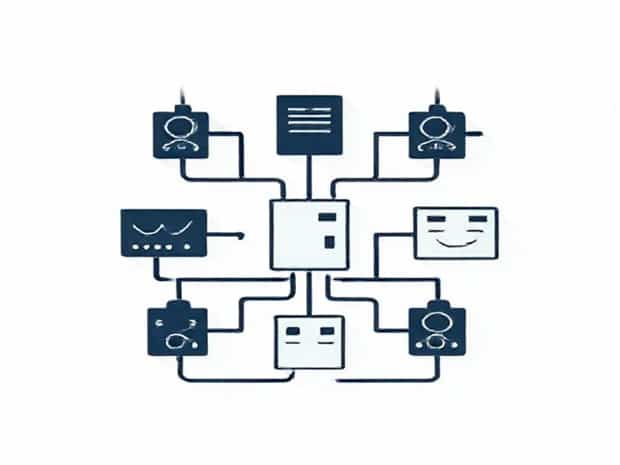
Distributed interleaving of paralleled power converters is a modern technique in power electronics that enhances system efficiency, reduces output voltage ripple, and improves overall reliability of power delivery systems. As power demands increase in industries such as telecommunications, data centers, and electric vehicles, parallel operation of converters has become essential to meet high current requirements without overloading individual units. By implementing distributed interleaving, engineers can synchronize multiple converters in a way that minimizes interference, balances load sharing, and optimizes thermal performance. Understanding this concept is critical for designing scalable, high-performance power systems that are both reliable and efficient.
Introduction to Parallel Power Converters
Parallel power converters involve connecting multiple converter units to a common output to share the load current. This technique allows the system to achieve higher output current than a single converter can provide, while also improving redundancy and fault tolerance. However, simply connecting converters in parallel can introduce challenges such as current imbalance, increased output voltage ripple, and electromagnetic interference (EMI). To address these issues, interleaving techniques are employed, distributing the switching operations among the converters in a coordinated manner.
Key Features of Paralleled Converters
- Higher current capability through load sharing
- Enhanced system reliability and redundancy
- Flexibility in modular system design
- Challenges including current mismatch and ripple magnification if not managed
Effective management of these challenges requires careful control strategies, among which distributed interleaving has proven to be a highly effective solution.
Concept of Distributed Interleaving
Distributed interleaving refers to the method of phase-shifting the switching signals of multiple parallel converters so that their output ripple components partially cancel each other. By evenly spacing the switching events, the combined output ripple is significantly reduced compared to converters operating in phase. This technique not only improves voltage quality but also reduces the stress on passive components such as capacitors and inductors, allowing for smaller and more cost-effective designs.
Benefits of Distributed Interleaving
- Reduced output voltage ripple due to phase cancellation
- Lower electromagnetic interference (EMI)
- Balanced thermal distribution across converters
- Improved transient response and dynamic performance
The effectiveness of distributed interleaving depends on the number of converters, their switching frequency, and the phase shift applied to each unit. Proper design ensures optimal ripple cancellation and load sharing.
Implementation Techniques
Implementing distributed interleaving involves controlling the phase relationship between multiple converters. Several techniques are commonly used
Phase-Shifted PWM Control
Phase-shifted pulse-width modulation (PWM) is the most widely used method. Each converter is assigned a unique phase shift, dividing the total switching period among the converters. For example, in a system with four parallel converters, each could be shifted by 90 degrees. This creates a more uniform distribution of switching events and significantly reduces output ripple.
Master-Slave Control
In master-slave control, one converter acts as the master, generating the reference switching signal, while the slave converters follow the master’s timing with specified phase shifts. This method ensures synchronization and helps achieve balanced current sharing among the converters.
Digital Control Techniques
Advanced digital controllers, such as microcontrollers or digital signal processors (DSPs), allow precise timing control for distributed interleaving. Digital implementation provides flexibility to adapt the phase shift dynamically based on load conditions, temperature, or other operating parameters.
Applications of Distributed Interleaving
Distributed interleaving is particularly beneficial in applications requiring high current and stable voltage outputs. These include
Telecommunications
- Powering base stations with high-current rectifiers
- Reducing voltage ripple for sensitive communication equipment
- Enhancing system reliability through redundancy
Data Centers
- Providing high-current power supplies for servers and networking equipment
- Minimizing ripple to ensure stable operation of sensitive electronics
- Enabling modular and scalable power designs
Electric Vehicles
- Supplying high-current loads for battery charging and motor drives
- Improving thermal management and efficiency through balanced load sharing
- Reducing stress on power electronics components for longer service life
In all these applications, distributed interleaving helps achieve efficient, reliable, and high-performance power delivery, making it a preferred technique in modern power electronics.
Challenges in Distributed Interleaving
Despite its benefits, distributed interleaving also introduces certain challenges that must be addressed during design and implementation
Synchronization Complexity
Maintaining precise phase shifts among multiple converters requires careful design of control circuits and timing systems. Any drift or mismatch can reduce ripple cancellation effectiveness and cause imbalance in current sharing.
Load Sharing Issues
Even with interleaving, slight differences in converter characteristics, component tolerances, or thermal effects can lead to uneven current distribution. Proper feedback mechanisms and compensation techniques are necessary to ensure balanced operation.
Design and Cost Considerations
Implementing distributed interleaving adds complexity to control systems, requiring either analog phase-shift circuits or digital controllers, which can increase system cost. However, the reduction in passive component size and improvement in performance often offset these additional costs.
Distributed interleaving of paralleled power converters is a powerful technique in power electronics that enhances system efficiency, reduces output voltage ripple, and improves reliability. By phase-shifting multiple converters, engineers can achieve better load sharing, lower EMI, and more stable voltage outputs. Its applications span telecommunications, data centers, electric vehicles, and other high-current systems. While challenges such as synchronization and load balancing exist, advanced digital control and careful design make distributed interleaving an essential tool for modern power conversion systems. Overall, understanding and implementing this technique is critical for engineers aiming to develop efficient, reliable, and scalable power electronics solutions.