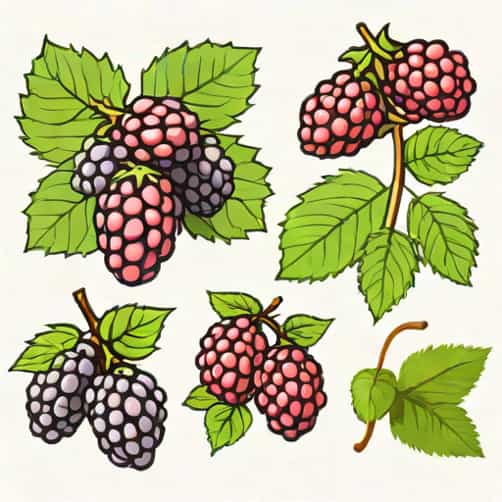
The world of berries is vast and fascinating, with a wide range of fruits that share similarities in appearance yet differ significantly in origin, taste, and cultivation. Two such berries that are often confused are the loganberry and the mulberry. At first glance, they may seem alike due to their deep red or purple color and clustered form, but a closer look reveals that these fruits come from entirely different plants with distinct histories and characteristics. Understanding the difference between loganberry and mulberry helps gardeners, chefs, and fruit lovers appreciate each for its unique flavor and uses.
Origins and Botanical Background
Loganberry A Hybrid Berry with an Accidental Beginning
The loganberry has a fascinating origin story that traces back to the late 19th century in California. It was accidentally created by James Harvey Logan, a horticulturist who was attempting to breed blackberries and raspberries. Through cross-pollination, the result was a hybrid fruit that combined the best features of both parent plants. The loganberry inherited the tartness of raspberries and the robustness of blackberries, creating a fruit that is deep red, conical in shape, and about one inch long. Botanically, it belongs to the genus Rubus, the same genus that includes raspberries and blackberries.
Mulberry A Fruit from the Morus Tree
In contrast, the mulberry is not a hybrid berry at all but the fruit of a deciduous tree in the Morus genus. There are several species of mulberries, such as the white mulberry (Morus alba), red mulberry (Morus rubra), and black mulberry (Morus nigra). The mulberry tree is native to Asia, Europe, and North America, depending on the species, and has been cultivated for centuries. It is famously associated with silkworm rearing, as silkworms feed on mulberry leaves. Unlike the loganberry, the mulberry is a collective fruit formed from multiple smaller drupelets that grow along a central stem, resembling an elongated blackberry.
Physical Appearance and Structure
How to Identify Loganberry
The loganberry grows on thorny vines, much like raspberries and blackberries. The berries are elongated, typically dark red to maroon when fully ripe. They are slightly longer and narrower than blackberries, with a smooth, shiny surface. Each berry is composed of multiple drupelets clustered together. When picked, the core stays attached to the berry, unlike raspberries where the core remains on the plant. This structural feature gives the loganberry a denser texture and slightly more tart flavor profile.
Recognizing Mulberries
Mulberries grow directly on the branches of trees rather than on vines. The fruits hang from short stems and ripen gradually, often resulting in trees that bear berries in various stages of color-from white or pink to deep purple or almost black. Mulberries are plumper and juicier than loganberries, and they tend to have a softer texture. Their shape is cylindrical, and they can grow up to one and a half inches long. When fully ripe, they are sweet and slightly tart, depending on the variety.
Flavor and Culinary Uses
Taste Profile of Loganberry
Loganberries have a distinct tangy flavor with a hint of sweetness. Their taste lies somewhere between raspberries and blackberries, making them a perfect ingredient for those who enjoy a balance of tart and sweet flavors. Because of their strong, rich taste, loganberries are popular in jams, jellies, pies, syrups, and even wine. They are also used in sauces for meats or desserts, where their acidity complements savory and sweet dishes alike.
Taste Profile of Mulberry
Mulberries, on the other hand, are generally sweeter and less acidic than loganberries. Their flavor varies by type-black mulberries tend to be the most flavorful, with a deep, wine-like sweetness, while white mulberries are mild and honey-like. Due to their high sugar content, mulberries are excellent for fresh eating, drying, or blending into smoothies. They can also be used in pies, tarts, and jams but are more delicate than loganberries and tend to break down easily when cooked.
Growing Conditions and Cultivation
How Loganberries Are Grown
Loganberries thrive in temperate climates and require well-drained soil and full sunlight. They are typically propagated through cuttings or root divisions. Since the plant grows on canes, it needs trellising or support systems for proper development. The vines can produce fruit within the second year after planting. While they are relatively hardy, loganberries do require protection from pests like aphids and birds that are attracted to the ripe fruits. Regular pruning helps improve airflow and fruit quality.
How Mulberries Are Grown
Mulberry trees are much easier to grow than loganberries and can adapt to various soil types. They prefer warm, sunny locations and are drought-tolerant once established. The trees can live for decades and produce fruit annually. However, one major consideration when planting mulberries is their tendency to stain sidewalks, cars, and hands due to their deep-colored juice. Gardeners often plant them away from walkways. Mulberries are also attractive to birds, which can make harvesting a challenge.
Nutritional Comparison
Loganberry Nutrition Facts
Loganberries are rich in vitamin C, manganese, and dietary fiber. They are also high in antioxidants such as anthocyanins, which help fight oxidative stress and inflammation. Because they are low in calories and fat, loganberries are an excellent choice for those seeking healthy snacks. Regular consumption of these berries can support immune function and cardiovascular health.
Mulberry Nutrition Facts
Mulberries are nutrient-dense as well, offering high levels of vitamin C, iron, potassium, and resveratrol-a compound known for its anti-aging and heart-protective properties. They also contain protein, which is unusual for most fruits. The antioxidant content of mulberries supports healthy skin, reduces cholesterol levels, and may help regulate blood sugar levels.
Key Differences Between Loganberry and Mulberry
- OriginLoganberry is a hybrid between blackberry and raspberry, while mulberry is the fruit of a tree from the genus Morus.
- Growth HabitLoganberries grow on thorny vines; mulberries grow on trees.
- FlavorLoganberries are tart and tangy; mulberries are sweeter and softer.
- AppearanceLoganberries are deep red and elongated; mulberries can range from white to dark purple and are plumper.
- Culinary UsesLoganberries are preferred for jams and baking, while mulberries are ideal for fresh eating or drying.
Though the loganberry and mulberry may appear similar at a glance, they belong to different plant families and offer distinct characteristics. The loganberry, with its hybrid origins and tangy taste, is beloved by bakers and jam makers. The mulberry, with its natural sweetness and tree-grown nature, provides a versatile fruit enjoyed fresh or dried around the world. Both berries deliver nutritional benefits and unique flavors, making them worthy additions to gardens and kitchens alike. Understanding the difference between loganberry and mulberry allows fruit enthusiasts to appreciate their diversity and enjoy them in their best form.