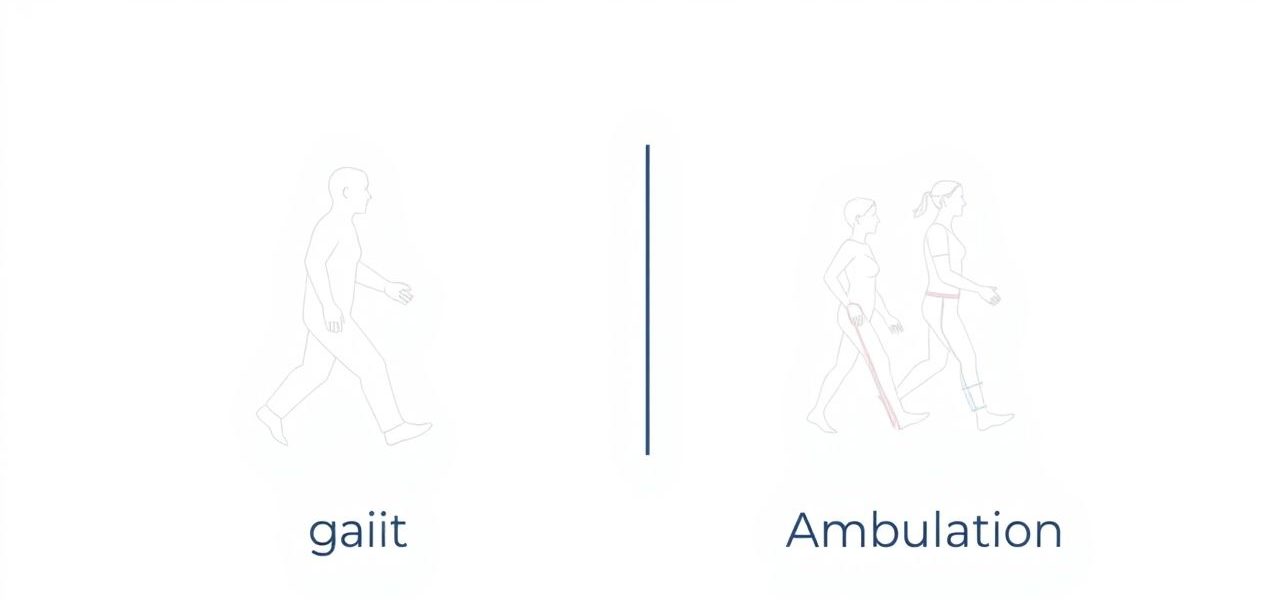
When people talk about human movement, the terms gait and ambulation often come up. At first glance, they might seem interchangeable, but in reality, these two words carry different meanings in healthcare, rehabilitation, and even daily conversation. Understanding the difference between gait and ambulation is not only important for medical professionals but also for anyone who wants to learn how the body moves, how walking patterns are assessed, and how mobility can be improved. By looking closer at these concepts, it becomes clear that while they are connected, each focuses on a different aspect of walking and movement.
Defining Gait
Gait refers to the manner or pattern in which a person walks. It involves the mechanics, rhythm, and coordination of movement during walking. Gait is a biomechanical concept and is usually studied in detail by physical therapists, orthopedists, neurologists, and other specialists. Every individual has a unique gait that can be influenced by age, body structure, muscle strength, joint flexibility, and even mood or emotional state.
Characteristics of Gait
- RhythmThe timing and cadence of each step.
- StrideThe length and consistency of each cycle of steps.
- BalanceThe ability to maintain posture while shifting weight.
- CoordinationThe interaction of muscles, joints, and the nervous system to produce smooth motion.
When healthcare professionals analyze gait, they are looking at these features to identify abnormalities such as limping, shuffling, or asymmetry between steps. Such irregularities can indicate conditions like arthritis, stroke aftereffects, cerebral palsy, or injuries affecting muscles and bones.
Defining Ambulation
Ambulation is the act of walking or moving from one place to another. Unlike gait, which focuses on the quality and mechanics of movement, ambulation emphasizes the ability to perform the activity of walking itself. In medical terms, ambulation is often used to describe whether a patient can walk independently, with assistance, or requires devices such as a walker, cane, or crutches.
Key Aspects of Ambulation
- IndependenceWhether the person can ambulate without help or supervision.
- Assisted WalkingUse of support, either from another person or with mobility aids.
- Functional AbilityHow far and how well a person can ambulate in daily life.
- EnduranceThe stamina to continue ambulation for extended periods or distances.
In hospitals and rehabilitation centers, ambulation is a common term used when assessing recovery progress. For example, after surgery, a patient’s ability to ambulate is an important milestone for discharge planning and overall health improvement.
Comparing Gait and Ambulation
Although gait and ambulation are closely related, they represent different perspectives on walking. To better understand their differences, it helps to compare them directly.
Main Differences
- FocusGait is about the pattern and style of walking, while ambulation is about the act and ability to walk.
- Use in HealthcareGait is often analyzed to detect abnormalities, whereas ambulation is used to evaluate functional mobility.
- AssessmentGait requires detailed observation, often with tools like gait analysis labs, while ambulation is assessed more simply by checking whether someone can move from place to place.
- GoalGait analysis aims at improving quality and efficiency of movement, while ambulation assessment ensures independence and safety in walking.
For example, a patient recovering from a hip replacement might be able to ambulate with a walker, but their gait may still show irregularities such as reduced stride length or imbalance. Over time, physical therapy aims to restore both smooth gait and independent ambulation.
Why the Difference Matters
Knowing the difference between gait and ambulation is valuable for several reasons. In healthcare, accurate terminology helps professionals communicate clearly about a patient’s condition. In rehabilitation, focusing on both aspects ensures patients not only regain the ability to walk but also improve how they walk. In everyday life, understanding these concepts can raise awareness about the importance of posture, strength, and mobility for long-term health.
Applications in Physical Therapy
Physical therapists often design exercises targeting gait improvement, such as balance training, muscle strengthening, and coordination drills. At the same time, they help patients achieve better ambulation by encouraging regular movement, building endurance, and introducing adaptive equipment when necessary.
Role in Elderly Care
For older adults, gait analysis can detect risks of falling, while ambulation assessments determine whether a person can remain independent at home. Early detection of gait issues can prevent injuries and promote safer ambulation.
Post-Surgical Recovery
After surgeries like knee replacement, doctors and nurses track ambulation as a marker of progress. However, they also evaluate gait to ensure the patient does not develop compensatory walking habits that could cause long-term problems.
Common Gait Abnormalities
Because gait is about patterns, it can be disrupted by various health conditions. Some common abnormalities include
- LimpingUsually due to pain or weakness in one leg.
- Shuffling gaitCommon in conditions such as Parkinson’s disease.
- Spastic gaitStiff, jerky movements often caused by neurological issues.
- Ataxic gaitUnsteady walking due to balance or coordination problems.
Identifying these abnormalities allows healthcare providers to create targeted treatment plans that address both gait quality and ambulation safety.
Improving Gait and Ambulation
Both gait and ambulation can be improved through structured interventions. Exercise programs, rehabilitation techniques, and assistive devices are commonly used to help people walk better and more efficiently.
Strategies for Better Gait
- Strengthening leg muscles through resistance training.
- Practicing balance exercises like standing on one leg.
- Using gait training devices such as parallel bars in therapy.
Strategies for Better Ambulation
- Gradually increasing walking distance each day.
- Incorporating mobility aids when needed for safety.
- Focusing on endurance with low-impact activities like treadmill walking or aquatic therapy.
By addressing both aspects, individuals can achieve more independence and confidence in their daily activities.
While gait and ambulation are connected, they highlight different aspects of human movement. Gait refers to the style and pattern of walking, focusing on mechanics and coordination. Ambulation, on the other hand, refers to the act of walking and one’s ability to move from place to place, with or without assistance. Understanding these distinctions benefits healthcare providers, patients, and anyone interested in improving mobility. By paying attention to both gait and ambulation, people can walk not only more efficiently but also more safely and independently throughout their lives.