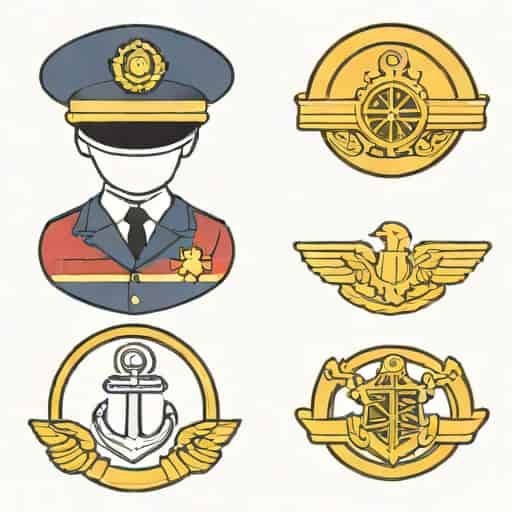
Understanding the roles and responsibilities of maritime forces is essential for anyone interested in military careers or national security. Among these forces, the Coast Guard and the Navy play crucial roles in protecting a nation’s waters, but their missions, training, and operational priorities differ significantly. While both are uniformed services and operate in maritime environments, a Coast Guard officer and a Navy officer have distinct career paths, responsibilities, and legal authorities. This topic explores the differences between Coast Guard and Navy officers in detail, providing a comprehensive overview for students, enthusiasts, and aspiring officers.
Roles and Responsibilities
The primary distinction between a Coast Guard officer and a Navy officer lies in their core missions. Both services operate at sea, but their objectives, operational focus, and jurisdiction vary.
Coast Guard Officer
Coast Guard officers primarily focus on maritime safety, law enforcement, environmental protection, and search and rescue. Their duties often include
- Patrolling coastal areas and ports to prevent illegal activities such as smuggling, human trafficking, and drug transport.
- Conducting search and rescue operations to assist ships and individuals in distress.
- Ensuring compliance with maritime safety regulations and environmental laws.
- Assisting in disaster response and humanitarian missions in coastal regions.
Coast Guard officers often work closely with other federal and local law enforcement agencies and have the authority to enforce laws on both domestic and international waters within their jurisdiction. Their focus is primarily on protecting citizens and property rather than engaging in combat operations.
Navy Officer
Navy officers, on the other hand, are primarily tasked with defense and combat operations at sea. Their responsibilities include
- Operating and commanding warships, submarines, and aircraft to maintain maritime security and deter adversaries.
- Conducting naval operations, including offensive and defensive combat missions during wartime.
- Protecting national interests overseas, such as trade routes and strategic territories.
- Engaging in intelligence, surveillance, and reconnaissance missions to monitor potential threats.
Navy officers focus on maintaining a nation’s military presence and readiness at sea, often working in international waters and in coordination with allied naval forces. Their work emphasizes defense, strategic operations, and military deterrence rather than law enforcement.
Training and Career Path
The training programs for Coast Guard and Navy officers are designed to equip them with skills relevant to their respective missions. While both share fundamental military training, there are differences in specialization, career progression, and daily responsibilities.
Coast Guard Training
Coast Guard officers typically attend the Coast Guard Academy or complete Officer Candidate School. Their training focuses on maritime law enforcement, navigation, search and rescue, and environmental protection. Practical experience includes patrolling coastal waters, boarding vessels for inspections, and responding to emergencies. Career paths may lead to specialized roles such as marine safety officer, law enforcement officer, or search and rescue coordinator.
Navy Training
Navy officers usually attend the Naval Academy or participate in Naval Officer Candidate School. Their training emphasizes combat readiness, ship handling, naval strategy, and leadership. Officers may specialize in areas such as surface warfare, submarine operations, aviation, or intelligence. Career advancement often involves deployments on various vessels, participation in joint military exercises, and taking on command roles within the fleet.
Legal Authority and Jurisdiction
Another significant difference between Coast Guard and Navy officers is their legal authority and operational jurisdiction. This distinction influences how each service interacts with domestic and international maritime law.
Coast Guard Authority
Coast Guard officers have law enforcement authority under domestic laws and certain international agreements. They can board ships, make arrests, conduct inspections, and enforce safety regulations. Their jurisdiction primarily covers territorial waters, ports, and coastal areas, although they can also operate in international waters for specific missions like counter-smuggling operations.
Navy Authority
Navy officers operate under military law and are focused on defense rather than law enforcement. They do not have domestic law enforcement powers but can engage in combat operations under the rules of armed conflict. Their jurisdiction is primarily international, including territorial waters of allied nations or contested regions where military presence is necessary to protect national interests.
Operational Environment
The environments in which Coast Guard and Navy officers operate also differ significantly, reflecting their respective missions and priorities.
Coast Guard Environment
Coast Guard officers work mostly in coastal waters, harbors, rivers, and nearshore regions. Their daily operations involve responding to maritime emergencies, inspecting vessels, and enforcing laws. They may also participate in humanitarian missions and environmental monitoring, making their work highly community-focused and directly impactful to civilian populations.
Navy Environment
Navy officers operate in both domestic and international waters, often far from home ports for extended periods. They may be deployed in hostile environments, participating in military exercises, conflict zones, or strategic patrols. Navy operations require coordination with other branches of the military, and officers must be prepared for combat scenarios, advanced tactical operations, and global deployments.
Equipment and Technology
Both services utilize specialized vessels and technology, tailored to their missions and operational requirements.
Coast Guard Equipment
- Patrol boats and cutters for coastal and river operations
- Helicopters and small aircraft for search and rescue missions
- Radar and navigation systems for monitoring vessel traffic
- Specialized equipment for environmental protection and law enforcement
Navy Equipment
- Aircraft carriers, destroyers, and submarines for combat operations
- Advanced weaponry and missile defense systems
- Naval aviation including fighter jets and surveillance aircraft
- Satellite and communication systems for global operations and intelligence gathering
In summary, while Coast Guard and Navy officers both serve their nations at sea, they have distinct roles, responsibilities, and operational environments. Coast Guard officers focus on maritime safety, law enforcement, search and rescue, and environmental protection, often operating close to home and directly interacting with civilian populations. Navy officers are primarily engaged in defense, combat, and strategic military operations, often deployed internationally and tasked with maintaining national security on a global scale. Training, legal authority, career paths, and operational equipment also differ, reflecting the unique missions of each service. Understanding these differences is essential for anyone considering a career in maritime services or studying the structure and function of national defense and law enforcement.