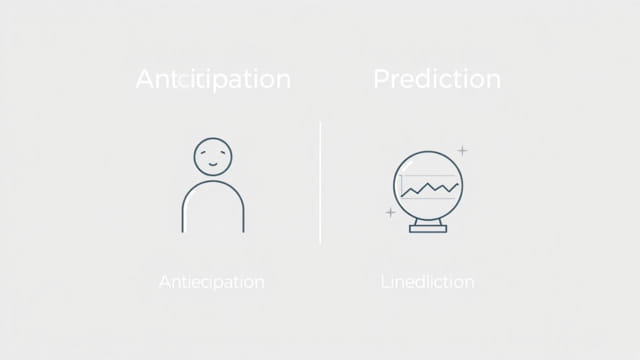
Understanding subtle differences between similar English words can improve both writing and speaking skills. Two such words that are often used interchangeably but carry distinct meanings are anticipate and predict. While they both relate to looking ahead to future events, they differ in tone, context, and emotional implication. Grasping the difference between anticipate and predict is essential for clear communication, especially in formal writing, business contexts, and everyday conversations. This topic explores the unique definitions, uses, and examples of each word to help learners and native speakers alike distinguish them properly.
Definitions and Core Meaning
What Does Anticipate Mean?
Anticipate means to look forward to something or to expect something with some degree of preparation. It often carries a sense of eagerness or readiness. The word can also imply action taken in advance to deal with something expected to happen.
- Example: She anticipated the guests’ arrival by preparing extra food.
- Example: The team anticipated a tough competition and trained harder.
In these examples, anticipate involves not just expecting something, but being prepared or emotionally invested in what’s coming.
What Does Predict Mean?
Predict refers to stating or estimating that a specific thing will happen in the future, based on knowledge, evidence, or reasoning. It tends to be used in more analytical or factual contexts, without necessarily taking emotional stance or preparatory action.
- Example: Scientists predict that sea levels will rise in the next 50 years.
- Example: The analyst predicted a drop in the stock market.
Predict is more neutral and is typically grounded in logic, analysis, or observable patterns.
Emotional vs. Logical Tone
Anticipate Is Often Emotional
The word anticipate is frequently used to express feelings like excitement, nervousness, or readiness. It connects the subject to the future event in a more emotional way than predict.
- Example: He anticipated the birth of his first child with great joy.
- Example: The audience anticipated the concert for months.
These uses show how anticipate can include emotional engagement or planning for a desired outcome.
Predict Is Mostly Analytical
Predict usually implies the use of data, trends, or expertise to make an educated guess. There is little to no emotional investment implied.
- Example: Economists predict inflation will decrease next year.
- Example: Meteorologists predicted heavy rain based on satellite images.
The emphasis is on informed estimation rather than personal experience or feeling.
Usage in Different Contexts
In Business and Strategy
In professional settings, both anticipate and predict are used, but their purposes differ.
- Anticipate: Companies anticipate customer needs by researching behavior.
- Predict: Marketing teams predict trends using data analytics tools.
In this case, anticipation includes acting ahead of time, while prediction involves analyzing what may happen.
In Daily Conversation
In informal speech, anticipate might be used to express personal expectation, while predict might come up in discussions involving outcomes or opinions about future events.
- Anticipate: I’m really anticipating the holiday season this year!
- Predict: I predict she’ll be late again, like usual.
Grammatical Use and Sentence Structure
Anticipate
Anticipate is a transitive verb, meaning it must be followed by a direct object. Sometimes it’s followed by a clause beginning with that.
- Correct: The team anticipated the challenge.
- Correct: We anticipated that the event would start late.
Predict
Predict is also a transitive verb, but it is often followed by clauses using that, especially in formal or scientific contexts.
- Correct: They predicted a change in the weather.
- Correct: She predicted that sales would rise in Q4.
Nuanced Differences
Preparation vs. Projection
Anticipate often implies taking action or bracing for an event, while predict implies merely stating what one thinks will happen.
- Anticipate: The school anticipated a larger crowd and added more seats.
- Predict: Experts predicted the match would be a close one.
Formal vs. Informal Use
Predict is more common in academic, scientific, or journalistic writing. Anticipate fits well in personal communication, formal correspondence, and customer service contexts.
- Formal: The government predicted higher employment rates.
- Formal: We anticipate your response by next week.
Common Mistakes
Using Anticipate Without Intent of Action
Sometimes, anticipate is misused in places where no action or emotional preparation is implied.
- Incorrect: Scientists anticipated the earthquake. (Better: Scientists predicted the earthquake.)
Using Predict with Personal Feelings
Predict should not be used when you’re expressing emotional anticipation.
- Incorrect: I predict Christmas this year. (Better: I anticipate Christmas this year.)
Quick Comparison Table
| Feature | Anticipate | Predict |
|---|---|---|
| Definition | To expect and prepare for something | To estimate or state something will happen |
| Emotion | Often emotional | Neutral/logical |
| Common Use | Personal, proactive | Scientific, analytical |
| Followed by | Direct object or clause | Direct object or clause |
The difference between anticipate and predict lies in tone, intent, and usage. Anticipate is proactive and often emotional, suggesting readiness or preparation. Predict is reactive and analytical, based on knowledge or reasoning. Knowing when and how to use each word can improve the clarity of your writing and speech, making your English more precise and impactful. Whether you’re crafting a business report, writing an essay, or having a conversation, choosing the right word between anticipate and predict will ensure your message is well understood and professionally delivered.