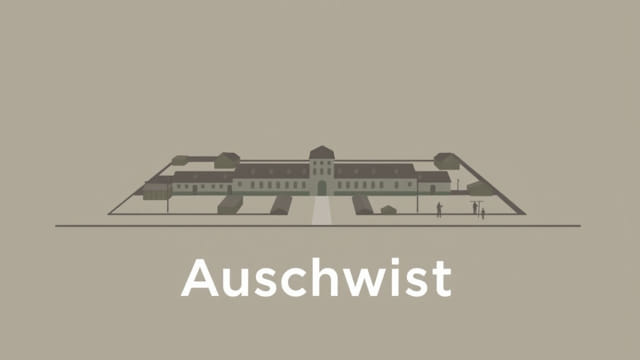
Located in southern Poland near the town of Oświęcim, Auschwitz was the largest and most infamous Nazi concentration and extermination camp during World War II. It was not a single facility but a vast network of camps, covering a staggering area that reflects the industrial scale of the Holocaust. The immensity of Auschwitz is not only measured in land size but also in the number of people imprisoned, murdered, and affected by its operation. Understanding its approximate dimensions provides deeper insight into the logistical planning and brutality of the Nazi regime.
Geographic Location and General Overview
Where Was Auschwitz Located?
Auschwitz was situated in Nazi-occupied Poland, approximately 50 kilometers (31 miles) west of Kraków. Its location was strategically chosen due to the area’s railway connections, which allowed the mass transport of Jews and other victims from across Europe.
Complex of Camps
The Auschwitz complex consisted of three main camps:
- Auschwitz I: The original concentration camp, serving as the administrative center.
- Auschwitz II-Birkenau: The largest part of the complex and the main extermination site.
- Auschwitz III-Monowitz: A labor camp established to provide workers for the nearby IG Farben chemical plant.
In addition to these, there were over 40 subcamps scattered across the region, involved in forced labor and various industrial enterprises.
Dimensions and Size of Auschwitz
Total Area Covered
The entire Auschwitz complex covered approximately 40 square kilometers (15.4 square miles). This included the main camps and all subsidiary locations. Each section of the complex had distinct functions, with some dedicated to extermination, others to forced labor, and others to administration.
Auschwitz I
Auschwitz I, the original camp, was relatively small in area compared to the rest. It covered around 0.5 square kilometers (0.2 square miles) and was surrounded by double barbed-wire fences and watchtowers. Despite its size, it played a critical role in the development of the Nazi concentration camp system.
Auschwitz II-Birkenau
Birkenau, also known as Auschwitz II, was by far the largest and most infamous section. It spanned approximately 140 hectares (1.4 square kilometers or 0.54 square miles). This camp alone could hold over 100,000 prisoners at a time. Birkenau contained numerous wooden and brick barracks, four gas chambers, crematoria, and a rail line that brought deportees directly into the camp.
Auschwitz III-Monowitz
The Monowitz camp, also known as Buna, was built to house laborers working at the IG Farben industrial complex. It covered an area of about 6 square kilometers (2.3 square miles). Here, prisoners were forced to perform grueling labor under brutal conditions with little food or medical care.
Infrastructure and Layout
Barbed Wire and Watchtowers
The entire Auschwitz complex was surrounded by electrified barbed wire fences and heavily guarded with watchtowers. The internal layout included roads, railways, and barracks, all designed for efficient prisoner movement and control.
Gas Chambers and Crematoria
Birkenau housed the main killing facilities. The gas chambers and crematoria were strategically placed at the far end of the camp, away from the view of new arrivals. These structures could kill and cremate thousands of victims per day, contributing to the industrialized nature of the genocide.
Living Conditions
Prisoners were crammed into overcrowded wooden or brick barracks. Each barrack could hold several hundred people with little ventilation, heating, or sanitation. Disease, malnutrition, and violence were rampant throughout the complex.
Number of Victims and Prisoners
Death Toll
An estimated 1.1 million people were murdered at Auschwitz, the majority of whom were Jews. Other victims included Poles, Roma (Gypsies), Soviet POWs, and others deemed undesirable by the Nazi regime. The vast majority of those sent to Auschwitz-Birkenau were murdered upon arrival.
Prisoner Population
Throughout its existence, more than 1.3 million people were deported to Auschwitz. The camp’s maximum capacity reached over 150,000 at one time, with constant prisoner turnover due to deaths and new arrivals.
Logistics and Transportation
Railroad Access
The camp’s immense size was supported by a complex railway infrastructure. Trains arrived daily from countries across Europe, often carrying thousands of people in cattle cars under inhumane conditions. Birkenau had a railway spur that went directly into the center of the camp, streamlining the process of selection and extermination.
Administrative Organization
Auschwitz’s scale required detailed record-keeping and bureaucratic management. Nazi administrators kept meticulous files on prisoners, selections, deaths, and labor assignments. The camp had its own hierarchy and internal command structure, run by the SS and assisted by prisoner functionaries.
Comparison with Other Camps
Larger Than Other Camps
In terms of area, capacity, and number of victims, Auschwitz was significantly larger and deadlier than any other Nazi concentration or extermination camp. Its facilities combined the functions of a labor camp, a transit camp, and a death camp, which made it unique in its operations and horrifyingly effective.
Model for Systematic Murder
Due to its efficiency and size, Auschwitz became a model for other extermination efforts. The knowledge gained through its operation informed Nazi practices in other camps and played a central role in the ‘Final Solution’ the plan to annihilate the Jewish population of Europe.
Modern-Day Memorial and Preservation
Auschwitz-Birkenau State Museum
Today, the Auschwitz site has been preserved as a museum and memorial. Visitors can walk through the barracks, see the ruins of crematoria, and learn about the lives of victims and survivors. The immensity of the place is physically felt, giving visitors a deeper understanding of the camp’s size and the scale of the atrocities committed there.
UNESCO World Heritage Site
Auschwitz was designated a UNESCO World Heritage Site in 1979. Its preservation is not only a tribute to the victims but also a reminder of the dangers of hatred, racism, and totalitarianism. The vastness of the site continues to provoke reflection and education about the Holocaust.
The immensity of Auschwitz can be measured not only in its physical size spanning over 40 square kilometers but also in the human tragedy it represents. It was the largest and most complex of the Nazi concentration and extermination camps, with facilities designed for mass murder on an industrial scale. The camp’s dimensions, infrastructure, and capacity for killing reveal the horrifying efficiency of the Holocaust. Understanding its scale is essential to honoring the victims and ensuring that such atrocities are never repeated. Auschwitz remains a powerful symbol of human cruelty and of the need for remembrance and vigilance.