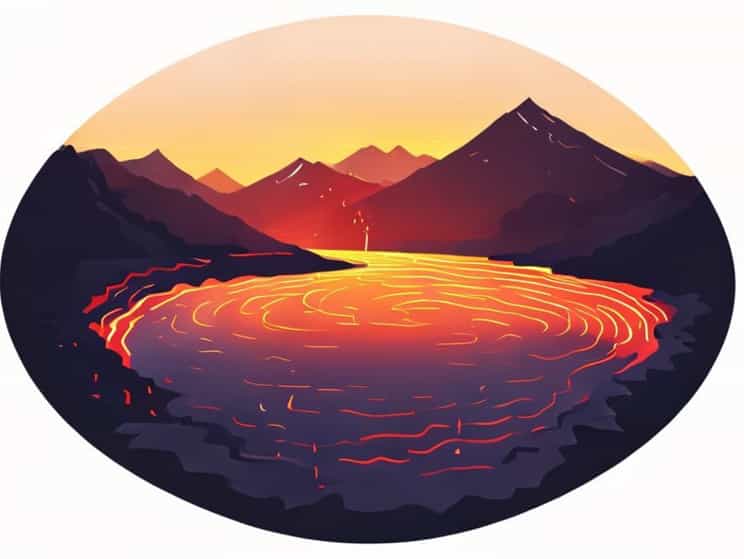
Lava dammed lakes are fascinating natural features that form when volcanic activity reshapes the landscape in dramatic ways. These lakes are created not by human engineering, but by flowing lava that blocks rivers, valleys, or drainage paths, causing water to collect behind the solidified rock. Understanding how lava dammed lakes are formed helps explain the close relationship between volcanism, water systems, and long-term landscape evolution. Although the process can happen quickly during an eruption, the results may last for centuries or even thousands of years.
What Are Lava Dammed Lakes
Lava dammed lakes are bodies of water that develop when lava flows act as natural barriers. As molten rock moves downhill from a volcanic vent, it can enter river valleys or low-lying areas. When the lava cools and hardens, it forms a solid dam that prevents water from flowing normally.
Over time, rainwater, groundwater, and river flow accumulate behind the lava barrier. This trapped water gradually forms a lake. Unlike artificial dams, lava dams are irregular in shape and composition, which influences how stable the lake will be.
The Role of Volcanic Eruptions
Volcanic eruptions are the starting point for the formation of lava dammed lakes. Not all eruptions create these lakes, but certain conditions increase the likelihood. Effusive eruptions, which produce large volumes of flowing lava rather than explosive ash clouds, are particularly important.
Basaltic lava, which is relatively fluid, can travel long distances. When it spreads across valleys or river channels, it can easily block existing waterways. Once the eruption ends, the lava begins to cool and solidify, locking the dam in place.
Lava Flow Behavior
The way lava flows depends on temperature, composition, and slope. Slow-moving but thick lava flows are especially effective at forming natural dams because they pile up and harden into dense rock walls.
How Water Becomes Trapped
Once lava blocks a river or drainage path, water has nowhere to go. Streams and rivers continue to deliver water to the area, and rainfall adds to the accumulation. As water backs up behind the lava dam, it spreads across the landscape, filling depressions and low areas.
The speed at which a lava dammed lake forms depends on climate, water supply, and the size of the blocked drainage system. In wet regions, lakes can develop relatively quickly, while in dry areas the process may take much longer.
The Cooling and Solidification Process
Lava cools from the outside inward. The outer surface hardens first, while the interior may remain hot for months or even years. As the lava cools completely, it becomes a solid rock structure capable of holding back water.
Cracks and fractures often form during cooling. These weaknesses can allow water to seep through the dam over time, affecting the lake’s stability. Some lava dams leak slowly, while others remain watertight for long periods.
Types of Lava Dams
Not all lava dams are the same. Their shape and structure depend on how the lava was deposited and the landscape it flowed into.
- Valley-filling lava dams block narrow river valleys
- Lava flow dams spread across wider lowlands
- Layered lava dams form from multiple eruptions
Each type influences the size, depth, and lifespan of the resulting lake.
Stability of Lava Dammed Lakes
The stability of a lava dammed lake depends on several factors. These include the thickness of the lava, the presence of cracks, and the pressure exerted by the water behind the dam.
Over time, erosion can weaken the dam. Water may carve channels through fractures or flow over the top, gradually lowering the lake level. In some cases, sudden dam failure can occur, releasing large amounts of water downstream.
Natural Erosion Processes
Rain, flowing water, and temperature changes all contribute to erosion. Freeze-thaw cycles can widen cracks, while chemical weathering slowly breaks down volcanic rock.
Environmental Conditions That Favor Formation
Lava dammed lakes are more likely to form in regions with active volcanism and established river systems. Mountainous areas with steep valleys are especially suitable because lava can easily block narrow channels.
Climate also plays a role. Regions with consistent rainfall provide enough water to fill the basin behind the lava dam, making lake formation more likely.
Ecological Impact of Lava Dammed Lakes
Once formed, lava dammed lakes can significantly affect local ecosystems. New aquatic habitats emerge, allowing plants and animals to colonize the area. Over time, the lake may support fish, birds, and vegetation.
The surrounding landscape also changes. Flooded valleys may submerge forests or grasslands, while sediment accumulation alters water chemistry and depth.
Geological Significance
From a geological perspective, lava dammed lakes provide valuable information about past volcanic activity. By studying lake sediments and surrounding lava flows, scientists can reconstruct eruption histories and environmental conditions.
These lakes also demonstrate how quickly volcanic processes can reshape landscapes, creating long-lasting features from relatively short events.
Examples of Lava Dammed Lakes
Many lava dammed lakes exist around the world, particularly in volcanic regions. Some have persisted for thousands of years, while others drained or disappeared as dams eroded.
These lakes vary widely in size, from small ponds to large bodies of water stretching across entire valleys.
Risks Associated With Lava Dams
Although lava dammed lakes can be stable, they also pose potential hazards. Sudden dam collapse can cause downstream flooding, threatening communities and ecosystems.
Monitoring is important in regions where lava dams block major rivers. Scientists assess crack development, seepage, and water pressure to evaluate risk.
Long-Term Evolution of Lava Dammed Lakes
Over long periods, lava dammed lakes may undergo significant changes. Sediment buildup can gradually fill the lake, transforming it into a wetland or meadow. Alternatively, erosion may eventually breach the dam.
In some cases, new volcanic activity can reinforce the dam or create additional barriers, extending the lake’s lifespan.
Why Lava Dammed Lakes Matter
Understanding how lava dammed lakes are formed helps scientists, students, and communities appreciate the dynamic nature of Earth’s surface. These lakes show how volcanic forces interact with water systems to create new environments.
They also highlight the balance between natural beauty and potential risk, reminding us that geological processes continue to shape the planet.
Lava dammed lakes form when flowing lava blocks rivers or valleys, trapping water behind solidified volcanic rock. This process begins with volcanic eruptions and continues through cooling, water accumulation, and landscape adjustment.
Although formed by intense geological events, lava dammed lakes can become stable and ecologically rich features. By studying how these lakes develop and evolve, we gain deeper insight into volcanism, hydrology, and the ever-changing nature of Earth’s surface.