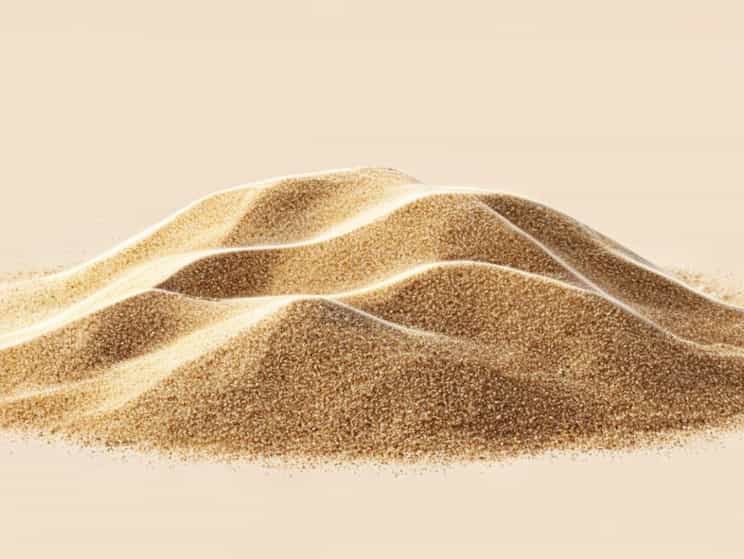
Coarse sand is a fundamental material widely used in construction, landscaping, and civil engineering projects. Its density, measured in kilograms per cubic meter (kg/m³), is a critical property that affects calculations for structural design, concrete mix proportions, and earthworks. Understanding the density of coarse sand allows engineers, architects, and builders to estimate load, volume, and material requirements accurately. Since coarse sand consists of larger ptopics than fine sand, its compaction, porosity, and moisture content influence its overall density, making it important to study in detail for practical applications.
Definition and Characteristics of Coarse Sand
Coarse sand is composed of granular ptopics typically ranging from 2 mm to 4.75 mm in diameter. It is distinguished from fine sand by its larger grain size and rough texture. Coarse sand is often sourced from riverbeds, quarries, or coastal areas and is a key ingredient in concrete, mortar, and drainage systems.
Physical Properties
- Ptopic SizeCoarse sand ptopics are larger and more angular than fine sand.
- PorosityThe larger ptopic size creates more void spaces, affecting bulk density.
- Moisture ContentWater retained between grains impacts the effective density.
- Color and CompositionCoarse sand may contain quartz, feldspar, and other minerals.
Density of Coarse Sand
The density of coarse sand refers to the mass of the material per unit volume. It is expressed in kilograms per cubic meter (kg/m³) and can vary based on compaction, moisture content, and ptopic arrangement. In construction, the density is essential for determining concrete mix ratios, foundation loads, and excavation volumes.
Typical Density Values
For dry coarse sand, the bulk density generally ranges from 1,400 to 1,600 kg/m³. When the sand is compacted, the density can increase to approximately 1,600 to 1,800 kg/m³. Saturated or wet coarse sand has a higher density due to the water filling the voids, which may range between 1,800 and 2,000 kg/m³.
Factors Affecting Density
Several factors influence the density of coarse sand in practical applications
- CompactionSand that is densely compacted has fewer air voids and a higher bulk density.
- Moisture ContentWater in the sand voids increases the measured density.
- Ptopic Shape and Size DistributionAngular ptopics with uniform size pack differently than rounded or mixed-size ptopics.
- Presence of ImpuritiesOrganic material, silt, or clay can decrease effective density.
Measurement Methods for Density
Determining the density of coarse sand accurately requires standardized procedures. There are several common methods used in laboratories and fieldwork.
Core Cutter Method
This method involves filling a known volume container with sand, weighing it, and calculating the density by dividing mass by volume. It is suitable for field measurements where compacted sand layers need to be tested.
Sand Replacement Method
Used primarily for soil and foundation investigations, this technique measures density by replacing excavated material with a known volume of sand. The method helps determine in-situ density, which is critical for construction projects.
Laboratory Measurement
In a controlled laboratory, coarse sand is dried, sieved, and poured into a graduated container to determine volume and mass. The density is then calculated using the formula
Density (kg/m³) = Mass of Sand (kg) ÷ Volume of Sand (m³)
Importance of Density in Construction
Knowing the density of coarse sand is essential for various construction-related calculations
- Concrete Mix DesignDensity affects the ratio of sand, cement, and aggregate for achieving desired strength.
- Foundation and Structural LoadBulk density helps calculate the weight of fill materials and soil stabilization requirements.
- Excavation and EarthworksAccurate density data ensures correct volume estimation and material procurement.
- Drainage SystemsCompacted coarse sand density influences water percolation and stability in filtration layers.
Density of Coarse Sand vs Fine Sand
Coarse sand generally has a lower bulk density than fine sand when loosely packed due to larger void spaces between ptopics. Fine sand ptopics fill gaps more efficiently, leading to slightly higher loose density. However, upon compaction, coarse sand can achieve densities similar to or even higher than fine sand, making it suitable for structural purposes.
Comparison Table
| Type of Sand | Loose Bulk Density (kg/m³) | Compacted Bulk Density (kg/m³) |
|---|---|---|
| Coarse Sand | 1,400 – 1,600 | 1,600 – 1,800 |
| Fine Sand | 1,500 – 1,700 | 1,700 – 1,900 |
Practical Applications
Understanding coarse sand density is crucial in multiple applications beyond concrete and foundations
Road Construction
Coarse sand is often used as a sub-base or filler in road construction. Its density determines compaction quality, load-bearing capacity, and durability of road layers.
Landscaping
In landscaping projects, coarse sand is used for leveling, drainage, and soil improvement. Knowing its density helps calculate the volume required to cover a certain area and achieve desired leveling depth.
Water Filtration
Coarse sand serves as a filter medium in water treatment systems. Its density affects porosity and flow rate, influencing filtration efficiency and maintenance schedules.
Factors Influencing Density Variability
The density of coarse sand is not a fixed value and can vary depending on environmental and material conditions
- Moisture ContentWet sand has a higher density due to water weight.
- Compaction MethodMechanical compaction achieves higher density than manual pouring.
- Source and Mineral CompositionSand from different locations can have varying ptopic sizes, shapes, and mineral content, affecting density.
- Presence of Air VoidsLoosely packed sand has more voids, reducing bulk density.
The density of coarse sand in kilograms per cubic meter is a vital parameter for construction, engineering, and industrial applications. Typically ranging from 1,400 to 1,800 kg/m³ depending on compaction and moisture, this property influences concrete mix design, foundation load calculations, earthwork estimates, and drainage system performance. Understanding the factors that affect coarse sand density, including ptopic size, compaction, and moisture content, is essential for engineers, architects, and builders to ensure accurate material estimates and structural integrity. Whether used in concrete, road construction, landscaping, or water filtration, knowing the density of coarse sand allows for precise planning, efficient resource use, and safe, durable construction outcomes.