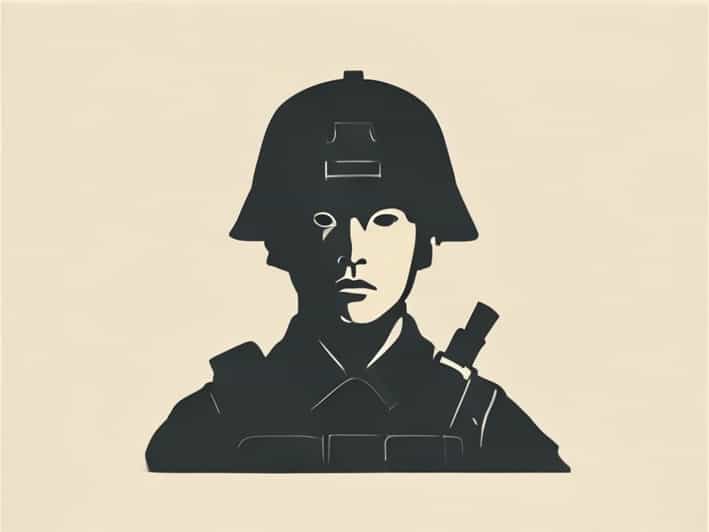
Kikuji Yamashita, a notable Japanese surrealist painter, created some of the most provocative and politically charged artworks of the post-World War II era. One of his most significant paintings,Deification of a Soldier, reflects the complex relationship between war, nationalism, and the human psyche. Created in the aftermath of Japan’s defeat in World War II, the artwork delves into the themes of hero worship, militarism, and societal expectations imposed upon soldiers. Yamashita’s surrealist approach combines distorted figures, chaotic compositions, and symbolic imagery to critique the glorification of soldiers while exploring the trauma and psychological consequences of warfare. Understanding this artwork provides insight not only into Yamashita’s artistic vision but also into the broader cultural and historical context of postwar Japan.
Historical context of the painting
Japan’s experience in World War II and its subsequent defeat had a profound impact on its society, politics, and art. Following the war, Japanese artists grappled with themes of devastation, loss, and the reevaluation of national identity. Kikuji Yamashita emerged as a leading figure in the postwar avant-garde movement, known for using surrealism to question societal norms and expose underlying anxieties.Deification of a Soldierwas created during this turbulent period, reflecting a society wrestling with the consequences of blind obedience to authority and the collective veneration of military figures. The painting serves as both a critique of militarism and an exploration of the psychological cost of war on individuals and communities.
Artist background
Kikuji Yamashita was born in 1926 and became active in the Japanese art scene in the postwar period. He is best known for blending surrealism with social commentary, using his work to address political and cultural issues. Yamashita’s unique style often includes grotesque imagery, fragmented bodies, and symbolic elements that challenge viewers’ perceptions of reality. In the case ofDeification of a Soldier, Yamashita combines surrealist techniques with historical reflection, allowing the painting to function both as a visual spectacle and as a critique of society’s treatment of soldiers as almost divine figures.
Visual analysis ofDeification of a Soldier
The composition ofDeification of a Soldieris chaotic and densely packed with symbolic figures. Yamashita uses a distorted visual language to convey tension, unease, and the unnatural elevation of a soldier to a god-like status. The soldier is often depicted at the center, larger than surrounding figures, emphasizing his supposed importance and the societal tendency to idealize military figures. Surrounding him are various figures, sometimes civilians, sometimes abstract or monstrous forms, representing the complex emotions and consequences surrounding war.
Use of surrealist techniques
Yamashita employs surrealism to destabilize conventional interpretations of heroism. Figures may be exaggerated, fragmented, or merged with symbolic objects, creating a dreamlike or nightmarish atmosphere. The juxtaposition of realistic and fantastical elements forces viewers to confront uncomfortable truths about war and veneration. Through this technique, the painting critiques the notion of deification by showing how it distorts human perception and moral judgment.
Symbolism and thematic elements
- The central soldier figure represents both the individual warrior and the societal idealization of military service.
- Distorted faces and contorted bodies around the soldier symbolize the psychological trauma, loss, and moral ambiguity associated with war.
- Elements such as fire, broken objects, or unnatural landscapes highlight destruction, chaos, and the unsettling impact of blind hero worship.
- The surreal composition emphasizes the dissonance between reality and societal expectations, reflecting postwar Japan’s struggle to process its militaristic past.
Themes explored in the painting
Deification of a Soldieraddresses several interrelated themes, each contributing to the artwork’s lasting impact and interpretive depth.
Critique of militarism
Yamashita critiques the glorification of soldiers and the societal structures that elevate them to near-divine status. By portraying the soldier in exaggerated and surreal terms, the painting questions the morality and consequences of blind obedience to military ideals. The work exposes the tension between hero worship and the destructive realities of war, highlighting the dangers of uncritical nationalism.
Psychological trauma
The painting reflects the mental and emotional toll of warfare on both soldiers and civilians. Distorted forms, chaotic composition, and unsettling imagery suggest the inner turmoil experienced by those affected by conflict. Yamashita emphasizes that deifying soldiers often ignores the suffering and humanity of the individuals involved, reducing complex human experiences to symbols of ideology.
Societal reflection
In postwar Japan,Deification of a Soldierserves as a mirror of society’s attempts to reconcile with the past. By presenting a surreal, exaggerated soldier figure, Yamashita challenges viewers to consider the cultural and historical forces that encourage hero worship. The painting invites reflection on how societies construct myths around war and the ethical responsibility to critically examine such narratives.
Impact and significance
The painting holds a significant place in both Japanese art history and the broader study of war-related art. Its bold critique of militarism, combined with surrealist techniques, influenced a generation of artists seeking to explore social and political themes through experimental forms.Deification of a Soldierremains relevant today for its examination of how societies commemorate war and the tension between individual humanity and collective myth-making.
Reception and critical interpretation
Art critics have lauded Yamashita’s work for its originality, emotional intensity, and incisive social commentary. The painting is interpreted as both a cautionary tale and a historical document, capturing the ambivalence of postwar Japanese society toward soldiers and military history. Scholars often note how Yamashita’s surrealist approach allows him to address sensitive topics, such as war guilt and national identity, in a visually compelling and intellectually engaging way.
Legacy of Kikuji Yamashita’s work
Yamashita’s art, includingDeification of a Soldier, continues to inspire discussions about the ethical and psychological dimensions of war. His use of surrealism to critique societal norms demonstrates the power of art to question collective beliefs and provoke reflection. By examining the deification of soldiers, Yamashita’s work encourages contemporary audiences to consider the ways in which history, memory, and cultural narratives shape public perception of military figures and conflict.
Educational relevance
The painting is frequently studied in courses on modern Japanese art, surrealism, and war-related art. Its themes are relevant for discussions on psychology, sociology, and ethics, providing a multidisciplinary approach to understanding both artistic expression and historical context. Through careful analysis, students can explore the interplay between visual form, symbolic meaning, and societal critique in Yamashita’s work.
Deification of a Soldierby Kikuji Yamashita is a compelling exploration of war, heroism, and societal values. Through surrealist techniques, distorted imagery, and symbolic composition, the painting critiques the idealization of soldiers while highlighting the psychological and cultural consequences of militarism. Yamashita’s work remains a powerful statement on postwar Japan, inviting reflection on the human cost of conflict and the myths constructed around heroism. By examining this painting, viewers gain insight into the complex relationship between individual experience, societal expectation, and historical memory, cementing Yamashita’s legacy as a key figure in the Japanese avant-garde and a perceptive commentator on the nature of war and human perception.