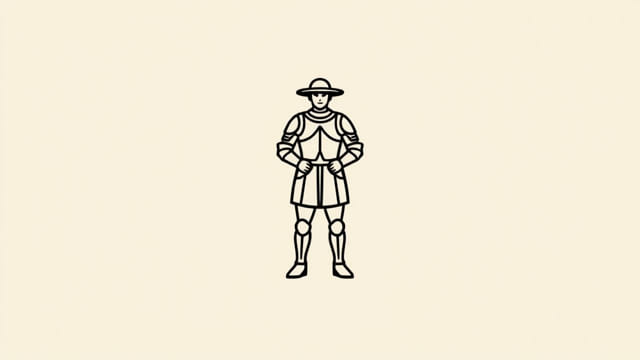
Solving a crossword puzzle often feels like piecing together fragments of history, language, and culture. A clue such as ‘Central European Cavalryman’ can evoke curiosity and lead solvers down a path of military history, old European titles, and traditional uniforms. This type of crossword clue typically appears in puzzles with historical or cultural themes, and knowing the correct answer depends on both geographical context and a bit of historical background. The answer is not a common word in everyday conversation but holds significance in the annals of European military traditions.
Understanding the Clue: Central European Cavalryman
The phrase ‘Central European’ refers to countries like Hungary, Poland, Austria, and parts of Germany. These regions share rich military histories, especially involving mounted troops or cavalry. When paired with cavalryman, the clue specifically points to a soldier who served on horseback in these central European nations. This narrows down the possibilities to historically significant mounted units or titles from those countries.
Clue Characteristics
- Region-based: Central Europe, not Western or Eastern specifically.
- Historical tone: Suggests an older term, likely no longer in active use.
- Military terminology: Focuses on cavalry a mounted military force.
Taking all this into account, the answer that best fits the clue ‘Central European Cavalryman’ is most commonly Hussar, a five-letter word with deep historical significance in European warfare.
Answer: Hussar
A Hussar was a type of light cavalry soldier that originated in Hungary during the 15th century and later spread across much of Europe. Known for their agility, speed, and distinctive uniforms, Hussars were widely adopted in military units throughout Central and Eastern Europe. They were celebrated for both their combat effectiveness and their highly stylized dress, which often included pelts, braided jackets, and fur-lined hats.
Key Traits of a Hussar
- Originated in Hungary
- Light cavalry unit designed for speed and mobility
- Known for flamboyant and decorative military uniforms
- Used by multiple nations including Austria, Poland, and France
Famous Hussar Units
- Polish Winged Hussars: Renowned for their large feathered wings worn on the back, used during the 16th and 17th centuries
- Austrian Hussars: Often employed in the Habsburg military, noted for their scouting and skirmishing abilities
- French Hussars: Napoleonic era units known for their dashing uniforms and roles in rapid assaults
Hussars were not just fighters they were symbols of national pride and elite status. Their influence extended beyond the battlefield, influencing military fashion and the organization of later cavalry units.
Why Hussar Fits the Crossword Clue
Crossword solvers look for an answer that is not only factually correct but also fits within the structure of the puzzle. Hussar is ideal because it typically matches clues with 5-letter spaces and covers all necessary aspects of the clue: Central Europe, military affiliation, and cavalry history.
Clue Breakdown
- Central European: Hussars originated in Hungary and were used throughout the region.
- Cavalryman: Hussars were mounted soldiers, fulfilling this part of the clue exactly.
- Historical consistency: The term is historically accurate and culturally appropriate.
Other Possible but Less Likely Answers
Depending on the puzzle’s difficulty or context, there may be other answers that fit part of the clue but not all of it as precisely as Hussar. For example:
- Uhlan: Another type of light cavalryman, common in Poland and Prussia, typically associated with lances.
- Lancer: A more general term for cavalry soldiers who wield lances; not specific to Central Europe.
- Dragoon: Refers to mounted infantry, used across Europe but not specifically tied to Central European identity.
While these terms describe mounted soldiers, they lack the strong regional and cultural ties that Hussar has to Central Europe, making them less precise answers for this clue.
How to Identify Similar Clues in Crossword Puzzles
Recognizing historical or military terms can be tough without background knowledge, but solvers can develop strategies for handling these types of clues.
Tips for Solving
- Look for regional indicators: Central, Eastern, Western they matter.
- Consider the time period implied by the clue cavalryman often means pre-20th century.
- Cross-reference other clues even one intersecting letter can help identify the word.
- Study common military units and historical ranks they often recur in puzzles.
Understanding military history terms like Hussar not only helps in crosswords but also enhances your general vocabulary and appreciation for historical contexts.
Hussars in Popular Culture and History
Beyond crosswords, the term Hussar continues to be used symbolically in books, movies, and historical reenactments. Their iconic uniforms and heroic portrayals make them favorites in military history and costume-based events.
Modern Legacy
- Several ceremonial military units in Europe still wear Hussar-inspired dress.
- Historical novels and films often depict Hussars as dashing and elite warriors.
- Reenactment groups and parades sometimes include Hussar-themed participants.
The enduring presence of the Hussar image in modern times highlights how powerful and memorable this unit remains, making it a common answer in word games and trivia questions alike.
The crossword clue ‘Central European Cavalryman’ is best answered with Hussar, a word steeped in historical significance and regional identity. Knowing about Hussars their role in European armies, their iconic uniforms, and their legacy not only solves the puzzle but deepens understanding of cultural and military history. With its five-letter format and precise fit, Hussar stands out as the definitive solution for this type of clue, combining accuracy with historical flavor.