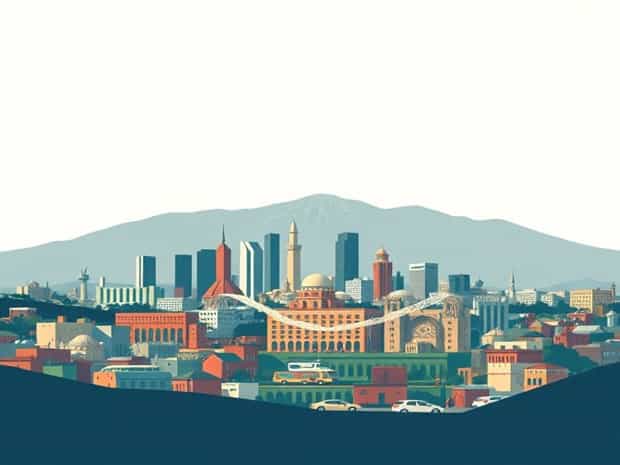
The capital city of Afghanistan is one of the most historically rich and culturally significant places in Central Asia. Known as Kabul, it has served as a crossroads of civilizations, a center of politics, and a hub for trade for centuries. With its strategic location surrounded by towering mountains and valleys, Kabul reflects both the challenges and opportunities of Afghanistan’s history. The city is not only the political heart of the country but also a symbol of resilience for the Afghan people, who have preserved their traditions and way of life through periods of change, conflict, and rebuilding.
Geographical Importance of Kabul
Kabul lies in a valley between the Hindu Kush mountains, making it a unique city in terms of geography and climate. The surrounding mountains provide natural protection, which historically made it an attractive choice as the capital city of Afghanistan. Its altitude also gives the city a cooler climate compared to many other regions of the country, which has influenced agriculture, settlement patterns, and trade throughout the centuries.
A Strategic Location
The position of Kabul made it a gateway between South Asia, Central Asia, and the Middle East. This location gave the capital a significant role in the Silk Road trade routes, allowing merchants, scholars, and travelers to pass through and share goods, culture, and ideas. Today, the geographical position of the capital city of Afghanistan continues to play a vital role in international politics and regional trade.
Historical Background
Kabul has a history that stretches back more than 3,500 years. Ancient texts and travelers’ accounts describe the city as a vibrant center of learning and commerce. Over the centuries, Kabul has been influenced by many civilizations, including Persians, Greeks, Mongols, and Mughals. Its long history has left behind monuments, traditions, and a deep sense of cultural pride among its residents.
From Ancient to Modern Times
During the reign of the Mughal Empire, Kabul flourished as an important cultural and economic hub. Later, in the 18th century, when Afghanistan was established as a unified state, Kabul was chosen as its capital city. Since then, the city has grown into the administrative and political core of Afghanistan, even as it faced challenges from wars and invasions. Despite these struggles, Kabul has remained resilient, constantly rebuilding and maintaining its role as the capital city of Afghanistan.
Cultural Significance
The capital city of Afghanistan is not only important for politics but also serves as a center for culture and tradition. Kabul reflects the diversity of Afghan society, with people from different ethnic backgrounds including Pashtuns, Tajiks, Hazaras, and Uzbeks. This diversity contributes to the city’s cultural richness, seen in its languages, foods, music, and festivals.
Language and Arts
In Kabul, Dari and Pashto are the most commonly spoken languages, but you can also hear other local languages due to the diverse population. The city has long been known for its poetry, calligraphy, and music. Traditional Afghan instruments and styles of storytelling remain a part of Kabul’s artistic life, making it a place where old traditions and modern influences coexist.
Festivals and Traditions
Kabul hosts many cultural celebrations throughout the year. Religious festivals, national holidays, and seasonal gatherings bring the community together. These events highlight the warmth and hospitality of Afghan culture, values that are especially strong in the capital city of Afghanistan.
Economic Role of Kabul
As the capital city of Afghanistan, Kabul is the main hub for economic activity in the country. It hosts markets, industries, and business centers that connect Afghanistan with international trade partners. The city’s economy has always been influenced by its location along trade routes, and even today, Kabul plays an important role in importing goods, promoting crafts, and fostering small businesses.
Traditional Markets
One of the most famous aspects of Kabul’s economy is its bazaars. Traditional markets sell carpets, spices, jewelry, and handicrafts that represent Afghanistan’s cultural heritage. These markets attract both locals and visitors, making them important centers for economic activity.
Modern Development
In recent years, efforts have been made to modernize Kabul’s economy. While challenges remain due to political instability, investments in infrastructure, telecommunications, and education are shaping the city’s economic future. The capital city of Afghanistan continues to strive toward growth and development despite obstacles.
Educational and Political Importance
Kabul is home to the country’s most important universities, schools, and cultural institutions. The presence of Kabul University, along with other educational centers, has made the capital a place where knowledge and innovation are encouraged. Education is seen as a key factor in shaping the future of Afghanistan, and the capital city plays a central role in this process.
Political Center
As the seat of government, Kabul houses the Presidential Palace, ministries, and foreign embassies. Decisions that shape the nation are made here, reinforcing Kabul’s status as the core of Afghanistan’s political life. This makes the city not just a capital in name but also in function, guiding the direction of the entire country.
Challenges and Resilience
Like many historic cities, Kabul has faced difficulties, including conflicts, natural disasters, and economic struggles. Despite these challenges, the people of the capital city of Afghanistan continue to rebuild and preserve their heritage. The resilience of Kabul is one of its defining qualities, making it a symbol of hope and endurance for the entire nation.
Rebuilding Efforts
Efforts to restore cultural monuments, improve infrastructure, and provide better services show how Kabul is constantly working toward recovery. International aid, local initiatives, and the determination of its people all contribute to rebuilding the capital city of Afghanistan.
Tourism Potential
Although political instability has affected tourism, Kabul holds great potential as a destination. The city has historic mosques, gardens, and museums that reflect its long history. For example, the Gardens of Babur and the National Museum of Afghanistan showcase the city’s cultural treasures. As stability improves, Kabul may once again attract visitors eager to experience the history and traditions of the capital city of Afghanistan.
Kabul, the capital city of Afghanistan, is far more than just the administrative center of the country. It is a place where history, culture, politics, and resilience come together. From its strategic location and rich history to its cultural diversity and economic role, Kabul represents the heart of Afghanistan. Despite facing many challenges, the city continues to serve as a symbol of endurance, guiding the nation toward a future that respects its heritage while seeking progress. Understanding the importance of Kabul allows us to appreciate not only the city itself but also the broader story of Afghanistan as a nation.