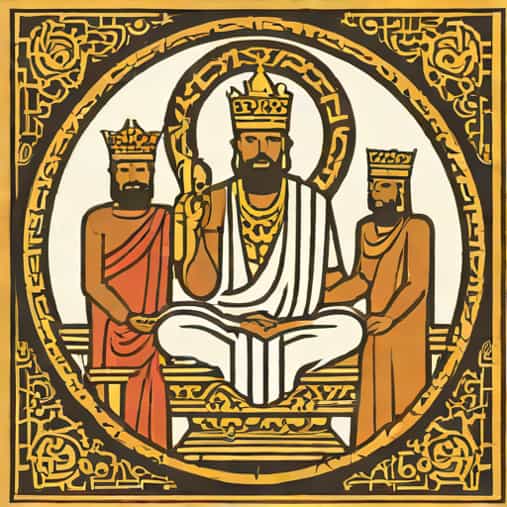
The land of Canaan, situated in the ancient Near East, played a central role in biblical history and the development of early Israelite society. During the tribal and monarchic periods, Canaan was a region of dynamic political, social, and religious transformation. It was characterized by a mixture of indigenous Canaanite city-states, nomadic tribes, and emerging Israelite settlements. Understanding Canaan during these periods provides insight into the cultural, economic, and political factors that shaped the formation of early Israelite identity and governance. This era witnessed the transition from loosely organized tribal communities to a unified monarchy under kings, which influenced the region’s development for centuries.
The Tribal Period in Canaan
The tribal period, often referred to as the period of the Judges, is believed to have occurred roughly between 1200 BCE and 1020 BCE. This era followed the initial Israelite settlement in Canaan, after their migration from Egypt. During this time, Israelite society was organized around twelve tribes, each descended from one of the sons of Jacob. These tribes maintained relative autonomy, with a focus on kinship, local governance, and communal religious practices.
Political Organization and Tribal Leadership
During the tribal period, Canaan was politically fragmented. The Israelite tribes did not have a centralized government but were loosely connected through shared ancestry, religious practices, and mutual defense against external threats. Leadership was often situational, with judges serving as temporary military leaders or arbiters rather than hereditary monarchs. These judges, such as Deborah, Gideon, and Samson, emerged during times of crisis to unite the tribes against foreign adversaries, demonstrating the flexible and decentralized nature of governance during this period.
Relations with Canaanite City-States
The Israelites coexisted with established Canaanite city-states, which were well-fortified and often governed by local kings. Interaction between Israelites and Canaanites included trade, occasional alliances, and conflicts over territory. The Canaanites practiced polytheism and maintained urban centers with complex administrative systems. In contrast, the Israelite tribes were primarily pastoral and rural, emphasizing covenantal relationships with their deity. This contrast influenced cultural exchanges and sometimes created tension, particularly in contested regions.
Religious Life and Practices
Religion played a central role in uniting the Israelite tribes. Worship was centered around the tabernacle and sacred sites, emphasizing the covenant between the Israelites and their God. Ritual sacrifices, festivals, and the oral transmission of sacred narratives reinforced tribal cohesion. However, the decentralized tribal structure meant that local shrines and practices varied, and interaction with Canaanite religious customs often led to syncretism and occasional conflicts with prophetic figures advocating monotheism.
The Transition to the Monarchic Period
By the end of the tribal period, pressures from internal disunity and external threats, including Philistine expansion, highlighted the need for centralized authority. This led to the emergence of a monarchy in Israel, beginning with Saul around 1020 BCE. The shift from tribal governance to monarchy marked significant political, social, and military changes in Canaan, creating a more unified state capable of coordinating defense, administration, and religious centralization.
Saul and the Early Monarchy
Saul, the first king of Israel, attempted to unite the tribes under a single authority while continuing to recognize the religious traditions of the tribes. His reign involved military campaigns against the Philistines and other neighboring groups to consolidate control over Canaanite territories. Despite his efforts, Saul faced challenges from tribal loyalties and rivalries, illustrating the complexity of transitioning from tribal organization to monarchy.
David and the Expansion of Israel
David succeeded Saul and established a more enduring monarchy. He is noted for uniting the Israelite tribes under a central government, creating Jerusalem as the political and religious capital, and extending control over much of Canaan. David’s reign represents the culmination of the tribal period’s gradual unification into a kingdom. His leadership demonstrated the effectiveness of centralized authority in consolidating power, promoting infrastructure, and establishing diplomatic relations with neighboring nations.
Solomon and the Consolidation of the Monarchic Period
Solomon, David’s successor, further strengthened the monarchic period through economic development, monumental building projects, and the centralization of religious worship. The construction of the First Temple in Jerusalem symbolized religious and political unity. Solomon’s administration organized Canaan into administrative districts, standardizing taxation and legal systems across the kingdom. Trade and alliances flourished under his rule, extending Israel’s influence beyond the borders of traditional Canaanite territory.
Social and Economic Life During the Tribal and Monarchic Periods
During both periods, Canaan’s social and economic life was influenced by geography, agriculture, and trade. The fertile plains and river valleys allowed for cultivation of grains, olives, and grapes, while hilly regions supported pastoral activities such as sheep and goat herding. Trade with neighboring regions, including Egypt, Mesopotamia, and Phoenicia, introduced new technologies, luxury goods, and cultural influences.
Urban and Rural Dynamics
Canaanite city-states provided urban centers for trade, governance, and religious activity, while Israelite tribal settlements were often rural and decentralized. The monarchic period saw increased urbanization and the growth of administrative centers to support centralized governance. Jerusalem, under David and Solomon, became a hub of economic, religious, and political life, reflecting the integration of tribal society into a unified kingdom.
Family and Kinship Structures
Kinship and family ties remained central throughout both periods. Tribal identity shaped social organization, inheritance patterns, and local governance. During the monarchic period, the authority of the king extended over these kinship networks, but local family and tribal traditions continued to influence social interactions, marriage practices, and land ownership.
Religious Developments
The religious evolution of Canaan during these periods was closely tied to political changes. During the tribal period, worship was decentralized, with local altars, high places, and shrines. Prophets and religious leaders played a role in guiding the tribes and maintaining covenantal traditions. In the monarchic period, centralization of worship in Jerusalem and the construction of the Temple under Solomon established a focal point for religious life, reinforcing political authority and cultural unity.
Interaction with Canaanite Religion
Israelite religion during both periods was influenced by, and sometimes in conflict with, Canaanite religious practices. Polytheistic worship of local deities and fertility cults was common among Canaanite populations. Israelite prophets and leaders emphasized monotheism, covenant obligations, and adherence to Yahweh, creating a religious identity that distinguished Israel from neighboring peoples.
Military and Strategic Considerations
The tribal and monarchic periods of Canaan were marked by frequent conflicts over territory, resources, and political dominance. Tribes relied on militias led by judges for defense, while the monarchy established standing armies and fortifications. Strategic control of key cities, trade routes, and water sources was essential for maintaining political stability and economic prosperity. David’s conquest of Jerusalem and other Canaanite cities exemplifies the importance of military strategy in consolidating the kingdom.
Canaan during the tribal and monarchic periods underwent significant political, social, and religious transformations. The tribal period was characterized by decentralized governance, kinship-based organization, and interactions with Canaanite city-states, while the monarchic period introduced centralized authority, urbanization, and religious consolidation. Key figures such as Saul, David, and Solomon shaped the trajectory of Israelite society, uniting the tribes, establishing Jerusalem as a capital, and centralizing religious practices. The social, economic, and military developments of these periods laid the foundation for the cultural and political identity of Israel, highlighting the dynamic interplay between tribal traditions and monarchic governance in the ancient Near East.