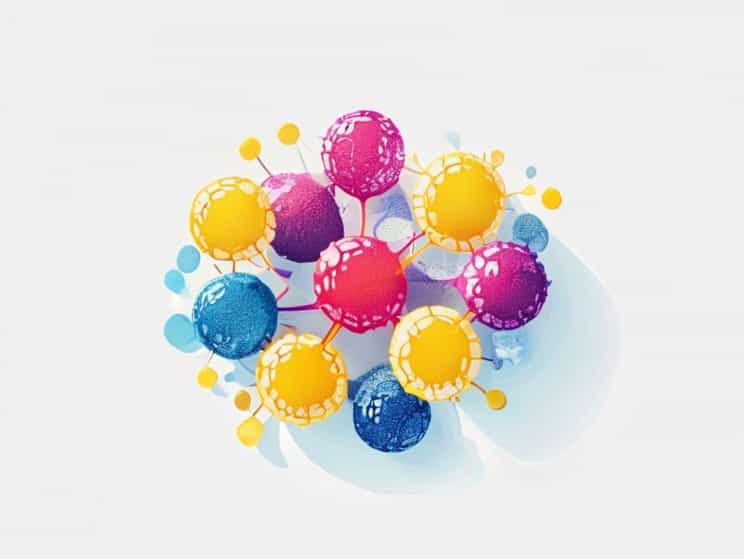
In biology and medical science, understanding the structure and composition of tissues is essential to studying how living organisms function. One fundamental concept is an aggregation of cells and extracellular materials, which forms the basis of all tissues in multicellular organisms. These aggregations are not simply random clusters but are highly organized structures where cells interact with one another and with the surrounding extracellular matrix to perform specific functions. The study of these structures reveals how organisms grow, repair themselves, and respond to external stimuli, highlighting the intricate relationship between cellular components and the materials that surround them.
Definition of an Aggregation of Cells and Extracellular Materials
An aggregation of cells and extracellular materials refers to a tissue or a collective assembly in which cells are held together by structural components and biochemical substances found outside the cells. These extracellular materials, often referred to as the extracellular matrix (ECM), provide physical support, biochemical signals, and mechanical strength to the tissue. The ECM is composed of proteins such as collagen, elastin, fibronectin, and proteoglycans, which help maintain tissue integrity and facilitate communication between cells.
Key Components of Aggregated Structures
- CellsThe living units that perform the specific functions of the tissue, such as muscle contraction, secretion, or immune response.
- Extracellular MatrixNon-living materials that fill the space between cells, offering support, adhesion sites, and pathways for nutrient diffusion.
- Cell JunctionsSpecialized connections between cells, such as tight junctions, desmosomes, and gap junctions, which allow communication and cohesion.
- Intercellular FluidsWater-based solutions that carry ions, nutrients, and signaling molecules throughout the tissue.
Types of Tissues Formed by Aggregation
Aggregations of cells and extracellular materials result in the formation of various tissue types in the body. Each type of tissue has a unique structure and function based on the arrangement of its cellular and extracellular components.
1. Epithelial Tissue
Epithelial tissues are made up of closely packed cells with minimal extracellular matrix. They serve as protective layers for the body and internal organs, line cavities, and form glandular structures. The limited extracellular material in these tissues mainly consists of a basement membrane that anchors the cells and provides structural support.
2. Connective Tissue
Connective tissue is characterized by a large proportion of extracellular matrix relative to the number of cells. This tissue type provides support, elasticity, and strength to various parts of the body. Examples include bone, cartilage, tendons, and adipose tissue. The ECM in connective tissues contains fibers such as collagen and elastin, which give mechanical strength, and ground substance, which fills the spaces between fibers and cells.
3. Muscle Tissue
Muscle tissues are composed of cells specialized for contraction. While the extracellular matrix in muscle tissue is less abundant than in connective tissue, it plays a critical role in transmitting force generated by cells to the surrounding structures, ensuring coordinated movement and stability.
4. Nervous Tissue
Nervous tissue consists of neurons and supporting glial cells. The extracellular material, although limited, provides a medium for the propagation of electrical signals and supplies essential nutrients to neurons. The ECM also aids in maintaining the precise architecture required for efficient signal transmission.
Functions of Extracellular Materials
The extracellular materials in cell aggregations perform multiple essential functions beyond mere structural support. They play an active role in communication, growth, repair, and overall tissue functionality.
1. Structural Support
The extracellular matrix forms a scaffold that holds cells in place, maintains tissue shape, and resists mechanical stress. This is particularly important in connective tissues like cartilage and bone, where mechanical forces are significant.
2. Cell Signaling
Extracellular components can influence cell behavior through biochemical signals. These signals regulate cell differentiation, proliferation, migration, and apoptosis, which are critical for tissue development and repair.
3. Tissue Repair and Regeneration
When tissues are damaged, the extracellular matrix provides a framework for new cells to grow and fill in the damaged area. This matrix often contains growth factors that stimulate tissue regeneration and healing.
4. Barrier and Protection
Some extracellular materials act as barriers against pathogens and environmental stress. For example, the dense ECM in epithelial tissues helps prevent microbial invasion and maintains a controlled environment for cells.
Clinical and Biological Importance
Understanding the aggregation of cells and extracellular materials has profound implications in medicine and biology. Abnormalities in cell aggregation or ECM composition can lead to various diseases, including fibrosis, cancer, and connective tissue disorders. Researchers study these structures to develop regenerative therapies, artificial tissues, and targeted treatments for illnesses affecting specific tissues. Additionally, tissue engineering and biomaterial research rely heavily on replicating the natural cell-ECM interactions to create functional artificial organs and implants.
Applications in Medicine
- Regenerative medicine and tissue engineering
- Cancer research, particularly tumor microenvironment studies
- Understanding developmental biology and organogenesis
- Designing biomaterials for implants and prosthetics
An aggregation of cells and extracellular materials is a fundamental concept in biology that underlies the formation and function of all tissues in multicellular organisms. By studying how cells interact with each other and with the extracellular matrix, scientists and medical professionals gain critical insights into tissue development, maintenance, and repair. These interactions determine the mechanical properties, signaling capabilities, and overall functionality of tissues, influencing health and disease. Whether in the context of basic biological research or advanced clinical applications, understanding these cellular aggregations provides a foundation for innovations in medicine, tissue engineering, and regenerative therapies.