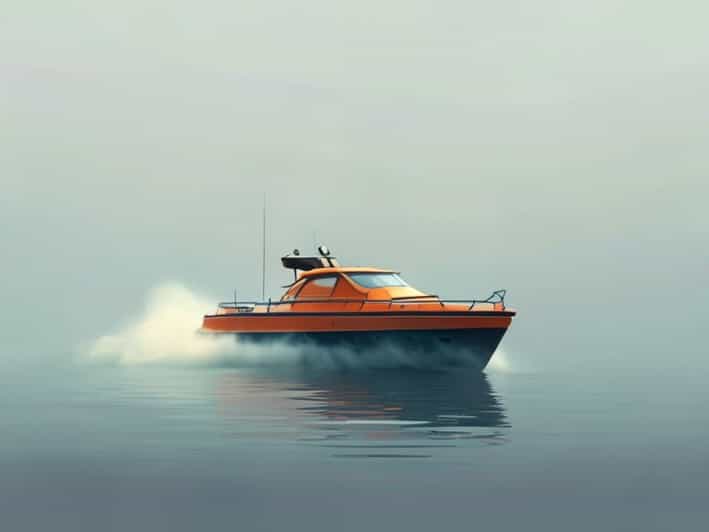
A powerboat is underway in the fog, and the scene immediately brings a sense of uncertainty and caution. Fog on the water can appear suddenly, reducing visibility and changing normal boating conditions into a potentially hazardous situation. For many boaters, especially those with limited experience, navigating through fog requires calm judgment, knowledge of safety rules, and proper preparation. Understanding what it means when a powerboat is underway in the fog is essential not only for safety but also for responsible boating practices that protect everyone on the water.
What It Means When a Powerboat Is Underway
In boating terms, a powerboat is considered underway when it is not anchored, tied to shore, or aground. This means the vessel is actively moving or capable of movement, even if it is drifting slowly. When a powerboat is underway in the fog, the operator is responsible for maintaining control of the vessel while dealing with severely limited visibility.
Fog changes how boaters perceive distance, speed, and direction. Objects appear closer or farther away than they really are, and other vessels may not be visible until they are dangerously close. This is why understanding navigation rules and operating procedures becomes critical in foggy conditions.
Why Fog Is Dangerous for Powerboats
Fog is one of the most challenging weather conditions for powerboat operators. Unlike rough waves or strong winds, fog does not directly affect the boat’s movement, but it limits the operator’s ability to see hazards. This includes other boats, buoys, docks, land, and even floating debris.
A powerboat underway in the fog may be traveling at a speed that feels safe, but without clear visibility, reaction time is reduced. Collisions often occur because operators cannot see each other in time to take evasive action.
Common Risks in Foggy Conditions
- Collisions with other vessels
- Running aground or hitting submerged objects
- Disorientation and loss of navigation bearings
- Delayed emergency response
These risks make it essential for boaters to adjust their behavior as soon as fog develops.
Safe Speed and Lookout Responsibilities
When a powerboat is underway in the fog, maintaining a safe speed is one of the most important responsibilities of the operator. Safe speed means traveling slowly enough to take effective action to avoid a collision and to stop within an appropriate distance.
In fog, safe speed is often much slower than normal cruising speed. Operators should be prepared to slow to idle speed if visibility becomes extremely limited. A proper lookout must also be maintained at all times, using both sight and hearing.
Listening becomes just as important as looking. Engine sounds, fog signals, and water movement can provide valuable clues about nearby vessels or obstacles.
Navigation Rules for Powerboats in Fog
Boating navigation rules are designed to prevent collisions, and they become even more critical when visibility is poor. A powerboat underway in the fog must follow these rules carefully, including understanding right-of-way situations.
In fog, vessels should avoid assumptions. Since you may not see the type or direction of another vessel, it is safest to take early and substantial action to avoid close encounters.
Key Navigation Practices
- Slow down well before visibility becomes critical
- Use navigation lights, even during daytime fog
- Sound appropriate fog signals
- Monitor instruments and charts closely
These practices help reduce confusion and increase safety for everyone sharing the waterway.
Using Sound Signals in Fog
When a powerboat is underway in the fog, sound signals are a primary method of communication. Since visibility is limited, other vessels rely on sound to detect your presence and determine your position.
Power-driven vessels underway are generally required to sound one prolonged blast at regular intervals. This signal alerts nearby vessels that a powerboat is moving through the area. Understanding and correctly using sound signals can significantly reduce the risk of collision.
Operators should also be alert to fog signals from other vessels. Identifying the direction and distance of these sounds helps in making safe navigation decisions.
The Role of Navigation Equipment
Modern navigation equipment can be extremely helpful when a powerboat is underway in the fog. GPS, radar, and depth sounders provide valuable information that may not be visible to the naked eye. However, technology should support good judgment, not replace it.
Radar can detect other vessels and large obstacles, but it requires proper training to interpret accurately. GPS helps confirm position and course, reducing the risk of disorientation. Even with these tools, operators must remain cautious and prepared for unexpected situations.
Preparation Before Entering Fog
Preparation plays a major role in safety. If fog is expected, powerboat operators should plan routes carefully and ensure all equipment is functioning properly. This includes navigation lights, sound signaling devices, and communication equipment.
Wearing life jackets becomes even more important in foggy conditions. In the event of a collision or sudden stop, having personal flotation devices readily available can save lives.
Pre-Fog Safety Checklist
- Check weather forecasts before departure
- Test navigation lights and horn
- Review charts and planned routes
- Ensure safety gear is accessible
These steps help reduce stress and improve decision-making when visibility drops.
What to Do If Visibility Becomes Zero
There are times when fog becomes so dense that visibility drops to almost nothing. In such cases, a powerboat underway in the fog may need to stop or take alternative action. Reducing speed to the minimum necessary for control is essential.
If conditions worsen, operators may choose to stop the vessel, maintain position, and continue sounding fog signals until visibility improves. This decision should be made carefully, considering traffic density and location.
Learning from Real-World Incidents
Many boating accidents involving fog occur because operators underestimate the danger. Common mistakes include traveling too fast, failing to use sound signals, or relying solely on technology. Learning from these incidents highlights the importance of patience and caution.
Experienced boaters often emphasize that there is no rush when visibility is limited. Reaching a destination safely is always more important than arriving quickly.
A powerboat is underway in the fog represents a situation that demands heightened awareness, responsibility, and respect for boating rules. Fog transforms familiar waters into unpredictable environments where safe speed, sound signals, and proper lookout are essential.
By understanding the risks, preparing in advance, and responding calmly to changing conditions, powerboat operators can navigate fog safely. Whether you are a recreational boater or someone studying boating safety, knowing how to handle a powerboat underway in the fog is a vital part of being a confident and responsible presence on the water.