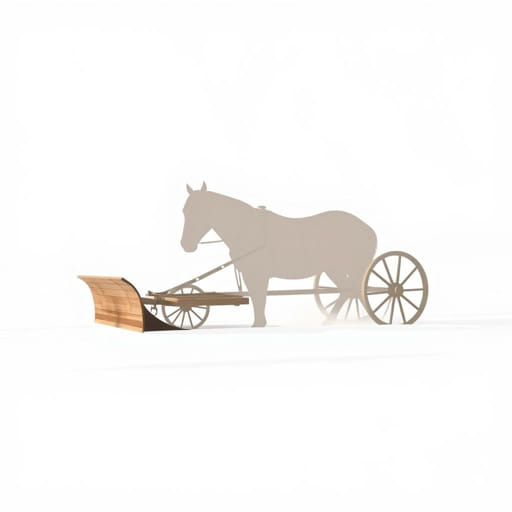
In many rural parts of the United States, especially in areas with significant Amish populations, a term known as the ‘Amish snowplow’ has gained attention. At first glance, it may sound like a piece of farming equipment or an unusual form of winter maintenance. However, the term is often used more humorously or colloquially than literally. In some contexts, it refers to a horse-drawn plow or sled used during winter conditions. In others, it carries a satirical or even tongue-in-cheek meaning. To fully understand what the ‘Amish snowplow’ is, it’s important to explore the different interpretations, cultural references, and social implications behind the phrase.
Understanding Amish Life and Transportation
The Amish are a group of traditionalist Christian communities known for simple living, plain dress, and resistance to modern technology. Most Amish groups avoid using electricity, cars, or other conveniences considered contrary to their values. Instead of automobiles, they commonly use horse-drawn buggies for transportation, even during snowy conditions.
Horse-Drawn Buggies in Winter
During the winter months, especially in snowy regions like Pennsylvania, Ohio, and Indiana, Amish people continue to use their buggies, often adapting them with sleigh-style runners instead of wheels. These adaptations allow them to travel more safely and efficiently through snow-covered rural roads.
- Steel runners replace buggy wheels for gliding over snow
- Horses are equipped with winter horseshoes to prevent slipping
- Buggies may be enclosed with heavy blankets or insulated covers
This adaptation is sometimes jokingly referred to by outsiders as an ‘Amish snowplow,’ though it is not designed to remove snow, but rather to navigate through it.
Satirical or Humorous Use of the Term
In modern slang or internet culture, the phrase ‘Amish snowplow’ has also been used humorously or sarcastically. In these contexts, it might describe a situation where a person driving a buggy happens to ‘plow’ through snow not in the mechanical sense, but by physically moving through it slowly with a horse. The contrast between high-powered snowplows and a simple horse-and-buggy setup can be comedic for those unfamiliar with Amish customs.
Common Jokes or Comments
- Calling a horse pulling a buggy through snow a snowplow for fun
- Referring to the tracks left by buggies in the snow as ‘cleared roads’
- Teasing the slow speed of horse-drawn travel as ineffective snow removal
While these uses are usually meant in good humor, it’s essential to approach them with cultural sensitivity. The Amish are not attempting to modernize or compete with snowplow equipment. Their goal is to maintain a lifestyle that aligns with their religious values, even when facing challenging winter conditions.
Actual Amish Approaches to Snow and Winter Work
Beyond humor, the Amish have developed practical and resourceful ways to deal with snow without relying on modern machines. In some cases, Amish farmers may use horse-drawn equipment to clear paths or driveways. These tools, while not motorized, can serve similar purposes on a small scale.
Winter Tools and Techniques
- Horse-drawn sleds for transporting firewood or goods
- Manual shoveling and cooperative efforts to clear community roads
- Using sand or ashes to improve traction on icy surfaces
While not efficient by urban standards, these methods reflect the Amish value of self-sufficiency and their ability to adapt to harsh climates using simple tools and strong community cooperation.
Misinterpretations and Urban Legends
The term ‘Amish snowplow’ sometimes appears in urban legends or humorous anecdotes passed along via email or social media. In such cases, the phrase may be applied to situations that never actually happened or were greatly exaggerated for comic effect. For example, a story might circulate about an Amish man plowing a highway with a horse-drawn sled, causing a traffic jam. These stories should be taken with a grain of salt and are more a reflection of outsider imagination than actual Amish practices.
The Dangers of Stereotyping
While it’s easy to laugh at quirky terms like ‘Amish snowplow,’ it’s important to recognize the risks of stereotyping. Reducing an entire culture to a humorous image can reinforce misconceptions and obscure the deeper values that define Amish life. These include:
- Commitment to faith and community
- Strong work ethic and resilience
- Minimal reliance on technology
By understanding what the term means and doesn’t mean we gain insight into how language can both reflect and distort cultural realities.
Modern Interest in Amish Sustainability
Interestingly, the Amish approach to winter survival including the so-called Amish snowplow has drawn attention from sustainability advocates. In an age of rising fuel costs and climate concerns, some people view the Amish lifestyle as a model for low-impact living. Using horses for transport, managing without electric heating, and building well-insulated homes are all aspects of Amish life that inspire curiosity and admiration among eco-conscious observers.
Lessons from Amish Simplicity
Though the Amish are not seeking to be trendy or modern, their traditional methods offer a reminder that simpler tools and communal cooperation can still work, even in extreme conditions. Some people have even attempted to replicate aspects of Amish living, such as heating with wood stoves or using manual tools, as a way to reconnect with self-sufficiency.
The phrase ‘Amish snowplow’ may evoke a chuckle, but it also opens the door to a deeper understanding of how the Amish navigate modern challenges in traditional ways. Whether referring to an actual horse-drawn sled used in winter or used metaphorically in jokes, the term highlights the contrast between high-tech convenience and low-tech resilience. In a world increasingly focused on speed and efficiency, the enduring methods of Amish communities remind us that slower, simpler ways still have value especially when grounded in purpose, community, and tradition.