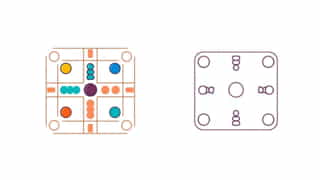
Ludo and Parchís are two popular board games that, at first glance, might appear almost identical. Both games involve moving colored tokens around a cross-shaped board, racing to bring all tokens home before the other players. Yet, despite their visual similarities and shared origin, there are key differences between Ludo and Parchís in terms of rules, gameplay mechanics, cultural influence, and strategic depth. Understanding these differences not only enhances the playing experience but also deepens the appreciation of each game’s unique charm.
Origins and Historical Background
Ancient Beginnings
Both Ludo and Parchís trace their roots to the ancient Indian game Pachisi, a game that dates back over 1,000 years. Pachisi was played on a cloth board in royal courts and was regarded as a game of both strategy and chance. Over the centuries, the game spread to various parts of the world, evolving into different versions depending on the region.
The Birth of Ludo and Parchís
Ludo was developed in England during the late 19th century and was officially patented in 1896. It simplified many aspects of Pachisi, making the game more accessible for children and families. Parchís, on the other hand, is the Spanish adaptation that became extremely popular across Spain and parts of Latin America. While the core ideas remain similar, cultural variations introduced several distinctions that separate these two beloved games.
Board Layout and Design
Color Scheme and Setup
One of the first visible differences between Ludo and Parchís is the board design and color scheme. Ludo typically uses four bright colors red, green, blue, and yellow while Parchís often uses red, blue, yellow, and green but sometimes in different arrangements. The boards look similar with a cross-shaped path, but Parchís boards sometimes include more decorative elements or numerical markings that reflect its Spanish heritage.
Token Start Positions
In Ludo, each player’s tokens begin in a colored area known as the base. Players must roll a six to bring a token into play. In Parchís, the tokens also start in their base, but the rules about entry can vary slightly. Additionally, Parchís boards often have more visually distinct starting positions and may include labels or markers indicating safe spaces.
Rules and Gameplay Mechanics
Number of Tokens per Player
In Ludo, each player usually controls 4 tokens. Parchís increases the complexity slightly by assigning 4 or sometimes even 6 tokens per player, depending on the variation. This adds another layer of strategy, as managing more tokens requires careful planning.
Rolling a Six
In both games, rolling a six allows a player to bring a token onto the board and grants an extra turn. However, Parchís often includes an additional rule: if a player rolls three consecutive sixes, their turn ends, and they must return their last moved token to the starting base. Ludo usually does not penalize consecutive sixes, making it a bit more forgiving.
Capturing Opponents
Capturing or sending an opponent’s token back to the base is possible in both games. In Ludo, capturing typically just sends the token back, and the capturing player continues. In Parchís, capturing an opponent’s token often rewards the player by allowing them to move 20 extra spaces. This bonus makes Parchís more aggressive and adds incentive to take risks.
Safe Zones and Rules
Ludo includes certain colored squares that serve as safe zones where tokens cannot be captured. Parchís also features safe zones, often more clearly marked, and usually located at regular intervals around the board. The rules for entering or passing these safe zones may differ slightly and are often stricter in Parchís.
Gameplay Strategy
Pacing and Decision-Making
Ludo is generally simpler and quicker, making it more suitable for casual play or for younger audiences. The strategic depth is moderate, focusing on timing and risk management. Parchís, with its additional rules, offers a more tactical experience. The need to consider captures, bonuses, and multiple tokens in play requires more strategic planning and foresight.
Movement and Blocking
In Parchís, players can block opponents by placing two of their tokens on the same square. This creates a blockade that cannot be passed unless broken by the owner or disrupted through special circumstances. Ludo generally does not include this mechanic, which simplifies movement but reduces strategic blocking opportunities.
Regional Popularity and Cultural Differences
Ludo Around the World
Ludo is popular globally, especially in countries like the UK, India, the Philippines, and Nigeria. It is often viewed as a fun family game and is widely adapted into digital formats and mobile apps. The simplicity of Ludo contributes to its wide appeal across age groups and cultures.
Parchís in Spain and Latin America
Parchís enjoys enormous popularity in Spain, where it is considered a classic game for all ages. It is also widely played in Spanish-speaking countries, including Colombia, Mexico, and Argentina. The game is often associated with childhood memories and is a staple in many Spanish households. Cultural traditions and holidays often include Parchís as part of family gatherings.
Digital Versions and Modern Adaptations
Online and Mobile Platforms
Both Ludo and Parchís have been adapted into digital versions. Ludo King, for example, is one of the most downloaded mobile board games worldwide. Parchís has also seen success with mobile apps like Parchís STAR, which maintains the traditional Spanish rules and aesthetics. These modern adaptations have helped both games remain relevant and reach new generations of players.
Rule Variations Online
Online versions often allow players to choose between different rule sets. For instance, a digital Parchís game might allow players to enable or disable the 20-space bonus for capturing, or decide whether to play with blockades. Ludo apps usually stick to the classic rules but may include additional game modes for variety.
Summary of Key Differences
- Origin: Both stem from Pachisi, but Ludo is British and Parchís is Spanish.
- Token count: Typically 4 in Ludo; sometimes 6 in Parchís.
- Rule complexity: Ludo is simpler; Parchís adds layers like bonuses and blockades.
- Consecutive sixes: Parchís penalizes 3 sixes in a row; Ludo does not.
- Cultural identity: Parchís is deeply rooted in Spanish traditions, while Ludo is more globally adapted.
While Ludo and Parchís may look similar on the surface, they offer distinctly different experiences rooted in cultural, strategic, and rule-based variations. Ludo is ideal for relaxed, casual play with a straightforward rule set. Parchís, on the other hand, delivers a more challenging and tactical game that rewards strategic thinking and bold moves. Understanding the differences between Ludo and Parchís can help players choose the version that best suits their preferences and adds a deeper appreciation for these timeless board games.