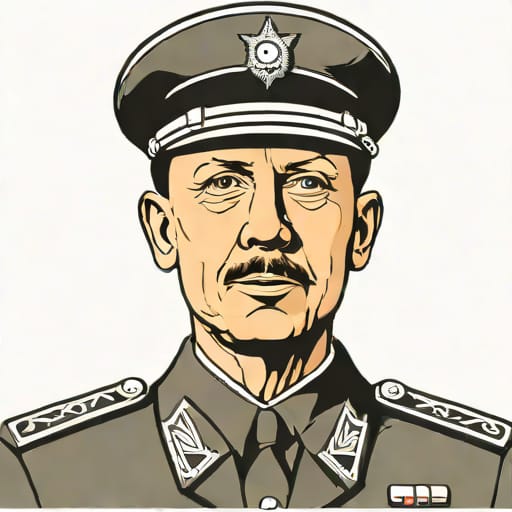
Joseph Goebbels and Heinrich Himmler were two of the most notorious figures in Nazi Germany, each playing a critical role in shaping the ideology, policies, and execution of the Third Reich. Goebbels, as the Reich Minister of Propaganda, wielded immense influence over German public opinion, using media, speeches, and cultural manipulation to enforce Nazi ideology. Himmler, as the head of the SS and chief architect of the concentration and extermination camp system, was central to the regime’s machinery of terror and genocide. Understanding the roles, motivations, and impact of Goebbels and Himmler is essential to grasp the inner workings of the Nazi state and the devastating consequences of their actions during World War II.
Early Lives and Rise to Power
Joseph Goebbels was born in 1897 in Rheydt, Germany. Despite physical disabilities and health challenges, he excelled academically, particularly in literature and history, which laid the groundwork for his later career in propaganda. His early fascination with nationalist ideology and anti-Semitism eventually drew him to the Nazi Party, where his talent for communication and persuasion quickly became apparent. Goebbels’ rise was marked by his ability to craft compelling narratives, influencing public sentiment and consolidating support for Adolf Hitler.
Heinrich Himmler was born in 1900 in Munich. Coming from a conservative, middle-class background, Himmler initially pursued agriculture before joining the Nazi Party in the early 1920s. His organizational skills, strict discipline, and ideological zeal earned him rapid promotion within the party ranks. Himmler’s vision of a racially pure Germany aligned closely with Nazi ideology, and he eventually became the head of the SS, responsible for enforcing party policies and maintaining internal security.
Roles in the Nazi Regime
Joseph Goebbels Master of Propaganda
Goebbels’ primary role in the Nazi state was to control information and manipulate public perception. As Reich Minister of Propaganda, he directed all media, including newspapers, radio broadcasts, films, and literature, ensuring that messages consistently promoted Nazi ideology. His work involved glorifying Hitler, demonizing perceived enemies such as Jews and communists, and fostering a culture of unwavering loyalty to the state.
Goebbels’ propaganda techniques were sophisticated and psychologically targeted. He employed repetition, emotional appeals, and staged events to influence public opinion. During wartime, his messaging emphasized national unity, the threat of external enemies, and the moral imperative of the Nazi cause. By shaping the German populace’s perceptions and attitudes, Goebbels became a central figure in sustaining the regime’s control.
Heinrich Himmler Architect of Terror
Himmler’s power lay in his role as head of the SS, the paramilitary organization tasked with enforcing Nazi policies, suppressing opposition, and implementing racial purity laws. He oversaw the Gestapo, concentration camps, and extermination camps, coordinating mass arrests, forced labor, and systematic genocide. Himmler’s vision extended to reshaping German society along ideological lines, promoting strict obedience, and enforcing the racial hierarchy that underpinned Nazi beliefs.
Himmler was meticulous and highly bureaucratic, organizing the SS with a focus on efficiency and control. His administrative skill allowed the SS to expand rapidly, encompassing military, intelligence, and policing functions. Under his leadership, the SS became the primary instrument of terror in Nazi Germany, responsible for countless atrocities committed against Jews, Romani people, political opponents, and other targeted groups.
Ideology and Personal Motivations
Goebbels’ Ideological Commitment
Joseph Goebbels was deeply committed to Nazi ideology, particularly its anti-Semitic and nationalist components. His speeches and writings reveal a personal obsession with promoting the party’s agenda and ensuring Hitler’s dominance. Goebbels believed in the transformative power of propaganda to reshape society, viewing it as both a weapon and a moral duty. His unwavering loyalty to Hitler and the Nazi cause defined his professional life, culminating in his decision to commit suicide alongside his family in Hitler’s bunker in 1945.
Himmler’s Vision of Racial Purity
Heinrich Himmler was motivated by a radical vision of racial hygiene and the creation of a master race. He sought to engineer a society based on Nazi racial principles, using science, pseudoscience, and brutal enforcement measures. Himmler’s obsession with racial ideology drove the policies of the SS and the systemic persecution of millions. Unlike Goebbels, Himmler combined ideological zeal with an almost obsessive interest in organizational control, making him a key figure in the execution of the Holocaust.
Collaboration and Interaction
Although Goebbels and Himmler operated in different spheres propaganda and security they shared a mutual commitment to Nazi objectives and frequently coordinated their efforts. Goebbels relied on Himmler’s SS to create newsworthy events and maintain the regime’s image of power and control, while Himmler utilized propaganda to justify and legitimize his policies of terror. Their collaboration exemplified the integration of ideology, media, and coercion that defined the Nazi state.
Mutual Reinforcement of Power
Propaganda and terror were mutually reinforcing tools. Goebbels’ messaging glorified the SS and framed its actions as necessary for national survival, while Himmler’s enforcement created dramatic material for propaganda campaigns. This synergy ensured that the German population was both persuaded by messaging and intimidated by the visible consequences of dissent.
Impact and Historical Legacy
The actions of Joseph Goebbels and Heinrich Himmler left a lasting imprint on history, illustrating the destructive power of totalitarian systems. Goebbels’ mastery of propaganda demonstrated how media could manipulate thought, opinion, and loyalty on a massive scale. Himmler’s role in orchestrating terror and genocide revealed the bureaucratic mechanisms that can enable large-scale atrocities. Together, they contributed to some of the darkest chapters in modern history, highlighting the dangers of unchecked ideological fanaticism and authoritarian control.
Lessons from Their Roles
- The importance of critical thinking and media literacy to resist propaganda.
- The dangers of absolute power concentrated in a few individuals with extremist ideologies.
- Recognition of the human capacity for both manipulation and cruelty when ideology is prioritized over ethics.
- The necessity of historical awareness to prevent repetition of such atrocities.
Joseph Goebbels and Heinrich Himmler were central to the functioning and atrocities of Nazi Germany, representing the dual instruments of manipulation and terror. Goebbels’ propaganda shaped public perception, reinforced loyalty, and spread Nazi ideology, while Himmler’s SS executed policies of racial persecution, political repression, and mass murder. Their collaboration and individual ambitions exemplify how totalitarian regimes operate through a combination of psychological control and violent enforcement. Studying their lives and actions provides insight into the mechanisms of dictatorship, the consequences of extremist ideologies, and the critical importance of vigilance against propaganda and authoritarian power in modern societies.