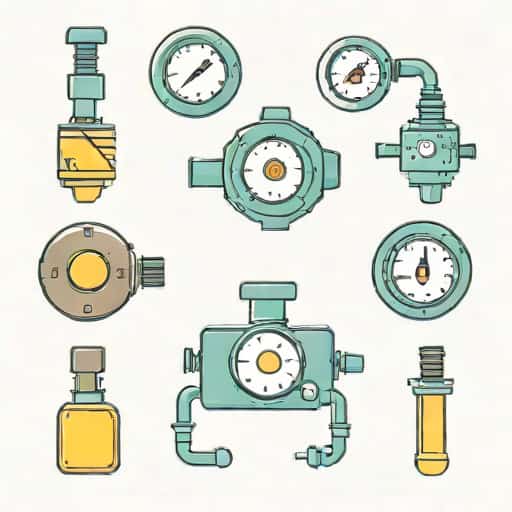
Pressure switches are critical components in many industrial, commercial, and residential systems, controlling the operation of pumps, compressors, and other devices based on fluid or air pressure levels. While many pressure switches come with adjustable settings, allowing users to fine-tune cut-in and cut-out points, some pressure switches are designed to be nonadjustable. These nonadjustable switches are often chosen for their reliability, safety, and simplicity. Understanding why certain pressure switches are nonadjustable provides insight into their design, applications, and the engineering principles that guide their use in systems where stability and safety are paramount.
Definition and Function of Pressure Switches
A pressure switch is a device that monitors the pressure of a gas or liquid and triggers an electrical contact when the pressure reaches a predefined point. These switches are used to start or stop equipment, alert operators to abnormal conditions, and maintain system safety. In adjustable switches, the cut-in and cut-out pressures can be modified by the user. Nonadjustable pressure switches, however, are factory-set to specific pressure points and cannot be altered without modifying or replacing the device.
Basic Components
Most pressure switches, whether adjustable or nonadjustable, share common components
- Sensing elementThis could be a diaphragm, bellows, or piston that reacts to pressure changes.
- Actuator mechanismTransfers the movement of the sensing element to trigger the electrical contact.
- Electrical contactsOpens or closes the circuit when the pressure threshold is reached.
- HousingProtects internal components from environmental factors.
In nonadjustable switches, the internal mechanism is calibrated at the factory to operate at a fixed pressure range, eliminating the need for field adjustments.
Reasons for Nonadjustable Design
Nonadjustable pressure switches are designed for specific applications where precise pressure settings are required, and human intervention could compromise safety or system performance. There are several reasons why a manufacturer or engineer might choose a nonadjustable switch over an adjustable one.
1. Safety Considerations
One of the primary reasons for using nonadjustable pressure switches is safety. In systems where incorrect pressure settings could lead to equipment damage, personal injury, or environmental hazards, nonadjustable switches provide a reliable safeguard. By setting the pressure threshold at the factory, manufacturers can ensure the switch operates within safe limits. Users cannot inadvertently set the switch to a dangerous level, reducing the risk of overpressure situations, explosions, or pump failures.
2. Consistency and Reliability
Nonadjustable pressure switches offer consistent performance because their settings are fixed. In critical applications, such as medical equipment, fire suppression systems, or industrial automation, consistent operation is essential. Adjustable switches may drift over time due to mechanical wear or improper adjustments, whereas nonadjustable switches maintain their reliability over the lifespan of the device.
3. Cost-Effectiveness
Nonadjustable switches can be more cost-effective for manufacturers and end-users. Because they do not include adjustment mechanisms, the design is simpler, production costs are lower, and there are fewer components that could fail. For large-scale installations where uniform performance is required across multiple units, using nonadjustable switches reduces the need for calibration in the field and lowers maintenance expenses.
4. Simplicity of Use
Nonadjustable switches are straightforward to install and operate. Users do not need technical knowledge to set pressure thresholds, which reduces installation errors and simplifies training for personnel. This simplicity is particularly valuable in residential or commercial systems, such as water pumps or HVAC units, where end-users may not have specialized technical skills.
Applications of Nonadjustable Pressure Switches
Nonadjustable pressure switches are used in applications where precision, safety, and reliability are critical. Some common examples include
- Industrial systemsAutomated machinery, hydraulic presses, and pneumatic equipment often require fixed pressure thresholds to prevent accidents and maintain performance.
- Residential water systemsPressure switches in home water pumps are often nonadjustable to ensure consistent cut-in and cut-out points, preventing damage to pumps and plumbing.
- Medical devicesEquipment such as oxygen regulators or dialysis machines use nonadjustable switches to maintain precise pressure levels essential for patient safety.
- Safety relief applicationsIn systems where overpressure could lead to explosions or environmental contamination, nonadjustable switches provide a fail-safe mechanism.
Comparison with Adjustable Pressure Switches
While adjustable pressure switches provide flexibility for system customization, nonadjustable switches are preferred in applications where safety and consistency outweigh the need for flexibility. Adjustable switches can be prone to incorrect settings if adjusted improperly, leading to malfunctions or hazards. Nonadjustable switches eliminate this risk by maintaining factory-calibrated settings.
- Adjustable switches Allow customization, require calibration, potential for human error.
- Nonadjustable switches Fixed settings, reliable operation, minimal maintenance, safer in critical applications.
Design Considerations for Nonadjustable Pressure Switches
When designing a nonadjustable pressure switch, manufacturers carefully consider factors such as the maximum allowable pressure, operating environment, and material compatibility. The factory calibration process ensures that each switch operates accurately within its specified range. Additionally, designers often include safety margins to accommodate pressure fluctuations without compromising system integrity.
Material and Durability
Nonadjustable switches are typically built with durable materials to ensure long-term reliability. Stainless steel, brass, and specialized polymers are commonly used for sensing elements and housings. These materials resist corrosion, mechanical wear, and environmental factors such as temperature extremes or chemical exposure, ensuring that the switch performs consistently throughout its service life.
Calibration and Testing
Before leaving the factory, nonadjustable pressure switches undergo rigorous calibration and testing. Each unit is verified to operate at its designated pressure threshold. Quality control measures ensure that the switches meet regulatory standards and provide predictable, repeatable performance. This meticulous process contributes to the safety, reliability, and trustworthiness of nonadjustable pressure switches in critical applications.
Some pressure switches are nonadjustable because safety, reliability, consistency, and simplicity are prioritized over flexibility. Designed to operate at a fixed pressure threshold, nonadjustable switches reduce the risk of human error, provide dependable performance, and simplify installation and maintenance. They are widely used in industrial, commercial, and residential systems where precise pressure control is essential, such as medical devices, safety relief systems, and water pumps. By eliminating adjustment mechanisms, manufacturers ensure that these switches maintain long-term reliability and protect both equipment and users. Understanding the reasons behind nonadjustable pressure switch designs helps engineers, technicians, and end-users make informed decisions when selecting components for pressure-sensitive systems.