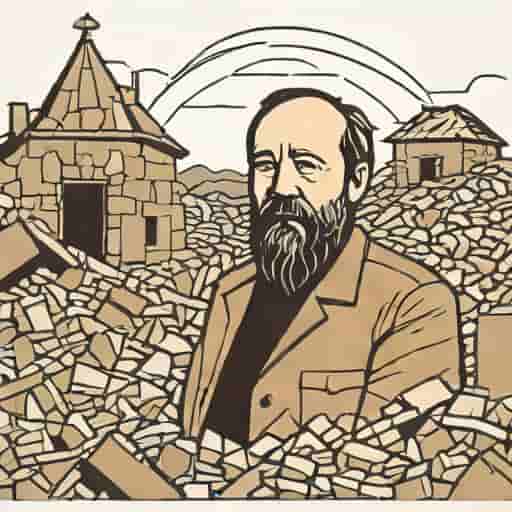
Aleksandr Solzhenitsyn is widely recognized as one of the most influential literary figures of the 20th century, known for his unflinching exploration of human suffering, moral courage, and the consequences of totalitarianism. Among his many works, From Under the Rubble stands out as a profound reflection on the social, political, and moral conditions of the Soviet Union. Written during a time of intense censorship and political repression, this collection of essays and commentaries showcases Solzhenitsyn’s commitment to truth, justice, and moral responsibility. Through his incisive critique, he challenges readers to confront uncomfortable realities and consider the ethical implications of societal and individual actions. Understanding the context, themes, and impact of From Under the Rubble reveals why this work remains relevant and powerful even decades after its publication.
Background of Aleksandr Solzhenitsyn
Aleksandr Solzhenitsyn was born in 1918 in Kislovodsk, Russia, and lived through some of the most turbulent periods in Soviet history, including World War II and Stalin’s repressive regime. His early experiences as a soldier and his later imprisonment in the Soviet labor camps deeply influenced his writing. Solzhenitsyn’s work often blends personal narrative with broader social critique, creating a unique literary voice that is both intimate and politically charged. From Under the Rubble exemplifies this approach, combining keen observation, moral reflection, and literary skill to expose the underlying issues plaguing Soviet society.
Context of From Under the Rubble
From Under the Rubble was written in the 1960s, a time when the Soviet Union was experiencing both political stagnation and social tension. While the official narrative promoted prosperity and ideological unity, Solzhenitsyn’s essays revealed the reality of corruption, moral decay, and the silencing of independent thought. The title itself evokes a powerful image of reconstruction and revelation, suggesting that beneath the surface of official propaganda lies a landscape of human suffering and ethical neglect. By addressing these issues, Solzhenitsyn sought to awaken the conscience of his readers and encourage a moral reckoning.
Main Themes of From Under the Rubble
Solzhenitsyn’s essays in From Under the Rubble cover a wide range of social, political, and moral topics. Several key themes recur throughout the work, providing insight into his worldview and literary mission.
Moral Responsibility
One of the central themes is the idea of moral responsibility, both at the individual and societal level. Solzhenitsyn argues that citizens cannot remain passive in the face of injustice, corruption, and moral decay. He challenges readers to examine their own ethical standards and consider how their actions-or inactions-affect the broader community. This theme underscores the author’s belief that a healthy society depends on the moral courage of its members.
Critique of Totalitarianism
Solzhenitsyn’s work is also a powerful critique of the totalitarian state. He exposes the mechanisms of control, fear, and propaganda used by the Soviet regime to maintain power. By highlighting the discrepancy between official rhetoric and lived reality, he encourages readers to question authority and resist complicity in systemic oppression. His insights extend beyond the Soviet context, offering lessons on the dangers of unchecked political power in any society.
Human Suffering and Resilience
Another recurring theme is the exploration of human suffering and resilience. Solzhenitsyn often draws on personal experiences and observations of fellow citizens to illustrate the physical, emotional, and spiritual toll of oppression. Despite the bleakness of these accounts, the essays frequently emphasize the capacity for endurance, courage, and moral integrity. Through this focus, Solzhenitsyn conveys a message of hope and the possibility of ethical renewal even in dire circumstances.
Importance of Truth and Conscience
From Under the Rubble stresses the critical role of truth and individual conscience. Solzhenitsyn asserts that societies cannot flourish without honesty, transparency, and a commitment to ethical principles. By challenging official narratives and exposing social hypocrisy, he demonstrates that moral and intellectual integrity are essential for meaningful human existence. The pursuit of truth becomes not only a personal endeavor but a societal imperative.
Literary Style and Techniques
Solzhenitsyn employs a variety of literary techniques in From Under the Rubble to convey his ideas effectively. His style combines analytical prose, narrative reflection, and poignant examples from real life, creating a compelling blend of philosophy and literature. He often uses vivid imagery, metaphor, and anecdotal evidence to illustrate abstract moral concepts, making his essays both intellectually engaging and emotionally resonant.
Use of Personal Experience
Drawing on his own life and experiences in labor camps and military service, Solzhenitsyn grounds his critiques in reality. This personal perspective lends credibility to his observations and allows readers to connect with the human dimension of social and political issues. By intertwining personal narrative with broader social critique, he effectively humanizes the consequences of systemic injustice.
Analytical Approach
Solzhenitsyn’s essays demonstrate a rigorous analytical approach, examining historical, social, and cultural factors that contribute to moral decay. He dissects policies, behaviors, and institutional failures with precision, offering insights that are both critical and constructive. This method encourages readers to think deeply about cause-and-effect relationships in society and the role of ethics in shaping social outcomes.
Impact and Legacy
From Under the Rubble has had a lasting impact on literature, philosophy, and political thought. Solzhenitsyn’s fearless critique of the Soviet system inspired other writers, intellectuals, and dissidents to speak out against oppression and advocate for reform. His emphasis on moral responsibility and ethical reflection resonates across generations, highlighting the enduring relevance of his work.
Influence on Literature
Solzhenitsyn’s essays helped redefine Soviet literature, blending moral inquiry with social critique. His work demonstrated that literature could serve as a vehicle for ethical reflection and societal transformation, influencing both contemporary and later writers who sought to address social and political issues through their art.
Political and Social Relevance
Beyond literature, From Under the Rubble contributed to broader discussions on political accountability, human rights, and ethical governance. By exposing systemic injustices and advocating moral integrity, Solzhenitsyn’s work provided a blueprint for ethical engagement in society, emphasizing the importance of individual action in shaping collective outcomes.
From Under the Rubble by Aleksandr Solzhenitsyn is a seminal work that combines literary excellence with profound moral and social critique. Through his essays, Solzhenitsyn addresses themes of moral responsibility, human suffering, resilience, and the pursuit of truth, offering both a critique of totalitarianism and a vision of ethical renewal. His skillful use of personal narrative, analytical rigor, and vivid imagery makes the work accessible, compelling, and intellectually stimulating. Decades after its publication, From Under the Rubble remains a vital contribution to literature and philosophy, challenging readers to confront uncomfortable realities and embrace moral courage. By engaging with this work, readers not only gain insight into Soviet history but also develop a deeper understanding of universal ethical principles, highlighting the enduring significance of Aleksandr Solzhenitsyn’s literary and moral legacy.