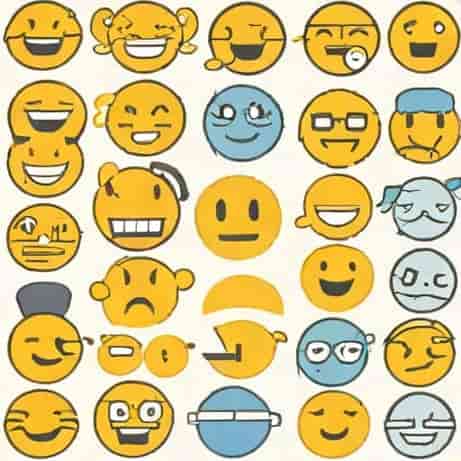
In everyday digital communication, emojis have become a natural part of how people express emotions, intentions, and reactions. They appear in text messages, social media posts, emails, and even professional chats. As their use has grown, researchers and language users alike have begun asking deeper questions about their role in communication. One common question is whether emojis are considered gestural and visual. Exploring this idea helps us understand how emojis function as more than decoration and how they connect to human interaction in meaningful ways.
Understanding Gestural and Visual Communication
To understand whether emojis are gestural and visual, it is important to first define these terms. Gestural communication refers to the use of body movements, such as hand gestures, facial expressions, and posture, to convey meaning. These gestures often accompany spoken language and add emotional or contextual information.
Visual communication, on the other hand, involves conveying information through visual elements. This can include images, symbols, colors, and spatial arrangements that communicate ideas without relying solely on words.
How Humans Use Gestures
In face-to-face interaction, gestures play a crucial role. A smile, a raised eyebrow, or a wave of the hand can communicate feelings or intentions instantly.
These nonverbal cues often clarify or even replace spoken language.
What Are Emojis in Digital Communication?
Emojis are small pictorial symbols used in digital text to represent emotions, objects, actions, or ideas. They evolved from simple text-based emoticons into a rich visual system supported across devices and platforms.
Although emojis are digital symbols, their purpose often mirrors nonverbal communication in real life.
The Evolution of Emojis
Originally, emojis were simple representations of facial expressions. Over time, they expanded to include gestures, animals, food, symbols, and abstract concepts.
This expansion has allowed emojis to function as a flexible and expressive communication tool.
Are Emojis Visual by Nature?
Emojis are undeniably visual. They rely on images rather than alphabetic text to convey meaning. When someone uses an emoji, the message is processed visually by the reader.
This visual quality allows emojis to communicate quickly and across language barriers.
Visual Symbols and Meaning
Like other visual symbols, emojis carry meaning through shape, color, and design. A smiling face suggests happiness, while a red heart often symbolizes love.
Because these meanings are widely shared, emojis function as a form of visual language.
Emojis as Digital Gestures
Many scholars argue that emojis can be considered gestural because they represent actions or expressions that would normally be conveyed through physical gestures. For example, a thumbs-up emoji mimics a common hand gesture used to show approval.
Similarly, facial expression emojis replicate smiles, frowns, or surprise.
Replacing Physical Gestures
In text-based communication, physical gestures are absent. Emojis help fill this gap by providing a visual substitute for gestures that would normally occur in person.
This makes messages feel more personal and emotionally rich.
Facial Expressions and Emotional Cues
Facial expressions are a key part of gestural communication. Emojis that depict faces closely resemble these expressions and serve a similar function.
They help convey tone, mood, and emotional intent that might otherwise be misunderstood in plain text.
Reducing Misinterpretation
Text alone can be ambiguous. Adding an emoji can clarify whether a statement is meant to be serious, sarcastic, or playful.
In this way, emojis act like facial cues in spoken conversation.
Emojis and Multimodal Communication
Communication that combines different modes, such as text and visuals, is known as multimodal communication. Emojis fit naturally into this framework.
They combine visual imagery with written language to create richer messages.
Blending Text and Gesture
When used alongside words, emojis enhance meaning rather than replace it entirely. They add layers of expression similar to how gestures support speech.
This blend makes digital communication more expressive and human-like.
Cultural Interpretation of Emojis
Just like gestures, emojis can be interpreted differently across cultures. A gesture that is positive in one culture may have a different meaning in another.
Emojis share this characteristic, which supports the idea that they function like digital gestures.
Shared and Contextual Meaning
While many emojis have widely accepted meanings, context still matters. The same emoji can convey different messages depending on how and where it is used.
This flexibility is similar to how gestures work in real-life interactions.
Differences Between Emojis and Physical Gestures
Although emojis resemble gestures, they are not identical. Physical gestures involve movement, timing, and spatial awareness. Emojis are static images displayed on a screen.
Despite this limitation, emojis still capture the essence of gestural communication.
Static Versus Dynamic Expression
Gestures change over time and can vary in intensity. Emojis present a fixed representation of a gesture or expression.
Even so, their consistent appearance can make communication clearer.
Emojis in Linguistic and Communication Studies
Researchers in linguistics and communication studies increasingly study emojis as part of modern language use. Some view them as a new form of paralinguistic feature.
Paralinguistic elements are aspects of communication that accompany language, such as tone and gestures.
Emojis as Paralinguistic Markers
Emojis often function similarly to tone of voice or facial expressions. They modify or reinforce the meaning of a message.
This role supports the idea that emojis are both gestural and visual.
Practical Examples of Gestural Emojis
Many emojis directly represent gestures commonly used in face-to-face interaction.
- Thumbs-up for approval
- Clapping hands for praise
- Waving hand for greeting
- Facepalm for frustration
These examples clearly mirror real-world gestures.
The Role of Emojis in Modern Communication
As communication increasingly moves online, emojis help maintain emotional and social connection. They make messages feel warmer and more expressive.
This is especially important in environments where tone and body language are absent.
Emotional Connection in Digital Spaces
Emojis help build rapport and understanding. They soften messages and create a sense of presence.
In this way, they function much like gestures in physical conversation.
Are Emojis Considered Gestural and Visual?
Based on their function and usage, emojis can be considered both gestural and visual. They are visual symbols that represent gestures, facial expressions, and emotional cues.
While they differ from physical gestures, they serve a similar communicative purpose in digital contexts.
A New Form of Nonverbal Language
Emojis represent an evolution in how humans communicate nonverbally. They translate gestures and expressions into a visual digital format.
As digital communication continues to grow, emojis will likely remain an important bridge between written text and human emotion. Understanding them as gestural and visual helps explain why they are so powerful and widely used in modern communication.