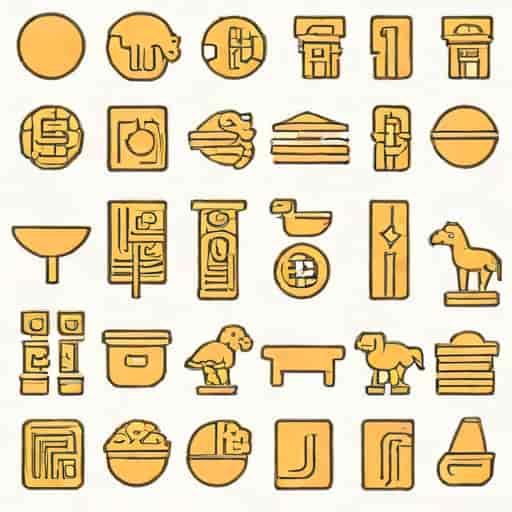
Throughout human history, people have found ways to communicate ideas visually long before written alphabets were developed. Two of the most fascinating examples of early visual communication are pictograms and hieroglyphs. While both rely on pictures and symbols, they serve different purposes and represent distinct stages in the evolution of writing. Understanding the difference between pictogram and hieroglyphs helps us trace how human societies moved from simple visual signs to complex systems of recorded language that could express thoughts, beliefs, and history.
What Is a Pictogram?
A pictogram, also known as a pictograph, is a visual symbol that represents an object, concept, or idea through imagery. Pictograms are among the earliest forms of communication used by humans. They rely entirely on recognizable images-drawings of animals, tools, people, or natural elements-to convey meaning without the use of words or sounds. In essence, pictograms are pictures that speak for themselves.
For example, a picture of the sun could stand for daylight, warmth, or the sun itself. Similarly, an image of a fish could represent fishing, water, or food. The meaning of each pictogram depends heavily on context and cultural understanding. Because pictograms are based on shared visual recognition, they can be understood even by people who speak different languages.
Common Characteristics of Pictograms
- They use simple, recognizable images to represent real-world objects or ideas.
- Pictograms do not represent sounds or spoken words.
- They are often used in universal communication, such as road signs or safety labels.
- Pictograms were used in ancient cave paintings, early trade records, and visual storytelling.
Modern examples of pictograms still exist today. Icons on smartphones, restroom signs, and airport symbols all descend from the ancient concept of pictorial communication. Their ability to convey information instantly makes them timeless and practical.
What Are Hieroglyphs?
Hieroglyphs, on the other hand, represent a more advanced stage of written communication. The word hieroglyph comes from Greek, meaning sacred carving, because these symbols were originally used in temples and tombs by ancient Egyptians. Unlike simple pictograms, hieroglyphs form a structured writing system that combines pictures with phonetic and symbolic meaning.
Each hieroglyph could represent an object, an idea, or a specific sound. This made the Egyptian hieroglyphic system both artistic and linguistic. Hieroglyphs could spell out names, describe events, or record laws and religious texts. Over time, scribes developed hundreds of different hieroglyphic symbols, making the system one of the most sophisticated forms of ancient writing.
Key Features of Hieroglyphs
- Hieroglyphs combine pictures with phonetic values, allowing them to represent spoken language.
- They form part of a complete writing system, not just isolated symbols.
- They were used primarily by ancient Egyptians for religious, governmental, and cultural purposes.
- Hieroglyphic inscriptions were often carved or painted on stone, papyrus, and walls.
While pictograms were used mainly for communication through imagery, hieroglyphs evolved into a complex language that could record history and express abstract ideas. This transformation marks one of the most important milestones in the development of human writing.
Main Difference Between Pictogram and Hieroglyphs
The main difference between a pictogram and hieroglyphs lies in their level of complexity and purpose. A pictogram is a picture that directly represents an object or idea, whereas hieroglyphs are part of a formal writing system that includes phonetic elements and grammatical structure. Pictograms are limited to visual representation, while hieroglyphs can represent speech and sound.
- RepresentationPictograms represent things; hieroglyphs represent both things and sounds.
- FunctionPictograms convey meaning through imagery, while hieroglyphs record spoken language.
- ComplexityPictograms are simple and universal; hieroglyphs are detailed and require specific knowledge to interpret.
- UsePictograms are used for quick, visual communication; hieroglyphs were used for writing and documentation.
How Pictograms Evolved into Hieroglyphs
The transition from pictograms to hieroglyphs did not happen overnight. Early societies used pictograms as the foundation for recording events or managing trade. Over time, people began to associate certain pictures with sounds or syllables. This phonetic shift allowed symbols to represent not only objects but also spoken words, opening the door to written language.
In ancient Egypt, for example, a picture of an owl represented the sound m. Similarly, a reed leaf symbolized the sound i. By combining these phonetic signs, scribes could write complex words, names, and sentences. Thus, hieroglyphs became a blend of pictorial and phonetic writing, bridging the gap between art and language.
Examples of Pictograms and Hieroglyphs
To better understand the difference between pictogram and hieroglyphs, it helps to look at examples of each type.
Examples of Pictograms
- Cave paintings showing animals and hunting scenes in Lascaux, France.
- Symbols representing grain, livestock, or tools in ancient Mesopotamian trade records.
- Modern public symbols, like a knife and fork for restaurants or a bed for hotels.
Examples of Hieroglyphs
- The Eye of Horus, symbolizing protection and royal power in ancient Egypt.
- The scarab beetle, representing rebirth and the cycle of life.
- Combinations of symbols that spell out royal names, such as Tutankhamun.
These examples show that while pictograms are purely visual, hieroglyphs serve both visual and linguistic purposes, enabling the expression of complete ideas and narratives.
The Role of Context in Interpretation
Context plays a vital role in interpreting both pictograms and hieroglyphs. A pictogram’s meaning can change based on cultural background or setting. For example, an image of a bird might symbolize freedom in one culture but represent a specific god or deity in another. Hieroglyphs, on the other hand, have standardized meanings within their writing system, though their interpretation still depends on surrounding symbols and grammatical rules.
Modern Relevance of Pictograms and Hieroglyphs
Even though hieroglyphs are no longer in common use, both pictograms and hieroglyphic concepts continue to influence modern design and communication. Pictograms are essential in digital interfaces, signage, and safety instructions, helping bridge language barriers across the globe. Meanwhile, hieroglyphs continue to fascinate historians, linguists, and artists for their beauty and complexity.
Archaeological discoveries of hieroglyphic texts have deepened our understanding of ancient Egyptian culture, religion, and governance. The famous Rosetta Stone, for example, allowed scholars to decipher hieroglyphs by comparing them with Greek text, revealing how intricate and intelligent this ancient writing system truly was.
Key Takeaways
- Pictograms are simple visual symbols representing objects or ideas.
- Hieroglyphs are part of a complex writing system that uses pictures to represent both objects and sounds.
- Pictograms can be understood across cultures, while hieroglyphs require knowledge of the specific language system.
- Pictograms came first historically, and hieroglyphs evolved from them.
The difference between pictogram and hieroglyphs lies at the heart of how humans learned to write and communicate abstractly. Pictograms served as the first step, allowing people to record events and convey meaning through shared imagery. Hieroglyphs built upon this foundation, adding structure, sound, and language to visual symbols. Together, they represent two essential stages in humanity’s journey from simple drawings to sophisticated writing systems. Understanding this evolution not only highlights human creativity but also reminds us that every written word today has its roots in a picture drawn thousands of years ago.