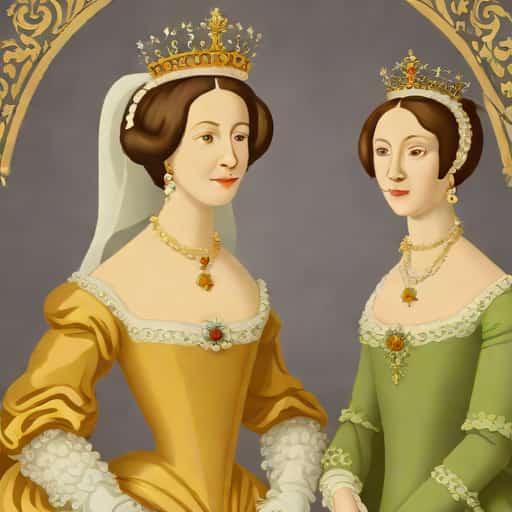
Queen Henrietta Maria, the French-born consort of King Charles I of England, is a historical figure remembered for her political influence, religious convictions, and the colorful court she maintained during a tumultuous period in English history. Among the most fascinating and unusual stories from her court is her association with Sir Jeffrey Hudson, often referred to as the Queen’s dwarf. Hudson became famous not only for his tiny stature but also for his remarkable presence, intelligence, and wit, which allowed him to become a notable figure in royal society. Their relationship provides insight into court life, social hierarchies, and the personal dynamics of the Stuart monarchy in the 17th century.
Introduction to Queen Henrietta Maria
Henrietta Maria of France was born in 1609 to King Henry IV of France and Marie de’ Medici. In 1625, she married Charles I of England, becoming queen consort. Her French Catholic upbringing distinguished her from the predominantly Protestant English court, often leading to political tension and intrigue. Despite these challenges, she maintained a vibrant court, encouraging the arts, fashion, and pageantry. Henrietta Maria’s personality was described as lively, intelligent, and sometimes controversial, reflecting her commitment to her beliefs and her determination to navigate a complex political landscape.
Her Role at Court
- Influencing royal policies, particularly related to religion and culture.
- Supporting the arts, music, and theater, creating a refined and sophisticated court environment.
- Navigating the challenges of being a Catholic queen in a Protestant country.
- Maintaining close relationships with attendants, courtiers, and unique figures like Sir Jeffrey Hudson.
- Serving as a symbol of French elegance and courtly sophistication in England.
Sir Jeffrey Hudson The Queen’s Courtly Dwarf
Sir Jeffrey Hudson was born in 1619 in Oakham, Rutland, England, and was known for his remarkably small stature, reportedly measuring only about 18 inches tall when first introduced to the queen’s court. Despite his size, Hudson was recognized for his intelligence, charm, and wit, qualities that allowed him to become a prominent figure in royal circles. He was presented to Queen Henrietta Maria during a famous pageant in 1626, which celebrated her arrival in England. Hudson’s unique position at court allowed him to participate in entertainment, diplomacy, and social events, often alongside the queen herself.
The Famous Presentation
The occasion that brought Hudson to prominence involved an elaborate court entertainment in which he appeared inside a large pie, emerging dramatically to the delight of the queen and her guests. This unusual introduction immediately captured the imagination of the royal court and cemented Hudson’s role as both an entertainer and a companion to Queen Henrietta Maria. His intelligence and courtly manners ensured that he was more than a novelty; he became a trusted figure in the queen’s inner circle.
The Relationship Between Henrietta Maria and Hudson
The bond between Queen Henrietta Maria and Sir Jeffrey Hudson was complex and multifaceted. Hudson served not only as an entertainer but also as a confidant and companion. Their interactions reflected both the whimsical aspects of court life and the deeper personal connections that could develop in royal households. Henrietta Maria valued Hudson’s wit, discretion, and loyalty, allowing him a unique level of access to court events and private audiences that was unusual for someone of his social standing.
Roles and Responsibilities
- Participating in court masques, pageants, and theatrical productions.
- Serving as a companion during official functions and private gatherings.
- Providing entertainment that combined humor, intelligence, and artistry.
- Occasionally acting as a messenger or intermediary in social and courtly matters.
- Maintaining a visible presence that reinforced the queen’s cultured and cosmopolitan court.
Court Life and Social Context
Understanding the relationship between Henrietta Maria and Hudson requires context about 17th-century English court life. The Stuart court was hierarchical, elaborate, and highly ceremonial. Entertainers, attendants, and unusual figures like Hudson often played important roles in reinforcing social structures and providing amusement for royalty and nobility. Henrietta Maria’s French background also brought elements of continental pageantry, fashion, and entertainment, which influenced how figures like Hudson were integrated into the court. His presence reflected both the queen’s taste for novelty and the broader cultural exchanges between France and England during this period.
Significance of Hudson’s Role
Sir Jeffrey Hudson’s significance extended beyond mere entertainment. As a member of the queen’s household, he symbolized the blending of whimsy and sophistication in court life. His participation in elaborate pageants and ceremonies demonstrated the queen’s support for theatrical culture and courtly spectacle. Hudson’s intelligence and diplomacy also meant that he could navigate complex social hierarchies, earning respect from both French and English courtiers. This duality of entertainment and influence highlights the unusual yet meaningful role he played at Henrietta Maria’s court.
Historical Events Involving Hudson
Hudson’s life at court was not without challenges. He witnessed significant political and military events, including the tensions leading up to the English Civil War. His closeness to the queen occasionally placed him in precarious situations, as royal households were subject to scrutiny and political conflict. Despite these challenges, Hudson continued to serve Henrietta Maria and remained a celebrated figure in her court, demonstrating loyalty and courage even in uncertain times.
Later Life and Legacy
- Hudson continued to serve in royal households, traveling to France and other locations during periods of political upheaval.
- He was knighted later in life, recognizing his service and contributions to the queen’s court.
- Historical accounts emphasize his wit, intelligence, and loyalty rather than simply his small stature.
- Hudson’s story became part of the cultural memory of Henrietta Maria’s court, symbolizing the unique and colorful nature of 17th-century royal households.
- His life illustrates the intersection of entertainment, politics, and personal relationships in early modern England.
The Cultural Impact of Their Association
The relationship between Queen Henrietta Maria and Sir Jeffrey Hudson offers insight into the culture of the Stuart court and the ways in which royalty used entertainment, pageantry, and personal relationships to project power and sophistication. Their association has been documented in paintings, literature, and historical accounts, emphasizing both the whimsical and strategic elements of court life. Hudson’s enduring fame demonstrates the fascination that unique figures could inspire when intertwined with prominent historical personalities.
Lessons from History
The story of Henrietta Maria and Hudson provides lessons about adaptability, intelligence, and the use of personality and charm in navigating complex social environments. It shows how individuals of unusual backgrounds could gain influence and respect through wit, loyalty, and skill, even in hierarchical societies. Additionally, their story highlights the ways in which queens and royal households used spectacle and entertainment to reinforce cultural prestige and maintain social cohesion.
The association of Queen Henrietta Maria with Sir Jeffrey Hudson remains one of the most memorable aspects of her court. Their relationship combined entertainment, loyalty, intelligence, and personal connection, offering a vivid glimpse into 17th-century court life. Hudson’s unique position as a courtly dwarf and trusted companion demonstrates the nuanced roles that individuals could play in royal households. Henrietta Maria’s taste for pageantry and her support for unusual figures like Hudson reveal a queen deeply engaged in cultural expression and social strategy. Together, they created a dynamic and colorful legacy that continues to capture the imagination of historians and enthusiasts of royal history alike.