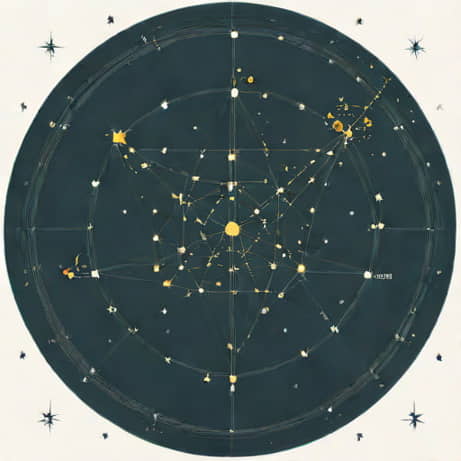
Among the many celestial formations observed and cataloged throughout history, the constellations described by the ancient Greek astronomer Claudius Ptolemy remain some of the most influential. Ptolemy, in his work the Almagest, identified 48 constellations that formed the basis of Western astronomy for centuries. These constellations, visible in both the Northern and Southern hemispheres, served as a framework for navigation, timekeeping, and the study of the stars. Each constellation carries its own mythology, symbolism, and scientific significance, making them not only tools for observation but also rich cultural artifacts that continue to inspire astronomers and stargazers today.
Ptolemy and the 48 Constellations
Claudius Ptolemy, who lived in the 2nd century CE, was a Greco-Egyptian scholar whose work in astronomy, geography, and mathematics laid the foundations for modern science. In the Almagest, Ptolemy cataloged 1,022 stars and organized them into 48 constellations, creating a systematic approach to the night sky. These constellations included some of the most recognizable patterns, such as Orion, Leo, and Scorpius. Ptolemy’s system was based on earlier Babylonian observations, enhanced by Greek mathematical and observational techniques, making it both practical and enduring.
Significance of Constellations
Constellations have served multiple purposes throughout history. They are essential for
- Navigation Sailors and travelers used constellations to determine direction and latitude.
- Timekeeping Seasonal changes and the appearance of certain constellations helped ancient civilizations mark time and predict agricultural cycles.
- Cultural storytelling Each constellation often carries mythological stories and cultural significance.
- Scientific observation Constellations provide a framework for locating stars and tracking celestial events.
One of Ptolemy’s Constellations Orion
Orion, often called The Hunter, is one of the most famous of Ptolemy’s 48 constellations. Its bright stars and distinct shape make it easily recognizable in the night sky. Orion is visible from almost every part of the Earth and has been important in both historical navigation and modern astronomy. The constellation is named after a hunter in Greek mythology and is associated with a rich array of myths involving gods, heroes, and celestial battles.
Stars of Orion
Orion contains several prominent stars that have been studied for centuries. Some key stars include
- Betelgeuse A red supergiant marking Orion’s shoulder.
- Rigel A blue supergiant representing Orion’s foot.
- Bellatrix Another bright star forming Orion’s other shoulder.
- The Orion Belt Three aligned stars-Alnitak, Alnilam, and Mintaka-forming the famous belt.
These stars not only define the constellation visually but also serve as reference points for locating other celestial objects, such as nebulae and galaxies, within the same region of the sky.
Mythology and Cultural Impact
Orion’s mythology has influenced literature, art, and folklore across different civilizations. In Greek mythology, Orion was a giant hunter placed among the stars by Zeus after his death. The stories often involve themes of heroism, love, and tragedy, reflecting human fascination with the night sky. Other cultures have their interpretations as well, such as the Egyptians, who linked Orion with Osiris, the god of the afterlife, associating the constellation with resurrection and cosmic order.
Scientific Relevance Today
Orion remains significant in modern astronomy. The Orion Nebula, located below the Belt, is one of the closest regions of star formation visible to the naked eye. Astronomers study this nebula to understand the processes of stellar birth, gas dynamics, and the evolution of planetary systems. Observations of Orion also contribute to the calibration of astronomical instruments and the study of variable stars like Betelgeuse, which recently gained attention for its unusual dimming events.
Observing Orion and Other Ptolemaic Constellations
Orion is best visible in the winter months in the Northern Hemisphere and during summer in the Southern Hemisphere. Its brightness and position near the celestial equator make it an accessible and reliable guide for both amateur stargazers and professional astronomers. Observing Orion allows one to connect with the long history of astronomy, tracing back to Ptolemy’s careful cataloging of the stars.
Other Notable Constellations by Ptolemy
While Orion is perhaps the most recognizable, Ptolemy’s 48 constellations include many other important formations, such as
- Leo, the Lion
- Scorpius, the Scorpion
- Ursa Major, the Great Bear
- Cygnus, the Swan
- Andromeda, the Princess
Each of these constellations has unique stars, myths, and observational significance, forming a comprehensive map of the night sky that guided centuries of astronomical research.
Legacy of Ptolemy’s Work
Ptolemy’s identification and documentation of 48 constellations established a lasting framework for the study of astronomy. His work influenced Islamic, medieval European, and Renaissance astronomy, shaping star charts and navigational tools. Modern astronomy continues to recognize many of these constellations, although additional constellations were added to cover the southern hemisphere comprehensively. Ptolemy’s emphasis on systematic observation, measurement, and cataloging laid the groundwork for the scientific approach to celestial mapping.
Connecting Myth and Science
One of the enduring features of Ptolemy’s constellations is their combination of mythological and scientific value. While ancient stories provide cultural context and fascination, the constellations also function as precise tools for identifying stars and navigating the cosmos. This duality demonstrates how science and storytelling can coexist, enhancing both understanding and appreciation of the night sky.
One of the 48 constellations described by Ptolemy, such as Orion, represents more than a pattern of stars; it embodies centuries of human curiosity, myth, and scientific advancement. Ptolemy’s cataloging of constellations created a framework for navigation, observation, and cultural storytelling that continues to influence astronomy today. From the bright stars of Orion to the subtle patterns of other constellations, each formation contributes to a rich tapestry of celestial knowledge. By studying these constellations, we connect with both our shared cultural heritage and the scientific principles that continue to expand our understanding of the universe.