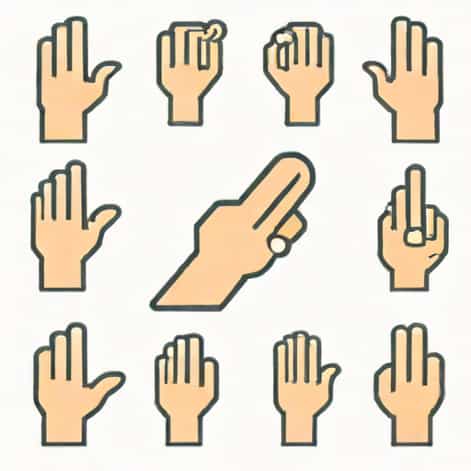
The human hand is a remarkable structure, designed for precision, strength, and dexterity. Among the five fingers, each has a distinct function and role, contributing to the overall capability of the hand. One of the most important fingers in terms of interaction with the environment is the forefinger, also known as the index finger. This finger plays a vital role in pointing, grasping, typing, and manipulating objects. Understanding which one is your forefinger and its anatomical, functional, and practical significance can enhance awareness of hand usage and improve efficiency in daily tasks.
Identifying the Forefinger
The forefinger is the finger located next to the thumb, positioned between the thumb and the middle finger. In most people, it is the second digit of the hand when counting from the thumb side. Commonly called the index finger, it is often used to indicate direction, press buttons, or interact with touchscreens. Anatomically, the forefinger has three phalanges the proximal, middle, and distal phalanges, connected by joints that allow flexibility and movement.
Distinguishing Features
While all fingers share similar structures, the forefinger can be distinguished by its length, position, and functional prominence
- PositionThe forefinger is located immediately after the thumb, making it the second digit of the hand.
- LengthIt is usually slightly shorter than the middle finger but longer than the ring finger and pinky.
- FunctionIt is the most commonly used finger for pointing, pressing, and manipulating small objects.
- SensationThe forefinger is highly sensitive due to the dense concentration of nerve endings, allowing precise tactile feedback.
Functions of the Forefinger
The forefinger has several vital functions that make it one of the most versatile digits in the human hand
Pointing and Communication
Humans frequently use the forefinger to point at objects, directions, or individuals. Pointing with the forefinger is a universal form of non-verbal communication that conveys attention, direction, or instruction. In addition to pointing, the forefinger is often used in gestures, such as signaling number one or emphasizing a statement during conversation.
Grasping and Precision Tasks
Alongside the thumb, the forefinger forms the primary grip known as the precision pinch. This grip allows humans to hold small objects, write, type, or operate tools effectively. The fine motor control of the forefinger enables delicate tasks, such as threading a needle, playing musical instruments, or using electronic devices.
Touchscreen and Typing Interaction
In the digital age, the forefinger has become essential for interacting with touchscreens and keyboards. Its dexterity and reach make it the preferred finger for tapping, scrolling, and selecting on smartphones, tablets, and computers. Typing efficiently on a keyboard often relies on proper positioning and movement of the forefinger to reach specific keys accurately.
Strength and Support
While it may not be the strongest finger, the forefinger contributes to hand strength, particularly in grips involving the thumb and middle finger. It assists in lifting, pushing, and stabilizing objects during various tasks, from household chores to professional work involving fine motor skills.
Anatomy of the Forefinger
The forefinger, like other fingers, is composed of bones, muscles, tendons, ligaments, and nerves that work together to provide movement and sensation. Key anatomical components include
Phalanges
The forefinger has three bones called phalanges the proximal phalanx (closest to the hand), the middle phalanx, and the distal phalanx (fingertip). These bones are connected by hinge joints that allow bending and straightening of the finger.
Muscles and Tendons
Movement of the forefinger is controlled by flexor and extensor muscles. Flexor tendons allow the finger to bend, while extensor tendons enable it to straighten. The intrinsic muscles of the hand also contribute to precise movements and coordination with other fingers.
Nerves and Sensation
The forefinger is highly sensitive due to the radial and median nerves, which provide sensory feedback. This sensitivity allows humans to detect textures, pressure, and temperature, making it ideal for tasks requiring accuracy and tactile awareness.
Forefinger in Daily Life
The forefinger is indispensable in everyday activities. Whether in work, play, or communication, it serves as a primary tool for interacting with the environment. Common uses include
- Pointing to objects or directions
- Pressing buttons, switches, or touchscreen devices
- Typing on keyboards or mobile devices
- Holding small tools or utensils with precision
- Performing intricate tasks like sewing, drawing, or crafting
Medical and Ergonomic Considerations
Due to its frequent use, the forefinger can be prone to strain or injury. Conditions such as tendinitis, carpal tunnel syndrome, or repetitive strain injury can affect its function. Proper ergonomics, regular breaks, and hand exercises can help maintain forefinger health and prevent discomfort from prolonged use.
Interesting Facts About the Forefinger
- The forefinger is often used as the primary finger for fingerprint identification due to its prominence and ease of access.
- In many cultures, the forefinger is associated with gestures indicating authority, emphasis, or direction.
- The term index finger comes from its common use for pointing or indicating items in the environment.
- Its combination with the thumb forms the most precise and versatile grip in the human hand.
Understanding which one is your forefinger and its importance highlights the complexity and utility of the human hand. This finger, positioned next to the thumb, is essential for pointing, grasping, typing, and performing intricate tasks. Its unique anatomy, sensitivity, and dexterity make it a critical tool in daily life, from communication to professional activities. Maintaining the health and functionality of the forefinger ensures effective interaction with the environment, emphasizing its significance as more than just a simple digit but a vital instrument for human capability and precision.