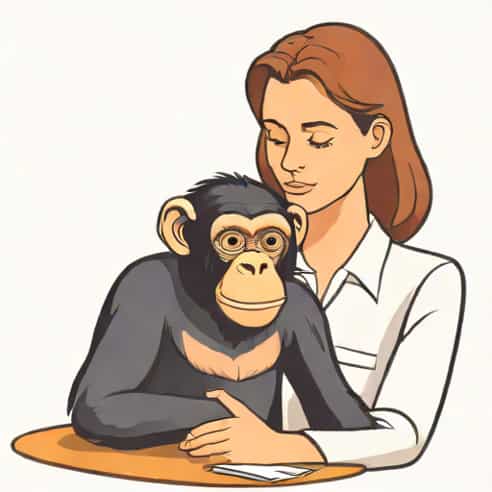
The lady who studied chimpanzees is widely known for her groundbreaking research in primatology, an area that has transformed our understanding of animal behavior and human evolution. Spending decades in the forests of Africa, she dedicated her life to observing chimpanzees in their natural habitat, recording their social interactions, communication methods, and problem-solving abilities. Her work revealed unexpected insights into the complexity of animal societies, the emotional depth of chimpanzees, and the parallels between human and primate behavior. Through patience, persistence, and careful observation, she challenged long-held assumptions and created a legacy that continues to inspire scientists and wildlife enthusiasts around the world.
Early Life and Inspiration
The lady who studied chimpanzees developed a fascination with animals at a very young age. Growing up, she often observed local wildlife and read extensively about natural history, which fueled her curiosity. Her interest in chimpanzees was sparked after learning about their intelligence and social structures, which seemed remarkably similar to human communities. Determined to pursue a career in research, she studied biology and ethology, focusing on primates. Early mentors and field experiences shaped her scientific approach, emphasizing careful observation, empathy, and the importance of long-term studies in understanding complex behaviors.
First Expeditions
Her first expeditions into the forests of Africa marked the beginning of a lifelong journey. Equipped with notebooks, binoculars, and an unwavering determination, she observed chimpanzee communities for hours, sometimes days, without disturbing their natural routines. She recorded patterns of grooming, feeding, and play, noting the hierarchy and relationships within the groups. These early experiences highlighted the challenges of fieldwork, including harsh weather, difficult terrain, and the unpredictability of wildlife. However, the rewards were immense, as she began to witness behaviors that had never been documented before, shedding light on the intelligence and adaptability of chimpanzees.
Major Discoveries
Over the years, the lady who studied chimpanzees made several significant discoveries that changed the scientific perspective on primates. She documented tool use among chimpanzees, showing that they could craft sticks to extract termites from mounds, a behavior previously thought to be uniquely human. She also observed complex social behaviors such as reconciliation after conflicts, cooperative hunting, and the establishment of alliances, revealing the sophisticated nature of chimpanzee societies. Additionally, her research demonstrated emotional expressions, such as grief, joy, and empathy, providing a window into the inner lives of these remarkable animals.
Impact on Science and Conservation
The impact of her work extended beyond academic circles, influencing both scientific understanding and conservation efforts. By demonstrating the intelligence and emotional capacity of chimpanzees, she highlighted the need for protecting their natural habitats. Her research provided crucial data for conservation programs, leading to initiatives aimed at preventing deforestation, poaching, and habitat loss. Educational outreach and public lectures also raised awareness about the ethical treatment of primates and the importance of preserving biodiversity. Her legacy inspired a generation of researchers to pursue fieldwork and advocate for wildlife conservation.
Methodology and Approach
Her methodology emphasized patient observation, meticulous record-keeping, and minimizing human interference. She spent years habituating chimpanzee groups to her presence, gaining their trust without altering their natural behavior. Detailed notes and sketches allowed her to track individual personalities, relationships, and behaviors over time. She also employed photography and later video recordings to document subtle interactions and behaviors that might otherwise go unnoticed. This rigorous approach ensured that her findings were scientifically credible and provided a rich, long-term dataset that continues to be a reference for primatologists worldwide.
Challenges Faced
Working in the wild presented numerous challenges. Harsh environmental conditions, including extreme heat, rainfall, and dense forests, tested her physical endurance. Encounters with dangerous wildlife, diseases, and isolation from urban centers added to the difficulties of long-term fieldwork. Social challenges also arose, as she navigated cultural differences with local communities and built collaborative relationships with park authorities and research assistants. Despite these obstacles, her perseverance and passion for understanding chimpanzees enabled her to achieve results that few researchers had accomplished before.
Recognition and Legacy
The lady who studied chimpanzees received widespread recognition for her contributions to science. Her publications in scientific journals, books for general audiences, and public lectures earned her numerous awards and honors. Beyond accolades, her true legacy lies in the knowledge she provided about chimpanzee behavior and the inspiration she gave to aspiring scientists. Universities, wildlife organizations, and conservation groups continue to cite her research, and her methods serve as a model for ethical and effective field studies. Today, her work is celebrated as a cornerstone in primatology and animal behavior studies.
Influence on Popular Culture
Her pioneering work also influenced popular culture, bringing awareness of chimpanzee intelligence and conservation to a broader audience. Documentaries, films, and educational programs often reference her discoveries, illustrating the complexity of primate societies and the human-like qualities of chimpanzees. By bridging the gap between rigorous science and public interest, she helped cultivate appreciation and empathy for these animals, encouraging people worldwide to support conservation and ethical treatment of wildlife.
Continuing Research Inspired by Her Work
Her legacy lives on through ongoing research inspired by her findings. Numerous primatologists and ethologists continue to study chimpanzees, building on her methods and discoveries. Long-term studies now track multiple generations of chimpanzees, exploring topics such as communication, problem-solving, and social dynamics. Conservation programs also benefit from her insights, applying her observations to habitat management, anti-poaching strategies, and rehabilitation of rescued animals. Her pioneering work established a foundation for modern primatology, ensuring that future generations can continue to learn from and protect chimpanzees.
The lady who studied chimpanzees revolutionized our understanding of animal behavior, social complexity, and the connections between humans and other primates. Through years of dedication, careful observation, and unwavering commitment, she revealed the intelligence, emotions, and social structures of chimpanzees in ways that challenged traditional assumptions. Her work not only advanced scientific knowledge but also fostered conservation efforts and inspired countless individuals to engage with the natural world. Her life and research remain a testament to the power of curiosity, empathy, and perseverance, and her contributions will continue to influence both science and public awareness for generations to come.