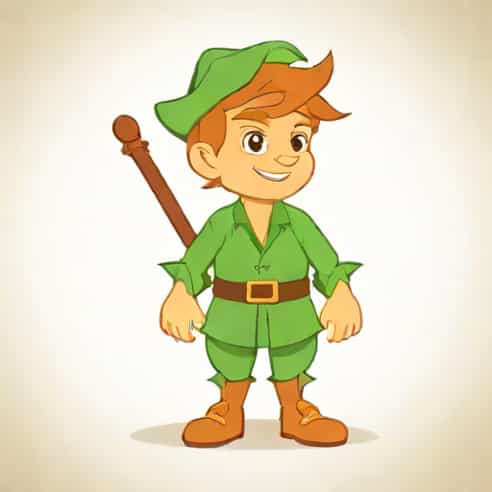
In the fantasy television series Once Upon a Time, one of the most surprising and emotional twists involves the connection between Peter Pan and Rumplestiltskin. Fans of the show were shocked to discover that Peter Pan, often known as the boy who never grows up, is actually Rumplestiltskin’s father. This revelation completely changed the way audiences viewed both characters and their stories, turning a simple fairy tale into a deep and tragic exploration of family, abandonment, and the desire for eternal youth.
The Relationship Between Peter Pan and Rumplestiltskin
In Once Upon a Time, the writers reimagined classic fairy tale characters and intertwined their stories in unexpected ways. While Peter Pan is traditionally portrayed as a mischievous yet charming boy from Neverland, the show gave him a darker and more manipulative personality. His relationship with Rumplestiltskin adds a unique psychological dimension to both characters, showing how the sins of a parent can shape the destiny of a child.
Rumplestiltskin’s father, known as Malcolm, was a man who struggled with responsibility and adulthood. He constantly sought an escape from his difficult life. Instead of facing his problems, Malcolm longed for freedom and adventure, much like the Peter Pan we know from children’s stories. This desire eventually led him to the magical realm of Neverland, where he would make a fateful choice that changed both his and his son’s lives forever.
Malcolm’s Transformation into Peter Pan
The transformation of Malcolm into Peter Pan is one of the most pivotal moments in Once Upon a Time. In the show’s flashbacks, Malcolm and young Rumplestiltskin visit Neverland through the help of a magic shadow. Neverland is depicted as a place where imagination has power, but it also demands a price. When Malcolm expresses his wish to stay young and carefree forever, the island grants it-by turning him into Peter Pan. However, this transformation comes with a terrible cost he must give up his son.
In that moment, Malcolm abandons Rumplestiltskin, choosing eternal youth over fatherhood. The shadow takes Rumple away, leaving Peter Pan to live eternally as the boy who never grows up. This twist not only explains Pan’s immortality but also adds a tragic layer to his character. His eternal youth becomes a curse born from selfishness and loss, a reminder that he traded love for power.
The Emotional Impact of the Revelation
The moment when viewers learn that Peter Pan is Rumplestiltskin’s father is one of the most dramatic reveals in the entire series. It completely redefines both characters. For Rumple, the revelation deepens his personal torment. He spent his life struggling with abandonment, fear, and the desire to be powerful so no one could ever hurt him again. Realizing that the manipulative Peter Pan is the father who left him as a child reopens all those old wounds.
For Peter Pan, the reveal emphasizes how far he has fallen from humanity. His choice to abandon his son for eternal youth shows his complete lack of empathy and morality. The show uses this father-son dynamic to explore the themes of betrayal, regret, and the consequences of selfish choices. It also highlights the idea that evil often comes from pain and neglect, not just inherent darkness.
Symbolism Behind Peter Pan’s Character
In traditional literature, Peter Pan symbolizes innocence and the refusal to grow up. However, in Once Upon a Time, this refusal becomes a form of corruption. The show turns the familiar idea on its head-suggesting that refusing to grow up and accept responsibility can destroy relationships and souls. Malcolm’s transformation into Peter Pan is the ultimate metaphor for escapism taken too far. By becoming the eternal child, he loses the very thing that defines humanity love and connection.
Rumplestiltskin, on the other hand, represents the opposite path. He begins as a cowardly man but gradually learns the value of sacrifice and family, especially through his love for Belle and his son, Baelfire. In many ways, the story of Peter Pan and Rumple mirrors two sides of the same coin-one man who runs from love and responsibility, and another who spends his life trying to reclaim them.
Neverland as a Reflection of Malcolm’s Desires
Neverland in Once Upon a Time is not the happy, magical paradise of children’s tales. Instead, it reflects Malcolm’s selfish desires and internal darkness. The island feeds on the dreams of those who wish to escape their problems, but in doing so, it traps them in eternal dissatisfaction. As Peter Pan, Malcolm becomes the ruler of this twisted realm, using Lost Boys and magic to maintain his control. Yet, he is never truly happy. The magic that keeps him young also keeps him emotionally empty, forever haunted by the memory of the son he abandoned.
This interpretation of Neverland gives it a haunting beauty. It becomes a psychological space rather than just a physical one-a symbol of eternal escape that slowly consumes those who live there. In that sense, Neverland represents the human desire to avoid pain and responsibility, but it also warns that such avoidance comes at a terrible cost.
Rumplestiltskin’s Confrontation with His Father
When Rumplestiltskin finally confronts Peter Pan, the scene is filled with years of suppressed anger and grief. Rumple’s entire life was shaped by abandonment and fear, and seeing his father again brings all those emotions to the surface. Pan, however, remains manipulative and cold, insisting that everything he did was for himself. This confrontation forces Rumple to make a difficult choice-to face his past or be destroyed by it.
Ultimately, Rumplestiltskin decides to end his father’s reign of manipulation. Their final battle is both physical and symbolic. When Rumple sacrifices himself to stop Pan, it represents his growth and redemption. Unlike his father, Rumple chooses love over power, showing that the cycle of abandonment can be broken. His actions prove that even those shaped by darkness can choose a different path.
How the Twist Redefines Both Characters
The revelation that Peter Pan is Rumplestiltskin’s father does more than surprise the audience-it redefines the emotional core of the series. It turns two villains into deeply human characters driven by pain, desire, and regret. For Rumple, it explains the roots of his fear of abandonment and his obsession with control. For Pan, it reveals that his eternal youth is not freedom but punishment.
By connecting their stories, the writers of Once Upon a Time transformed Peter Pan from a playful child into a tragic figure of lost innocence. Meanwhile, Rumplestiltskin’s journey from cowardice to heroism becomes even more powerful when seen as a rejection of his father’s selfishness. The father-son dynamic gives both characters emotional depth that goes far beyond their fairy tale origins.
Key Themes in Their Relationship
- The danger of escaping responsibility and growing up.
- The emotional cost of abandoning family for personal desires.
- The possibility of redemption through love and sacrifice.
- The contrast between eternal youth and emotional maturity.
So, is Peter Pan Rumplestiltskin’s father? In Once Upon a Time, the answer is yes-and this truth changes everything about how we understand both characters. The story takes the familiar Peter Pan myth and transforms it into a haunting tale of loss, selfishness, and redemption. Peter Pan’s eternal youth becomes a curse born from abandoning his son, while Rumplestiltskin’s dark journey becomes one of healing and forgiveness. Through their intertwined stories, the show reminds viewers that true strength lies not in escaping life’s challenges but in facing them with courage, love, and acceptance.