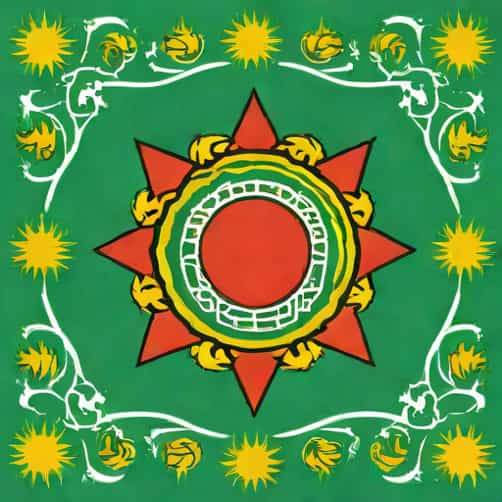
The Eastern Turkic Khaganate was a powerful and influential state that existed in Central Asia during the 6th and 7th centuries, playing a significant role in shaping the political, cultural, and military landscape of the region. One of the most intriguing aspects of this historical entity is its symbols of authority, including the flag of the Eastern Turkic Khaganate. Flags and banners were not merely decorative; they represented power, identity, and sovereignty, signaling allegiance and leadership within the khaganate. Understanding the Eastern Turkic Khaganate flag provides insight into the traditions, symbolism, and historical significance of this remarkable civilization.
Historical Context of the Eastern Turkic Khaganate
The Eastern Turkic Khaganate was established after the split of the original Turkic Khaganate, which had united various Turkic tribes under a single rule. The Eastern branch emerged in the 6th century, occupying the steppes of modern-day Mongolia, parts of northern China, and Central Asia. The khaganate was known for its military strength, sophisticated political organization, and extensive trade networks along the Silk Road. Its rulers, known as khagans, wielded considerable influence over neighboring states and tribes, using banners, flags, and other symbols to assert authority and maintain cohesion within the empire.
Significance of Flags in Turkic Culture
Flags and banners held immense symbolic value in Turkic culture, including the Eastern Turkic Khaganate. They were used in battles to identify units, signal commands, and inspire troops. Beyond military utility, flags represented the khagan’s authority, legitimacy, and connection to spiritual beliefs. The colors, patterns, and emblems on the flag conveyed messages about the ruler’s power, divine favor, and the unity of the tribes under his control. For historians and scholars, studying these flags helps uncover the cultural and political priorities of the Eastern Turkic Khaganate.
Design and Features of the Eastern Turkic Khaganate Flag
While there is limited physical evidence of the original Eastern Turkic Khaganate flag, historical texts, artistic depictions, and cultural records provide clues about its design. The flag likely featured symbolic colors such as blue, which represented the sky and divine power, reflecting the Turkic reverence for Tengri, the sky god. Other colors like red and white may have been incorporated to symbolize courage, purity, and tribal unity. The flag may also have included emblems such as the wolf, a sacred animal in Turkic mythology, representing strength, protection, and guidance.
Symbolism in the Flag
The Eastern Turkic Khaganate flag was rich in symbolic meaning, communicating the khagan’s authority and the values of the state. Key elements of symbolism include
- ColorsBlue for divine connection, red for bravery, and white for purity and unity.
- AnimalsThe wolf symbolized guidance, protection, and the Turkic origin myths.
- PatternsGeometric designs and motifs indicated tribal affiliations and social hierarchy.
- OrientationThe way the flag was displayed reflected the status of the khagan and the message being communicated, such as war readiness or celebration.
These symbols were not random; they were carefully chosen to reflect the spiritual beliefs, political authority, and cultural identity of the Eastern Turkic Khaganate.
Use of the Flag in Governance and Warfare
In governance, the Eastern Turkic Khaganate flag served as a symbol of the khagan’s legitimacy and authority. Flags were displayed during official ceremonies, tribal assemblies, and diplomatic missions to signal the presence of leadership and command respect. In warfare, the flag played a practical role in organizing troops, signaling strategies, and boosting morale. Units were identified by their unique banners, allowing commanders to coordinate movements across vast steppe terrains. The flag was also used to intimidate enemies and convey the unity and strength of the khaganate.
Flag in Religious and Cultural Context
The Eastern Turkic Khaganate’s flag had religious significance as well. The Turkic people were deeply connected to Tengriism, a belief system centered around the sky god Tengri. The symbols and colors on the flag reflected this spiritual worldview, invoking divine protection and favor in battles and important events. The flag also appeared in cultural celebrations, festivals, and rituals, reinforcing the collective identity of the Turkic tribes and their loyalty to the khagan. In this way, the flag functioned not only as a political emblem but also as a spiritual and cultural icon.
Legacy and Modern Interpretations
The Eastern Turkic Khaganate flag continues to capture the interest of historians, artists, and cultural enthusiasts. Modern depictions of the flag are often based on historical research, archaeological findings, and artistic interpretations of Turkic symbols. While the original materials have not survived, the symbolic essence of the flag remains influential in contemporary Central Asian culture and among Turkic communities. The flag is celebrated in historical exhibitions, educational programs, and cultural events, serving as a reminder of the rich heritage and political achievements of the Eastern Turkic Khaganate.
Influence on Later Turkic States
The design and symbolism of the Eastern Turkic Khaganate flag influenced subsequent Turkic states and empires. Elements such as the use of the wolf motif, specific colors, and geometric patterns can be seen in later flags, banners, and emblems of Central Asian khanates. This continuity demonstrates the lasting impact of the Eastern Turkic Khaganate on regional political culture and identity. Scholars studying the evolution of Turkic flags note that these symbols provided a visual link between past and present, reinforcing tribal and national identity across centuries.
Preservation and Study of Historical Flags
Research into the Eastern Turkic Khaganate flag involves the study of historical texts, stone inscriptions, coins, and artwork from the period. Archaeologists and historians analyze these sources to reconstruct the likely appearance and use of the flag. Museums and academic institutions also preserve replicas and educational materials to help the public understand the significance of these symbols. By studying the flag, researchers gain insight into the governance, military organization, spiritual beliefs, and artistic traditions of the Eastern Turkic Khaganate, contributing to broader knowledge about early Central Asian history.
The Eastern Turkic Khaganate flag was much more than a piece of cloth; it was a symbol of authority, culture, and spiritual belief that communicated the power and identity of one of Central Asia’s most influential empires. Through its colors, patterns, and emblems, the flag represented the khagan’s legitimacy, the unity of the Turkic tribes, and their connection to divine power. While the original flag no longer survives, its legacy continues through historical research, cultural celebrations, and modern interpretations. Understanding the Eastern Turkic Khaganate flag offers a window into the rich history, governance, and traditions of the Turkic peoples, highlighting the enduring importance of symbols in human societies.