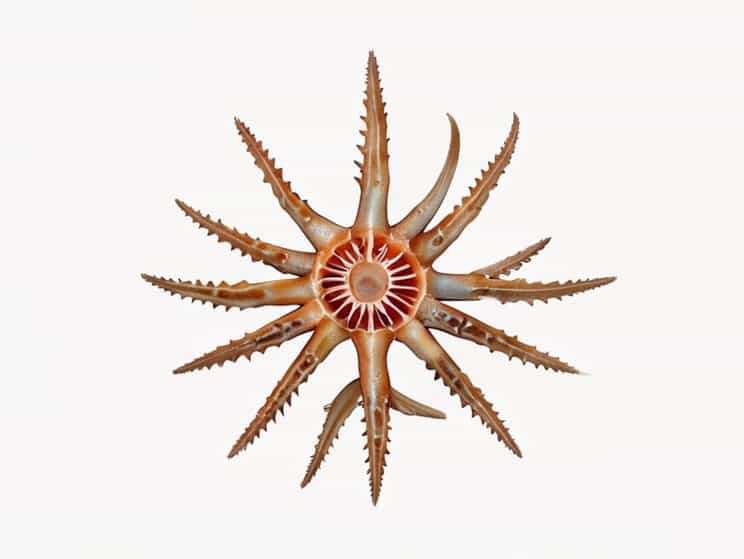
Echinoderms, a diverse group of marine animals that include starfish, sea urchins, brittle stars, and sea cucumbers, are well known for their unique skeletal structure composed of calcareous ossicles. These microscopic calcium carbonate elements form the endoskeleton of echinoderms, providing structural support, protection, and aiding in locomotion. The calcareous ossicles are intricately arranged and can vary in size, shape, and complexity depending on the species. Understanding how these ossicles form, their functions, and their role in the overall anatomy of echinoderms is essential for studying their biology, evolution, and ecological adaptations. These tiny structures are critical for the survival and movement of echinoderms, demonstrating a remarkable example of evolutionary innovation in marine organisms.
Structure of Calcareous Ossicles
Calcareous ossicles are small, hard plates made of calcium carbonate, embedded within the dermis of the echinoderm’s body wall. They are often connected by a network of connective tissue and muscles, allowing for flexibility while maintaining rigidity. The ossicles can take on various forms, such as plates, spines, or rods, depending on the species and their location within the organism.
Types of Ossicles
- PlatesBroad, flat ossicles that make up the main framework of the endoskeleton, commonly found in starfish and sea urchins.
- SpinesProtruding ossicles that provide protection against predators and support movement across substrates.
- Microscopic elementsTiny, irregularly shaped ossicles that fill the spaces between larger plates, enhancing strength and flexibility.
The diversity in ossicle morphology contributes to the unique appearance and mechanical capabilities of each echinoderm species.
Formation of Calcareous Ossicles
The development of calcareous ossicles is a complex biological process that occurs during both larval and adult stages. Specialized cells called sclerocytes are responsible for secreting calcium carbonate to form these structures. The arrangement and growth of ossicles are tightly controlled by genetic and biochemical factors, ensuring that they achieve the correct shape and interlocking patterns necessary for skeletal support.
Process of Ossicle Formation
- Sclerocytes deposit calcium carbonate in a matrix of collagen and glycoproteins.
- Ossicles gradually develop intricate patterns, including spiny projections and lattice-like structures.
- The ossicles are interconnected by connective tissue to form a flexible but supportive endoskeleton.
This formation process allows echinoderms to maintain a balance between rigidity for protection and flexibility for movement, which is essential for their survival in dynamic marine environments.
Functions of Calcareous Ossicles
Calcareous ossicles serve multiple critical functions in echinoderms. They provide structural support, protecting internal organs and maintaining the shape of the organism. They also play a role in locomotion, as muscles attached to the ossicles allow the echinoderm to move its arms or body effectively. Additionally, ossicles act as a defense mechanism, deterring predators with their hardness or spiny projections.
Support and Protection
The ossicles form the endoskeleton that supports the body, maintaining rigidity while allowing flexibility. This support is especially important for species like starfish, which use their arms for movement and feeding. The ossicles’ hard composition also protects delicate internal organs from physical damage and predation.
Locomotion and Movement
In many echinoderms, muscles are attached to ossicles, allowing coordinated movement. For example, in starfish, the ossicles in the arms provide leverage for tube feet to operate efficiently. In sea urchins, spiny ossicles help in crawling across uneven surfaces. The interaction between ossicles and the water vascular system facilitates precise and controlled movements.
Defense Mechanisms
Spiny and sharp ossicles act as deterrents against predators. In addition, some echinoderms, such as sea cucumbers, have specialized ossicles called sclerites that contribute to body toughness and can even be expelled in defense. The calcareous nature of these structures makes them difficult for many predators to crush or consume.
Ecological Significance
The presence of calcareous ossicles in echinoderms has ecological implications. These structures contribute to the rigidity and strength of the echinoderm body, allowing these organisms to inhabit diverse marine habitats, from coral reefs to deep-sea environments. The skeleton also plays a role in the sediment cycle, as fragments of ossicles contribute to the formation of marine sediments after the echinoderm dies.
Role in the Marine Ecosystem
- Providing habitats The ossicles of dead echinoderms contribute to reef and sediment structures.
- Predator-prey dynamics Ossicles influence predation patterns, as predators must overcome the hard structures.
- Species distribution The mechanical support provided by ossicles allows echinoderms to adapt to different environmental conditions.
Evolutionary Perspective
Calcareous ossicles have evolved over millions of years to provide echinoderms with a highly effective combination of support, flexibility, and defense. The diversity in ossicle structure across species reflects evolutionary adaptation to different ecological niches and lifestyles. Fossil records of ossicles also provide valuable information about the evolutionary history of echinoderms and the environmental conditions of past oceans.
Adaptive Advantages
- Structural flexibility Allows movement and adaptability in complex environments.
- Protection from predators Hard calcareous composition deters attacks and reduces mortality.
- Enhanced survival Ossicle patterns and spines are adapted to feeding strategies, locomotion, and habitat utilization.
The calcareous ossicles in echinoderms form a versatile and multifunctional endoskeleton that is central to their survival, adaptation, and ecological success. From providing structural support and facilitating movement to offering protection and playing a role in the sediment cycle, these microscopic calcium carbonate structures exemplify the remarkable evolutionary design of echinoderms. Understanding the formation, diversity, and function of ossicles not only illuminates the biology of these fascinating marine animals but also sheds light on broader themes of adaptation and survival in the marine environment. The study of calcareous ossicles continues to be an essential aspect of marine biology, paleontology, and evolutionary research, highlighting the complex interplay between form, function, and ecological significance in the natural world.