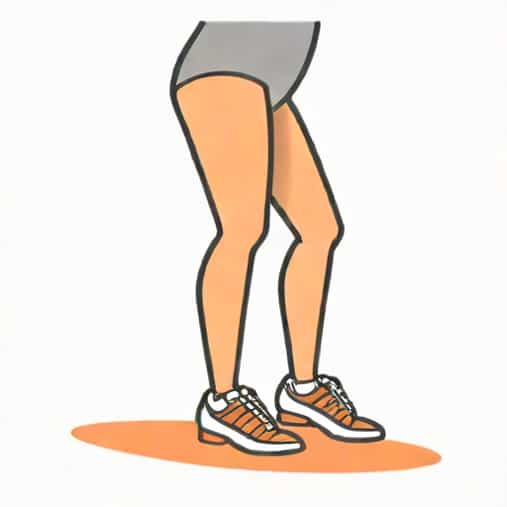
The phrase knees and hips are equally flexed bilaterally is commonly used in medical and physical therapy contexts to describe the position of a patient’s lower limbs. It indicates that both knees and hips are bent to the same degree on the left and right sides of the body. This observation is important for assessing symmetry, mobility, and musculoskeletal function. Understanding what this phrase means, its clinical relevance, and how it is evaluated can provide valuable insight for healthcare professionals, patients, and anyone interested in human anatomy and movement.
Understanding Bilateral Flexion
Bilateral flexion refers to the simultaneous bending of joints on both sides of the body. In the context of knees and hips, it means that the left and right knees and hips are flexed to the same extent. Flexion itself is the action of decreasing the angle between two body parts. For the hips, this occurs when the thigh moves toward the torso. For the knees, flexion happens when the lower leg moves toward the back of the thigh. When both joints are flexed equally on both sides, it demonstrates symmetry and coordinated musculoskeletal function.
Anatomy of the Knees and Hips
The knees and hips are major joints responsible for movement, stability, and weight-bearing. The hip joint is a ball-and-socket joint that allows flexion, extension, rotation, and abduction. The knee is a hinge joint that primarily permits flexion and extension, with slight rotational capacity. Proper assessment of these joints involves observing the range of motion, strength, and flexibility, which can reveal potential issues related to injury, arthritis, or neuromuscular conditions.
Clinical Relevance of Equal Flexion
Noting that knees and hips are equally flexed bilaterally has several important clinical implications. Symmetry in joint flexion is essential for diagnosing musculoskeletal problems, planning rehabilitation, and evaluating functional mobility. Unequal flexion may indicate muscle weakness, joint stiffness, neurological impairment, or structural abnormalities. For instance, a patient recovering from hip surgery may be evaluated to ensure that both hips can flex equally, which is critical for walking, sitting, and performing daily activities.
Common Scenarios for Assessment
- Physical TherapyTherapists assess joint flexion to design individualized exercise programs and monitor progress.
- Post-Surgery EvaluationAfter hip or knee surgery, equal flexion ensures proper healing and function.
- Neurological ExamsSymmetrical joint movement can reveal or rule out nerve impairments affecting motor function.
- Sports MedicineAthletes may be evaluated for flexibility and symmetry to prevent injuries and improve performance.
- Orthopedic AssessmentDetecting unequal flexion may indicate conditions like arthritis, ligament injury, or hip dysplasia.
How to Assess Bilateral Flexion
Healthcare professionals use specific techniques to assess whether knees and hips are equally flexed bilaterally. This involves both visual observation and measurement using tools such as goniometers. Patients may be asked to lie on their back or stand while the clinician observes the angle of hip and knee flexion. Any differences between the left and right sides are noted, as even minor asymmetries can have clinical significance.
Steps in Assessment
- Position the patient appropriately, often lying supine for hip and knee assessment.
- Ask the patient to flex their knees and hips, bringing their thighs and lower legs toward the torso.
- Observe the range of motion on both sides, ensuring that the angles of flexion are symmetrical.
- Use a goniometer or inclinometer to measure exact degrees of flexion if necessary.
- Document findings for future reference, treatment planning, or comparison with normative data.
Importance of Symmetry
Symmetry in knee and hip flexion is vital for normal movement patterns and functional activities. Unequal flexion can cause compensatory movements, imbalance, and increased risk of injury. For example, if one hip flexes less than the other, it may alter gait patterns, leading to back pain, knee strain, or hip discomfort. Maintaining and monitoring symmetrical flexion helps prevent long-term musculoskeletal problems and ensures that rehabilitation is effective.
Factors Affecting Flexion Symmetry
- Muscle tightness or imbalance
- Joint stiffness or arthritis
- Previous injuries or surgeries
- Neurological impairments
- Postural habits and daily activities
Exercises to Maintain or Improve Symmetrical Flexion
Physical therapists often recommend exercises to ensure that knees and hips remain equally flexible. Stretching, strengthening, and mobility exercises can help maintain symmetry, especially after injury or surgery. For example, hip flexor stretches, hamstring stretches, and knee flexion exercises can improve range of motion. Balance exercises and targeted strengthening can address muscle imbalances, promoting proper alignment and joint function.
Sample Exercises
- Seated knee lifts to improve hip and knee flexion
- Hamstring stretches to increase knee extension and balance
- Bridging exercises to strengthen hip extensors and stabilize the pelvis
- Lunges and step-ups to improve functional movement and symmetry
- Leg swings and dynamic stretches to enhance joint mobility
The statement knees and hips are equally flexed bilaterally is a crucial observation in clinical practice, physical therapy, and orthopedic assessment. It indicates that both sides of the body are functioning symmetrically in terms of joint flexion, which is essential for mobility, balance, and overall musculoskeletal health. Assessing bilateral flexion provides insight into potential issues, guides rehabilitation, and helps prevent injuries. Maintaining symmetry through exercise, stretching, and proper care ensures functional movement and long-term joint health. By understanding and evaluating this aspect of human movement, healthcare professionals can enhance patient outcomes and support optimal physical performance.
- Equal flexion bilaterally ensures symmetry in movement and posture.
- Assessment involves visual observation and measurement of hip and knee angles.
- Symmetry is important for preventing compensatory injuries and maintaining balance.
- Physical therapy and targeted exercises can improve or maintain flexion symmetry.
- Monitoring bilateral flexion is critical after injury, surgery, or in chronic conditions.