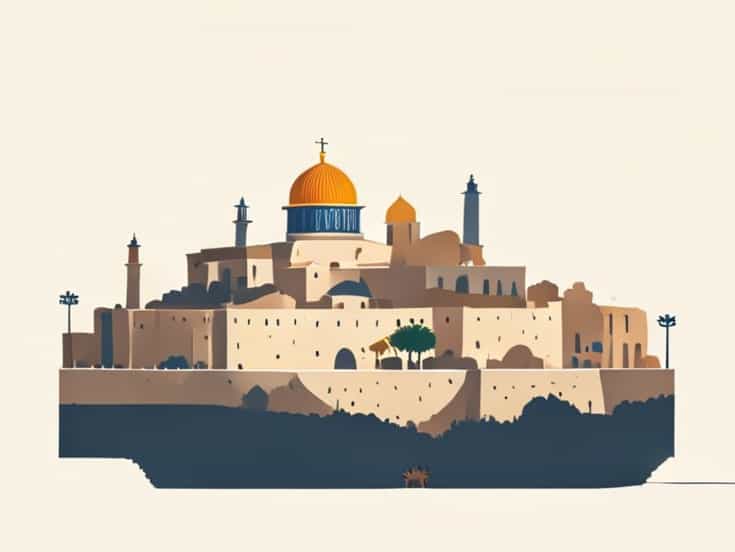
The phrase Jerusalem will be trodden down by the Gentiles has echoed through centuries of religious discussion, historical reflection, and theological debate. For many readers, it carries a sense of prophecy, conflict, and hope intertwined. The statement is often encountered in biblical study, sermons, and discussions about history and faith, yet its meaning is not always immediately clear. To understand it fully, one must consider historical context, symbolic language, and the broader message it conveys.
Origin of the Phrase in Scripture
The phrase Jerusalem will be trodden down by the Gentiles comes from the New Testament, specifically from the Gospel of Luke. It appears in a section where Jesus speaks about future events concerning Jerusalem. The language is prophetic and symbolic, reflecting both immediate historical realities and longer-term spiritual themes.
At the time these words were spoken, Jerusalem was a city under immense political and religious tension. Foreign rule, internal divisions, and expectations of deliverance shaped how such statements were heard and remembered.
Understanding the Meaning of Trodden Down
The expression trodden down suggests more than physical destruction. It conveys the idea of domination, control, and humiliation. To tread something down is to place it underfoot, removing its autonomy and dignity.
In the context of Jerusalem, this phrase reflects periods when the city was ruled by foreign powers, losing political independence and facing cultural and religious pressure.
Symbolic Language in Biblical Context
Biblical language often uses physical actions to describe spiritual or social realities. Trodden down can refer to military occupation, but it can also symbolize spiritual oppression or the loss of divine favor.
This layered meaning allows the phrase to resonate across different historical periods.
Who Are the Gentiles?
In biblical terms, Gentiles generally refers to nations or peoples who are not part of Israel. The term does not necessarily imply hostility, but it does indicate those outside the covenant community as understood in Jewish tradition.
When the phrase states that Jerusalem will be trodden down by the Gentiles, it points to foreign nations exercising authority over the city.
Historical Powers Over Jerusalem
Throughout history, Jerusalem has been ruled by various Gentile powers. These include the Babylonians, Persians, Greeks, Romans, and later empires. Each period of rule left a distinct mark on the city’s political and cultural life.
- Babylonian conquest and exile
- Roman occupation during the time of Jesus
- Later Byzantine and Islamic rule
Historical Fulfillment and Interpretation
Many scholars see the Roman destruction of Jerusalem in 70 CE as a significant fulfillment of the phrase Jerusalem will be trodden down by the Gentiles. The city was destroyed, the temple was ruined, and Jewish autonomy was lost for centuries.
This event deeply shaped Jewish and Christian understanding of history and prophecy.
The Time of the Gentiles
The phrase is often linked with the idea of the times of the Gentiles. This concept suggests a period during which non-Jewish nations would hold influence or control, particularly over Jerusalem.
Interpretations vary, but many see this period as having both historical and spiritual dimensions.
Different Theological Views
Some interpret the times of the Gentiles as already fulfilled in history, while others believe it continues into the present or will end in the future. These differing views reflect broader theological perspectives.
Despite these differences, the phrase remains central to discussions about prophecy and fulfillment.
Jerusalem as a Spiritual Symbol
Beyond its physical reality, Jerusalem holds deep symbolic meaning in religious tradition. It represents faith, divine promise, and human responsibility. When Jerusalem is described as being trodden down, it can reflect a spiritual condition as much as a political one.
This symbolism allows the phrase to speak to personal and communal experiences of loss, exile, and hope.
The Role of Human Responsibility
Some interpretations emphasize that the condition of Jerusalem is linked to human actions. In this view, being trodden down is not only the result of foreign powers but also a consequence of moral and spiritual failure.
This perspective encourages reflection on accountability rather than focusing solely on external forces.
Modern Discussions and Relevance
In modern times, the phrase Jerusalem will be trodden down by the Gentiles is often discussed in relation to current events and political realities. Jerusalem remains a city of global significance, contested and deeply symbolic.
For some, modern developments are seen as signs of fulfillment or transition. For others, the phrase remains a historical statement with enduring lessons rather than a prediction of current events.
Caution in Interpretation
Many scholars urge caution when applying ancient prophetic language directly to modern politics. The original context, audience, and purpose of the statement should be carefully considered.
This approach helps prevent oversimplification or misuse of the phrase.
Hope Within the Statement
While the phrase may sound bleak, it is often accompanied by a sense of hope. The idea that Jerusalem will be trodden down until a certain time implies that this condition is not permanent.
This sense of limitation suggests restoration, renewal, or change beyond the period of oppression.
Spiritual Lessons Drawn From the Phrase
Many readers find personal meaning in the statement. Being trodden down can reflect times of hardship, loss, or testing. In this way, Jerusalem becomes a mirror for human experience.
The phrase encourages patience, faith, and trust in a larger purpose beyond immediate circumstances.
The Enduring Power of the Phrase
Part of the reason this statement continues to be discussed is its depth and flexibility. It speaks to history, faith, politics, and personal struggle all at once.
Few phrases manage to connect ancient events with ongoing reflection so effectively.
Jerusalem will be trodden down by the Gentiles is a phrase rich in historical significance and symbolic meaning. It reflects real events of foreign domination, carries spiritual lessons about loss and hope, and continues to inspire discussion today.
Whether approached as prophecy, history, or metaphor, the statement invites thoughtful reflection on power, faith, and the promise of renewal. Its lasting relevance lies not only in what it says about Jerusalem, but in what it reveals about the human search for meaning amid change and uncertainty.