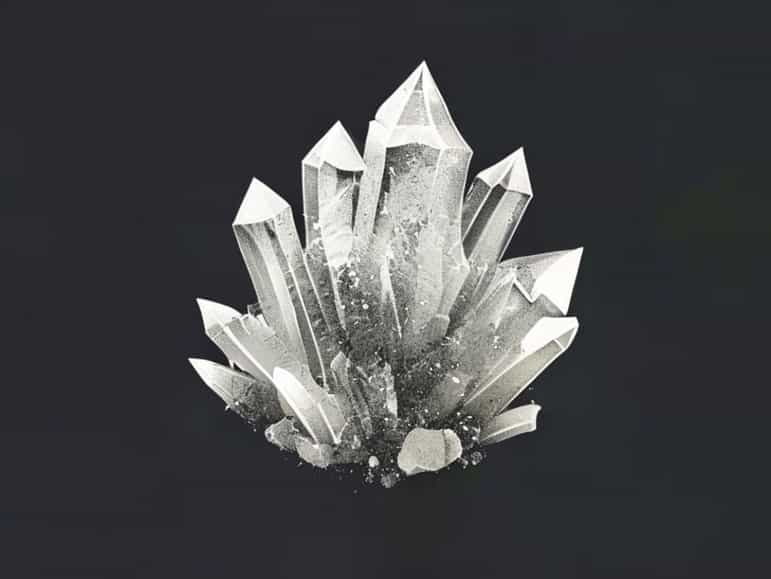
Minerals are the building blocks of the Earth’s crust, and their formation is a fascinating process that occurs over thousands or even millions of years. One important way that minerals form is from dissolved substances in water that eventually crystallize. This process not only creates beautiful natural structures like crystals and geodes but also plays a critical role in shaping the geology of our planet. Understanding how minerals form from dissolved substances provides insights into chemistry, geology, environmental science, and even industrial applications. This topic explores the process of mineral crystallization from dissolved minerals, the conditions that facilitate it, examples of minerals formed this way, and its broader implications.
The Science Behind Mineral Formation
Minerals can form through a variety of processes, including cooling of molten rock, precipitation from solutions, and chemical reactions. When minerals form from dissolved substances, the process is primarily driven by changes in temperature, pressure, or the concentration of elements in water. Water acts as a solvent, dissolving elements such as calcium, silica, magnesium, and sodium from rocks and soil. Over time, when conditions change, these dissolved minerals become supersaturated and begin to crystallize, forming solid mineral structures.
Supersaturation and Crystallization
Supersaturation occurs when the concentration of dissolved minerals in water exceeds the amount that can remain in solution. This can happen due to evaporation, cooling, or chemical reactions that change the solubility of minerals. Once supersaturation is reached, the dissolved ions begin to come together in an organized, repeating pattern to form crystals. The shape, size, and structure of these crystals depend on the specific mineral, the concentration of ions, and environmental factors such as temperature and pressure.
Conditions That Promote Crystallization
Several conditions are necessary for dissolved minerals to crystallize effectively. These conditions determine the type and quality of the crystals formed.
Temperature
Temperature changes can drastically affect mineral solubility. For example, many salts are more soluble in hot water than in cold water. As water cools, minerals that were previously dissolved can no longer remain in solution, prompting them to crystallize. This is why natural hot springs, caves, and evaporating lakes often contain well-formed crystals of minerals such as gypsum, halite, and calcite.
Pressure
Pressure can also influence mineral crystallization. High pressures underground can force minerals to precipitate from solutions, creating crystals within rock formations. Conversely, a drop in pressure, such as when water moves closer to the Earth’s surface, can allow dissolved minerals to crystallize as well. This principle helps explain the formation of veins and pockets of minerals within rocks.
Evaporation
Evaporation is a common natural process that leads to the crystallization of minerals from water. As water evaporates from lakes, rivers, or shallow pools, the concentration of dissolved ions increases. Once the solution becomes supersaturated, minerals begin to crystallize on the surfaces of rocks or within the remaining water. Common examples include salt flats and stalactites and stalagmites in caves.
pH and Chemical Environment
The chemical composition and acidity of the water also affect mineral crystallization. Certain minerals require specific pH levels to form properly. For example, calcite forms more readily in slightly alkaline conditions, while some sulfates crystallize in acidic environments. The presence of other ions or impurities can also influence the size and clarity of the crystals.
Examples of Minerals Formed from Dissolved Substances
Many well-known minerals form through the crystallization of dissolved substances. Understanding these examples helps illustrate the diversity and beauty of natural mineral formation.
Halite (Rock Salt)
Halite forms when saline water evaporates in arid regions or salt lakes. As the water evaporates, sodium and chloride ions combine to create cubic salt crystals. Halite deposits are found worldwide and are commercially significant for food, industry, and chemical production.
Calcite
Calcite is a carbonate mineral that commonly forms in caves as stalactites and stalagmites. Water dissolves calcium carbonate from limestone rocks, and as the water drips and evaporates, the calcium carbonate precipitates, slowly forming striking crystal structures over centuries. Calcite is also used in cement, agriculture, and optics.
Gypsum
Gypsum crystals often form in shallow saline lakes or lagoons. As water evaporates, calcium sulfate precipitates to create delicate, translucent crystals. Gypsum is widely used in construction, plaster, and as a soil conditioner.
Quartz
Quartz is a silicon dioxide mineral that can form from silica-rich solutions under various temperature and pressure conditions. Quartz crystals are found in veins, geodes, and pegmatites. Their formation from dissolved silica demonstrates the interplay between solution chemistry and environmental conditions.
Natural Environments Favoring Mineral Crystallization
Crystallization from dissolved minerals occurs in diverse geological and environmental settings. Some of the most notable include
- CavesStalactites and stalagmites formed from calcite.
- Evaporating lakes and salt flatsHalite, gypsum, and other evaporite minerals.
- Hydrothermal veinsMinerals like quartz, gold, and sulfides precipitate from hot, mineral-rich solutions.
- Marine environmentsFormation of evaporites and carbonate reefs from dissolved ions in seawater.
Human and Industrial Applications
The crystallization of dissolved minerals is not only a natural phenomenon but also has important industrial applications. For instance, chemical industries use controlled crystallization to produce pure salts, fertilizers, and specialty chemicals. Mining operations often rely on evaporative processes to extract minerals from brine or solutions. Understanding natural crystallization principles allows scientists and engineers to design more efficient and environmentally friendly extraction and production processes.
Time Scale and Growth of Crystals
The formation of crystals from dissolved minerals can occur quickly in some laboratory or industrial settings, but in natural environments, it often takes thousands to millions of years. The rate of crystal growth depends on the availability of ions, temperature, pressure, and stability of the solution. Slow growth typically produces larger, well-formed crystals, while rapid precipitation can result in smaller or imperfect crystals. This is why some natural geodes contain massive, clear crystals, while others are more granular and opaque.
The process by which minerals form from dissolved substances that crystallize is a fundamental aspect of Earth’s geology and chemistry. It involves supersaturation, changes in temperature, pressure, evaporation, and chemical environment. Minerals like halite, calcite, gypsum, and quartz provide stunning examples of how dissolved ions organize into solid crystalline structures. These formations not only enrich the natural beauty of landscapes but also have crucial industrial and scientific applications. Understanding the conditions and processes that lead to crystallization helps us appreciate the complex interplay of chemistry and geology and highlights the ongoing importance of mineral science in environmental and industrial fields.