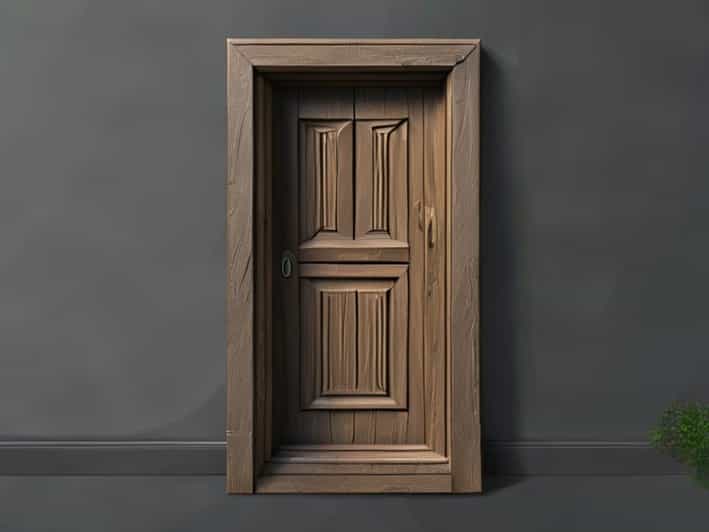
When visiting Jewish homes around the world, many people notice a small object attached to the doorpost, often slightly angled and quietly present. This item is not decorative in a casual sense, yet it carries deep spiritual meaning and cultural identity. Auspiciously found on doorpost in Jewish homes, this object represents faith, remembrance, and daily awareness of religious values. For centuries, it has served as a symbol of protection, tradition, and connection between the household and Jewish law.
The Meaning Behind the Doorpost Tradition
The item auspiciously found on doorpost in Jewish homes is known as the mezuzah. It is a small case that contains a handwritten parchment scroll. The presence of the mezuzah is rooted in biblical commandments that instruct Jewish people to place sacred words on the doorposts of their homes.
Rather than being a charm or decoration, the mezuzah is a physical reminder of spiritual responsibility. Each time someone enters or leaves the home, the mezuzah quietly reinforces awareness of faith, ethics, and identity.
What a Mezuzah Contains
Inside every mezuzah is a parchment called a klaf. This scroll is written by a trained scribe and contains specific verses from the Torah. These verses express core beliefs about unity, devotion, and the importance of passing faith through daily life.
The writing must follow strict guidelines. Even a small mistake can invalidate the parchment, which is why care and precision are essential. The case itself may vary in design, but the sacred text inside remains the heart of the mezuzah.
The Sacred Text Inside
The parchment includes passages that emphasize loving and honoring God, teaching values to children, and remembering these teachings at home and beyond. These words are not meant to be read casually every day, but their presence holds constant meaning.
Why It Is Considered Auspicious
The mezuzah is considered auspicious because it symbolizes divine protection and blessing over the household. While Judaism does not promote superstition, the mezuzah is seen as a source of spiritual safeguarding when placed with proper intention.
The belief is not that the object itself has magical power, but that it represents a commitment to faith. That commitment is what brings blessing, mindfulness, and a sense of peace into the home.
Placement on the Doorpost
There are clear traditions regarding where and how the mezuzah is placed. Typically, it is attached to the right side of the doorway as one enters the room. The placement reflects long-standing interpretation of religious instruction.
In many communities, the mezuzah is placed at a slight angle, leaning inward. This angled position reflects respect for differing interpretations and symbolizes harmony within tradition.
Which Doorways Require a Mezuzah
Not every opening requires a mezuzah. Generally, doorways that lead into living spaces are included, while temporary structures or certain utility areas may be excluded.
- Main entrances to the home
- Bedrooms and living areas
- Offices within the house
- Long-term residential spaces
The Mezuzah as a Daily Reminder
For many Jewish families, the mezuzah serves as a daily spiritual pause. Some people touch the mezuzah when passing through the doorway and then touch their hand to their lips as a gesture of respect.
This simple action reinforces mindfulness, grounding daily routines in awareness of values, ethics, and gratitude. It turns ordinary movement into a moment of reflection.
Cultural and Historical Significance
The tradition of placing a mezuzah on the doorpost has existed for thousands of years. Across different regions and historical periods, Jewish communities maintained this practice even during times of hardship or displacement.
The mezuzah became a quiet marker of Jewish presence, especially in places where religious expression was restricted. Its continued use reflects resilience and devotion across generations.
Design Variations Across Communities
While the parchment inside remains consistent, mezuzah cases vary widely in appearance. Designs reflect local culture, artistic styles, and personal taste.
Some cases are simple and minimalist, while others are crafted from metal, wood, glass, or ceramic. Despite visual differences, all valid mezuzahs share the same sacred core.
Modern and Traditional Styles
In modern homes, mezuzahs may blend seamlessly with contemporary design. In more traditional settings, they may feature symbolic motifs or classic materials.
This flexibility allows the mezuzah to remain relevant across changing times while preserving its spiritual essence.
Mezuzah in Jewish Identity
The mezuzah plays an important role in shaping Jewish identity. It marks the home as a place of intention and moral awareness. For children growing up in Jewish households, the mezuzah becomes a familiar and comforting presence.
It teaches that faith is not limited to places of worship but is integrated into daily life. The doorway becomes a threshold between the outside world and a space guided by values.
Misunderstandings About the Mezuzah
Some people mistakenly believe the mezuzah is a good luck charm. While it is associated with blessing, its purpose is deeper than fortune or superstition.
The mezuzah is about remembrance and responsibility. It reminds those who live within the home to act with kindness, integrity, and awareness.
Maintenance and Respect
Over time, the parchment inside a mezuzah can wear or fade due to weather or age. Jewish law encourages periodic checking to ensure the text remains intact and legible.
This act of maintenance reflects respect for the sacred words and the values they represent.
Mezuzah Beyond the Home
While commonly associated with homes, mezuzahs are also placed on the doorposts of workplaces, schools, and community buildings. This extends the sense of sacred awareness into public and professional spaces.
In this way, the mezuzah connects private life with broader social responsibility.
Why the Mezuzah Endures
The reason the mezuzah remains auspiciously found on doorpost in Jewish homes is because it speaks to universal human needs belonging, meaning, and continuity. It quietly links the past with the present.
Through simple placement and profound symbolism, the mezuzah transforms a doorway into a reminder of faith, values, and identity.
Final Reflections
The small object on the doorpost may seem unremarkable to an outsider, but within Jewish life, it carries centuries of meaning. Auspiciously found on doorpost in Jewish homes, the mezuzah is not merely an object, but a living tradition.
By blending spiritual awareness with daily routine, it continues to guide households in faith, mindfulness, and ethical living, generation after generation.