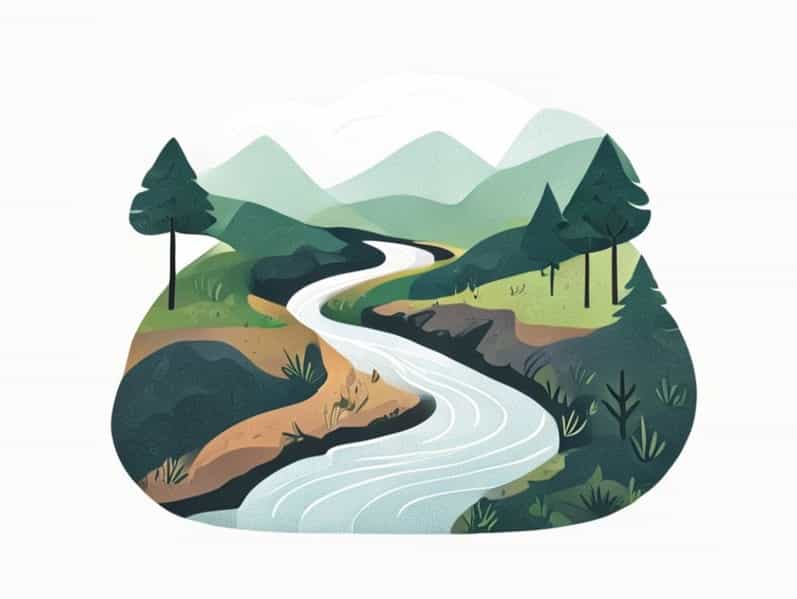
A southward-flowing stream and the stream valley that surrounds it offer a fascinating look at how water shapes landscapes over time. Even small streams have the power to carve channels, transport sediment, and influence ecosystems along their path. When a stream consistently flows southward, the terrain, climate, and underlying geological structures all contribute to the direction and behavior of the moving water. Observing such a system helps reveal patterns of erosion, deposition, and valley formation that are essential in geography, environmental science, and earth studies. Understanding these natural processes also deepens our appreciation for how landscapes evolve gradually and continuously.
What Defines a Southward-Flowing Stream?
A southward-flowing stream is simply a watercourse whose primary direction of movement is toward the south. This flow direction is typically influenced by the slope of the land, gravitational pull, and local geological formations. Streams move from higher elevations to lower elevations, and when the terrain slopes downward toward the south, the water naturally follows that path. Although this may seem straightforward, the forces that shape these directions are often complex and deeply rooted in the region’s geological history.
Factors Influencing Flow Direction
- TopographyElevation changes guide water downhill, creating a natural path of least resistance.
- Geological StructureBedrock composition, fault lines, and ancient tectonic activity influence stream placement.
- Climate and PrecipitationRainfall intensity and seasonal patterns shape flow strength and sediment load.
- Soil and VegetationSoil type affects infiltration, while vegetation can slow or redirect surface runoff.
All these factors work together to determine how water moves and how the surrounding valley forms and evolves.
The Formation of a Stream Valley
A stream valley is a long, narrow depression carved by the continuous movement of flowing water. Over time, erosion deepens the channel while weathering widens the surrounding area. The shape of a stream valley can reveal a great deal about the history of the landscape, including periods of heavy water flow, shifts in climate, and changes in sediment supply. A southward-flowing stream gradually transforms the terrain as it cuts deeper into rock layers and transports material downstream.
Types of Stream Valleys
- V-shaped valleysCharacterized by steep walls, often found in youthful stream systems with high energy.
- U-shaped valleysTypically carved by glacial movement but sometimes influenced by streams after glaciation.
- Broad, flat valleysFormed in mature stages of stream development when erosion slows and deposition dominates.
Regardless of the type, the presence of a southward-flowing stream ensures continual change in the valley shape due to erosion and sediment transport.
Stream Erosion and Sediment Movement
The movement of water within a stream is a powerful agent of erosion. When a stream flows southward down a sloping landscape, its energy can increase depending on gradient and water volume. This energy allows it to pick up ptopics, break down rock formations, and widen the valley floor. Sediment movement is a key feature of stream activity materials ranging from fine silt to gravel and boulders can all be transported downstream.
Three Main Processes of Erosion
- Hydraulic actionWater forces itself into cracks and breaks down rock surfaces.
- AbrasionSediment carried by the stream acts like sandpaper, scraping and grinding the bed and banks.
- SolutionMinerals dissolve in water, gradually removing material from the stream channel.
These processes continuously alter the shape of both the stream and the valley, especially when the watercourse maintains a steady southward path.
Characteristics of a Southward-Flowing Stream Valley
A valley shaped by a stream moving southward often shows clear directional features. The slope of the land guides the stream’s energy, and the valley reflects this through its alignment, vegetation patterns, and deposits. Over centuries or even millennia, the consistent flow direction results in distinctive landscape traits that can be observed in many river systems worldwide.
Common Features
- Elongated valley shape aligned north-to-south.
- Sediment deposits accumulating toward the southern end.
- Meanders forming where the land becomes flatter.
- Vegetation patterns following moisture availability along the valley floor.
These features help scientists understand past climates, tectonic activity, and ecological shifts in the region.
Ecology Within a Stream Valley
A stream valley is more than a geological formation-it is an active ecological corridor supporting diverse plant and animal life. Water availability, soil moisture, and microclimates created by the valley shape allow a range of species to thrive. A southward-flowing stream often experiences temperature shifts along its length, influencing the types of organisms that inhabit different sections.
Habitats Along the Stream
- Riparian zonesLush areas along the water’s edge where vegetation benefits from consistent moisture.
- Upland slopesDrier regions supporting shrubs, grasses, or forest ecosystems depending on climate.
- WetlandsFormed in flatter southern areas where water may slow and spread.
These habitats enrich biodiversity and support complex interactions between water, land, and living organisms.
Human Interaction With Stream Valleys
Throughout history, humans have settled near stream valleys for their fertile soil, water supply, and transportation opportunities. A southward-flowing stream often collects water from northern highlands, providing a reliable source for agriculture and daily use. The valley floor typically features rich alluvial soil, making it ideal for crops and settlements.
Benefits of Settling Near Stream Valleys
- Access to fresh water for drinking and irrigation.
- Fertile soil suitable for farming.
- Natural pathways for travel and trade.
- Opportunities for hydropower in steeper sections.
However, human activity can also disrupt natural processes, affecting erosion rates, water quality, and wildlife habitats.
Environmental Concerns and Preservation
Stream valleys face increasing pressure from development, pollution, and climate change. As rainfall patterns shift, southward-flowing streams may experience more intense floods or prolonged dry periods. Preserving stream valleys is essential for maintaining ecological balance, protecting water resources, and preventing excessive erosion.
Key Conservation Practices
- Restoring native vegetation along riparian zones.
- Reducing runoff from urban and agricultural areas.
- Monitoring sediment levels and water quality.
- Implementing sustainable land use policies.
By protecting these natural systems, communities help ensure that stream valleys continue to support wildlife, agriculture, and stable landscapes.
A southward-flowing stream and its surrounding stream valley showcase the dynamic relationship between water and land. From erosion and sediment transport to ecological diversity and human settlement, each element plays a role in shaping the valley’s structure and function. Understanding how these systems develop provides insight into the forces that sculpt the natural world. Whether studied for scientific, environmental, or educational purposes, stream valleys remain essential features that highlight the quiet but powerful influence of flowing water on the landscape.