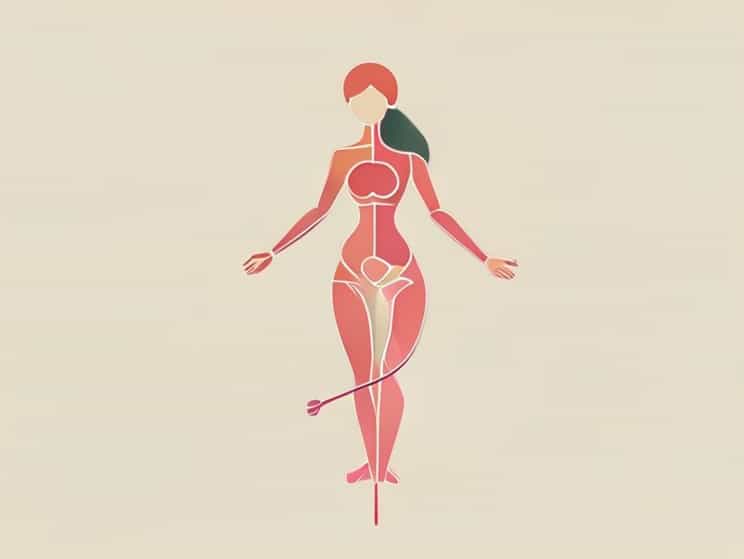
A diagram of the female reproductive system is often one of the first tools used to understand how the human body supports reproduction, hormonal balance, and menstrual health. While a diagram is a visual representation, its real value lies in explaining how each organ is connected and what role it plays. For students, parents, and general readers, learning to read and understand this diagram helps remove confusion and builds basic health awareness. The female reproductive system is complex, but when explained step by step, it becomes much easier to understand.
Purpose of a Diagram of the Female Reproductive System
A diagram of the female reproductive system is designed to show the location, shape, and relationship between internal and external reproductive organs. It simplifies anatomy by organizing structures in a clear way. Diagrams are commonly used in biology education, medical training, and health discussions to explain menstruation, pregnancy, fertility, and hormonal function.
Rather than overwhelming the reader with technical language, a good diagram highlights the main organs and shows how they work together. Understanding this visual layout helps people better understand written explanations and medical advice.
Main Parts Shown in the Diagram
Most diagrams of the female reproductive system include both internal and external organs. Each part has a specific function that supports reproduction and overall health.
Ovaries
The ovaries are usually shown on each side of the uterus in a diagram. They are small, oval-shaped organs that play a vital role in reproduction. The ovaries produce eggs, also called ova, and release important hormones such as estrogen and progesterone.
In a diagram, the ovaries help explain where eggs originate and how hormonal balance is maintained throughout the menstrual cycle.
Fallopian Tubes
The fallopian tubes are thin, curved structures that connect the ovaries to the uterus. In a diagram, they appear like arms extending from the uterus toward the ovaries. Their main function is to transport the egg from the ovary to the uterus.
Fertilization usually occurs in the fallopian tube, making this structure essential for pregnancy. Diagrams often highlight this area when explaining conception.
Uterus
The uterus is the central organ shown in most diagrams of the female reproductive system. It is a hollow, muscular organ shaped somewhat like an upside-down pear. The uterus is where a fertilized egg implants and develops during pregnancy.
Diagrams often label different parts of the uterus, including the uterine lining, which thickens and sheds during the menstrual cycle.
Cervix
The cervix is the narrow lower portion of the uterus that connects to the vagina. In diagrams, it is shown as a small canal between the uterus and the vaginal opening. The cervix plays a role in menstruation, childbirth, and protecting the uterus from infection.
Understanding the cervix through a diagram helps explain procedures like cervical screening and changes that occur during labor.
Vagina
The vagina is a muscular canal that connects the cervix to the outside of the body. In diagrams, it is shown as the lower passage of the reproductive system. The vagina serves multiple functions, including menstrual flow, sexual intercourse, and childbirth.
Diagrams often help clarify the difference between the vagina and external structures, which is a common source of confusion.
External Structures in the Diagram
Some diagrams also include the external female reproductive organs, collectively known as the vulva. These structures are visible outside the body and protect internal organs.
Labia
The labia are folds of skin shown on the outer part of the diagram. They help protect the vaginal opening and urethra. Diagrams may label the inner and outer labia separately to show their structure and position.
Clitoris
The clitoris is a small but sensitive structure located near the top of the vulva. In diagrams, it is often shown as a small point, though it has internal parts not always visible. It plays a key role in sexual response.
How Diagrams Explain the Menstrual Cycle
A diagram of the female reproductive system is commonly used to explain the menstrual cycle. By showing the ovaries, uterus, and fallopian tubes together, the diagram helps illustrate how hormonal changes affect each part.
For example, diagrams can show where an egg is released, how the uterine lining thickens, and where shedding occurs during menstruation. This visual approach makes it easier to understand monthly changes in the body.
Understanding Pregnancy Through the Diagram
Pregnancy is another topic where diagrams play an important role. A diagram of the female reproductive system helps explain how sperm travels through the vagina and cervix, where fertilization occurs, and how the embryo implants in the uterus.
These diagrams are especially useful in education because they connect biological processes with physical structures. Seeing how organs are positioned helps clarify how pregnancy develops over time.
Educational Importance of Accurate Diagrams
Accurate diagrams are essential for proper understanding. Incorrect or oversimplified diagrams can lead to misunderstandings about anatomy and health. Educational diagrams aim to balance clarity with accuracy, showing realistic proportions while remaining easy to read.
Teachers, healthcare providers, and textbooks rely on these diagrams to communicate information clearly to people of different ages and backgrounds.
Common Labels Found in a Diagram
Most diagrams of the female reproductive system include clear labels to identify each part. These labels help guide the reader and reinforce learning.
- Ovaries
- Fallopian tubes
- Uterus
- Cervix
- Vagina
- Labia
- Clitoris
Seeing these labels repeatedly in diagrams helps learners remember the names and functions of each structure.
How to Read a Diagram Correctly
To fully understand a diagram of the female reproductive system, it is helpful to start from the ovaries and follow the path inward. This approach mirrors the natural flow of reproductive processes such as ovulation and menstruation.
Taking time to match labels with written explanations improves comprehension and helps connect visual information with real biological functions.
Diagrams in Health Awareness
Beyond education, diagrams are important tools for health awareness. They help individuals understand medical conditions, procedures, and symptoms related to reproductive health. When patients can visualize where something is happening in the body, communication with healthcare professionals becomes easier.
This is especially important for discussions about pain, irregular cycles, or reproductive treatments.
A diagram of the female reproductive system is more than just an illustration. It is a powerful learning tool that explains how different organs work together to support reproduction and overall health. By understanding the ovaries, fallopian tubes, uterus, cervix, vagina, and external structures, readers gain a clearer picture of the human body. When paired with clear explanations, these diagrams make complex anatomy accessible and meaningful for a wide audience.