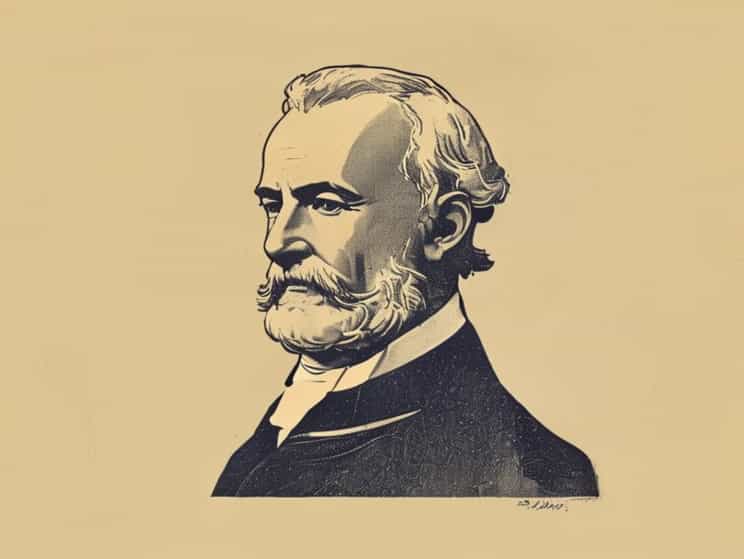
In 1854, George Boole, a mathematician and philosopher, published a seminal work that would revolutionize logic and the study of reasoningThe Laws of Thought. This work laid the foundation for modern symbolic logic and ultimately for the digital systems that power computers today. Boole’s ideas were radical for his time because he approached logic through mathematics, seeking to express reasoning with symbols, equations, and formal rules. Understanding the significance ofThe Laws of Thought 1854 George Boolerequires exploring the historical context, key principles, and enduring impact of his work.
Historical background of George Boole
George Boole (1815-1864) was largely self-taught and became a professor of mathematics in England. During the mid-19th century, logic was primarily studied philosophically rather than mathematically. Boole recognized the potential to treat logic like algebra, where propositions could be represented by symbols and manipulated according to defined rules. His 1854 work,The Laws of Thought, formalized this approach, presenting a systematic method for reasoning.
The aim of The Laws of Thought
The primary aim of Boole’sThe Laws of Thoughtwas to establish a formal system in which logical statements could be expressed mathematically. By translating qualitative reasoning into quantitative forms, Boole sought to provide a framework for analyzing thought with precision and clarity. This approach made it possible to identify valid reasoning patterns and to highlight logical errors systematically.
Boole’s approach to logic
Before Boole, logic was largely based on syllogisms and Aristotelian principles. Boole introduced an algebraic method, where logical variables could take values such as true or false. He used operations like AND, OR, and NOT to combine these variables. This approach created the first formal system of symbolic logic, now known as Boolean algebra.
Key principles of Boole’s system
- Law of IdentityEach proposition is identical to itself, meaning A is A.
- Law of Non-ContradictionA proposition cannot be both true and false simultaneously.
- Law of Excluded MiddleEvery proposition is either true or false; there is no middle ground.
These foundational laws of thought provided the logical scaffolding for the symbolic representation of reasoning.
Boolean algebra and symbolic logic
Boole’s innovative contribution was to apply algebraic principles to logic. He treated logical statements like variables in mathematical equations, using symbols to represent logical operations. For instance, he used multiplication to represent AND, addition for OR, and complementation for NOT. This symbolic approach allowed complex reasoning to be reduced to algebraic calculations.
Boolean algebra made it possible to manipulate logical expressions systematically, paving the way for modern computational logic and digital circuit design.
Impact on philosophy and mathematics
Boole’s work bridged the gap between philosophy and mathematics. Philosophers were interested in the nature of thought and reasoning, while mathematicians sought formal systems to express truth.The Laws of Thought 1854 George Booleprovided a method that satisfied both camps. It allowed philosophical propositions to be analyzed mathematically, introducing rigor to discussions about truth and inference.
Applications in logical reasoning
- Formalizing syllogisms and deductive reasoning
- Identifying logical fallacies
- Analyzing relationships between multiple propositions
- Providing foundations for probability theory and set theory
Boole’s influence on later developments
The significance of Boole’s 1854 work extends far beyond his lifetime. Boolean logic became the backbone of modern computer science. In the 20th century, Claude Shannon applied Boolean algebra to electrical circuits, showing how binary logic could control switches and, ultimately, computers. Every digital device today-from smartphones to supercomputers-relies on principles first formalized inThe Laws of Thought.
Additionally, Boole influenced mathematical logic, set theory, and probability theory. His symbolic approach allowed later mathematicians and logicians to expand the study of formal systems and algorithms.
Structure of The Laws of Thought
Boole’s book is organized into sections that progressively build his algebraic system. It begins with fundamental principles, introduces operations on classes and propositions, and culminates in the application of algebraic methods to logical reasoning. The work is both theoretical and practical, demonstrating how his laws can be applied to real reasoning problems.
Main sections of the book
- Fundamental propositions and their algebraic representation
- Operations on logical classes (AND, OR, NOT)
- Equations of logic and their solutions
- Applications to probability and inference
Boole’s impact on education and knowledge
StudyingThe Laws of Thoughtprovides insights into formal reasoning and analytical thinking. In mathematics, philosophy, computer science, and even linguistics, Boole’s methods continue to be taught as foundational principles. Many academic courses on logic reference his work, and his ideas are often summarized in presentations and lectures for easier understanding.
Relevance in modern technology
The principles outlined in Boole’s work are directly relevant to digital electronics, programming, and artificial intelligence. Logic gates in computer hardware implement Boolean operations, allowing computers to perform calculations and decision-making tasks. Boolean expressions in programming languages control the flow of programs and enable conditional execution, reflecting the enduring utility of Boole’s algebra.
Criticism and challenges
While Boole’s work was groundbreaking, it faced initial skepticism because it introduced mathematical formalism into a domain traditionally dominated by philosophy. Some critics argued that reducing thought to algebraic symbols oversimplified human reasoning. However, the long-term success and applications of Boolean logic have demonstrated the validity and power of Boole’s approach.
Legacy of The Laws of Thought
The legacy ofThe Laws of Thought 1854 George Booleis immense. It transformed logic from a philosophical discipline into a precise mathematical science. It laid the groundwork for computer science, artificial intelligence, digital communication, and information theory. More broadly, it introduced a method for rigorously analyzing reasoning that remains foundational in education and research.
Key takeaways
- George Boole formalized logical reasoning using algebraic methods.
- The Laws of Thought introduced symbolic logic, Boolean algebra, and foundational logical laws.
- Boole’s work bridges philosophy, mathematics, and modern technology.
- Applications of Boolean logic include digital circuits, programming, and computational reasoning.
- The work emphasizes clarity, precision, and systematic analysis of thought.
George Boole’sThe Laws of Thought 1854represents a landmark in the history of logic, mathematics, and computation. By converting qualitative reasoning into quantitative, symbolic forms, Boole opened new horizons for understanding thought, developing technology, and designing intelligent systems. The principles he introduced continue to shape education, computing, and scientific reasoning, making his work as relevant today as it was more than a century and a half ago. For students, professionals, and researchers, understanding Boole’s laws provides both a historical perspective and practical tools for rigorous thinking and problem-solving.