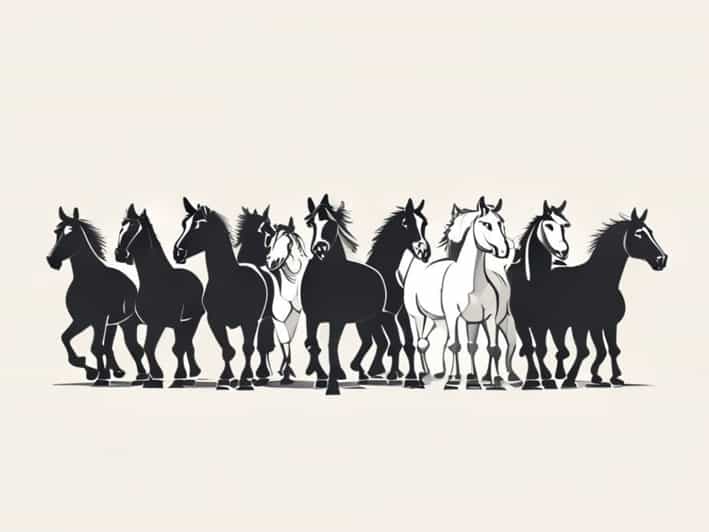
A large group of horses moving together in a procession is a sight that captures both the grace and power of these majestic animals. Such gatherings of horses are not just visually striking but often carry historical, cultural, or ceremonial significance. From parades and festivals to traditional rituals and equestrian events, a procession of horses can symbolize unity, strength, and tradition. Understanding the dynamics, organization, and purpose of large groups of horses in processions provides insight into human-animal interaction and the cultural importance of these magnificent creatures.
What Is a Horse Procession?
A horse procession is an organized movement of horses, often accompanied by riders or handlers, that travels in a ceremonial or structured manner. Unlike a herd in the wild, where movement is instinctive and reactive, a horse procession is deliberate and often planned for public display or ritual purposes. These processions can vary in size, from a small contingent of horses in a parade to large gatherings involving dozens or even hundreds of horses moving together. The formation, pace, and coordination are crucial to maintaining order and achieving the intended effect.
Terminology and Significance
When referring to a large group of horses in a procession, several terms may be used depending on context. A herd generally describes a natural group of horses in the wild. A parade or procession refers to a ceremonial or organized movement of horses, often with human participants. The significance of such processions can be cultural, historical, or symbolic, representing power, celebration, or tradition. Recognizing these distinctions helps in understanding the purpose behind assembling large groups of horses.
Historical and Cultural Context
Throughout history, large groups of horses have played an essential role in ceremonies, military formations, and social events. In many cultures, horses have been symbols of nobility, strength, and prestige, making their presence in processions highly significant. Ancient civilizations, such as the Egyptians, Persians, and Mongols, utilized coordinated groups of horses for parades, war displays, and public demonstrations. Today, these traditions continue in cultural festivals, state ceremonies, and equestrian competitions.
Examples of Ceremonial Processions
- Royal parades, where horses are adorned with ornate saddles, bridles, and decorations.
- Military ceremonies, showcasing cavalry units or historical reenactments.
- Cultural festivals, including horse fairs, religious celebrations, and traditional rituals.
- Equestrian shows, demonstrating skills, formation riding, and synchronized movement.
Organization of a Large Group of Horses
Managing a large group of horses in a procession requires careful planning and coordination. Unlike wild herds, where natural hierarchy and instincts guide movement, a procession relies on human guidance and structured formation. Riders or handlers must ensure that the horses remain calm, maintain spacing, and follow the designated route. The size of the group, the experience of the horses, and the skill of the riders all contribute to the success of the procession.
Role of Riders and Handlers
Experienced riders and handlers are essential in controlling large groups of horses. They lead, position, and maintain the pace of the procession. Communication between riders is key to ensuring the safety of both horses and spectators. Handlers may also use specific cues, reins, or voice commands to guide horses, demonstrating the importance of training and familiarity with the animals.
Training Horses for Processions
Horses participating in processions often undergo specialized training to handle noise, crowds, and close proximity to other horses. They are desensitized to loud sounds, music, or cheering crowds, which helps prevent panic or erratic behavior. Horses also learn to maintain formation and respond to riders’ cues consistently, ensuring smooth movement throughout the procession. Proper conditioning, socialization, and practice are essential components of this training.
Visual and Symbolic Appeal
The visual impact of a large group of horses in a procession is striking. Horses moving together in coordinated formation convey strength, elegance, and harmony. The symbolism associated with such gatherings varies by culture and context. In some cases, horses represent wealth, status, or ceremonial importance. In others, the procession may honor historical events, religious beliefs, or community traditions. The combination of movement, color, and coordination creates a memorable and powerful display.
Common Visual Elements
- Uniform attire for riders or handlers, emphasizing cohesion.
- Decorated saddles, bridles, and horse ornaments for ceremonial purposes.
- Formation patterns, such as lines, columns, or circles, enhancing visual impact.
- Inclusion of banners, flags, or musical accompaniment to elevate the ceremonial effect.
Challenges of Large Horse Processions
While beautiful and symbolic, large horse processions present several challenges. Safety is a major concern, both for the animals and the spectators. Horses may react unpredictably to unexpected stimuli, so careful monitoring and experienced handling are crucial. Logistics, such as route planning, spacing, and coordination of multiple horses and riders, require meticulous attention. Additionally, environmental conditions, such as weather or terrain, can affect the behavior and performance of horses in the procession.
Risk Management
- Ensuring proper spacing between horses to prevent collisions or accidents.
- Using trained horses accustomed to crowds and noise to minimize stress.
- Having emergency protocols in place for handling distressed animals.
- Coordinating riders and support staff for smooth communication during the event.
Modern Applications
Today, large groups of horses in processions are seen in various contexts, from cultural festivals and state ceremonies to entertainment and equestrian competitions. They continue to serve as symbols of tradition, prestige, and community pride. Equestrian teams and show riders often perform synchronized routines, demonstrating advanced riding skills and precise coordination. These modern applications celebrate both the horse’s natural grace and the human skill required to organize such impressive displays.
Equestrian Shows and Competitions
- Demonstrations of formation riding or synchronized patterns with large groups of horses.
- Competitions that judge precision, coordination, and visual impact.
- Opportunities for riders to showcase teamwork and horsemanship skills.
Cultural Festivals and Ceremonies
- Traditional parades that honor historical or religious events.
- Festivals where horse processions highlight local customs and artistry.
- Public displays that strengthen community identity and heritage preservation.
A large group of horses in a procession represents a remarkable combination of natural beauty, strength, and human organization. These processions have historical, cultural, and ceremonial importance, providing both visual spectacle and symbolic meaning. Organizing and training horses for such events requires skill, experience, and careful planning to ensure safety and coordination. Whether seen in traditional festivals, military displays, or modern equestrian competitions, horse processions continue to captivate audiences and celebrate the unique bond between humans and these powerful animals. Understanding the dynamics and significance of large groups of horses in a procession allows us to appreciate the artistry, tradition, and careful planning that goes into creating such unforgettable displays.