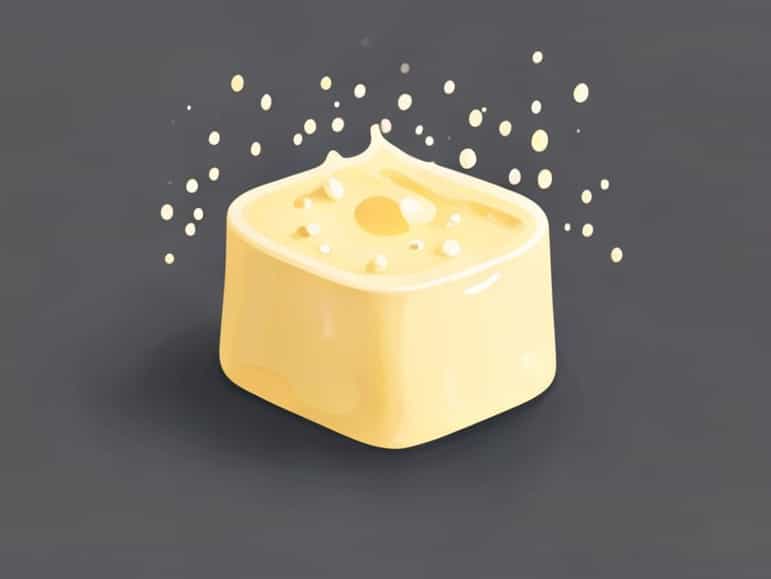
Butter is a familiar ingredient in kitchens around the world, yet many people rarely think about its scientific structure. Behind its smooth texture and rich flavor, butter is actually a type of colloid, meaning it contains tiny ptopics dispersed in another substance. Understanding the dispersed phase and dispersion medium in butter helps explain why it behaves the way it does when heated, refrigerated, or mixed with other ingredients. This deeper look at butter’s composition also highlights why it serves unique roles in baking, cooking, and food preparation.
What Butter Is Made Of at the Microscopic Level
Butter is primarily a water-in-oil emulsion. In simple terms, this means that small droplets of water are dispersed throughout a continuous fat phase. The fat phase forms the main structure of butter, creating its solid form when chilled and its melt-in-the-mouth quality when warmed.
Because butter is not a simple homogeneous substance, understanding its dispersed phase and dispersion medium allows us to appreciate how it behaves in recipes and why it differs from other dairy products like cream or margarine.
The Main Components
- Milk fat
- Water
- Milk proteins
- Salt (in salted butter)
Although fat dominates the composition, the water and milk proteins play important roles in maintaining the emulsion. When these components break down or separate, butter can develop off textures or melt unevenly.
The Dispersed Phase in Butter
The dispersed phase refers to the substance that exists in small ptopics or droplets spread throughout another substance. In the case of butter, the dispersed phase is primarily water. Tiny droplets of water remain scattered within the continuous fat matrix, held in place by proteins and emulsifying agents naturally present in dairy.
Characteristics of the Dispersed Phase
The water droplets inside butter average from 10 to 20 micrometers in size. These droplets are crucial because they help determine how butter reacts when cooked. For example, when butter is heated in a pan, the water droplets begin to vaporize, producing a sizzling sound. This is why butter releases steam as it melts, unlike pure oils.
- Water contentAbout 15-18% in most commercial butter
- Role of waterHelps with steam production in baking, influences texture, and affects browning
- Additional dispersed materialsMilk proteins and small amounts of lactose
These water droplets are essential for certain culinary effects, such as puffing in laminated dough or helping baked goods achieve a tender structure.
The Dispersion Medium in Butter
The dispersion medium is the substance that forms the continuous phase in a colloid. In butter, the dispersion medium is milk fat. This fat surrounds and encases the dispersed water droplets, creating a stable structure that remains solid at refrigerator temperatures but softens at room temperature.
Composition of the Dispersion Medium
Milk fat in butter consists of a mixture of triglycerides with varying melting points. This mix of fats allows butter to soften gradually rather than rapidly liquefying like a single, pure fat. This slow softening behavior influences how butter spreads, how it melts on warm food, and how it behaves in pastries.
- Fat content usually around 80-82%
- Contains saturated, monounsaturated, and a small amount of polyunsaturated fats
- Fat crystals form a semi-solid network
The fat crystals help stabilize the water droplets, preventing them from merging into larger pools. When the fat warms and the crystal structure weakens, the emulsion becomes more fluid, which is why melted butter separates into layers if left undisturbed.
How Butter’s Emulsion Is Formed
Butter is created by churning cream. During churning, the fat molecules collide and cluster together, eventually forming a continuous fat phase. As the fat network strengthens, it traps the remaining water droplets inside, forming the water-in-oil emulsion we recognize as butter.
The Churning Process
- Cream is agitated
- Fat globules break open and merge
- A continuous fat matrix forms
- Water droplets become trapped within the fat
This transformation is both physical and mechanical. No chemical reaction occurs, but the rearrangement of fat creates the characteristic texture of butter. Salt may be added afterward to improve flavor and shelf stability.
Why the Dispersed Phase and Dispersion Medium Matter
The structure of butter affects more than appearance-it changes how butter behaves when used in cooking, baking, spreading, or frying. Bakers, for example, rely on the interplay between fat and water to achieve flaky pastries, tender cakes, and browned cookies.
Influence on Cooking Techniques
- Melting behaviorWater droplets burst into steam, causing bubbling and sometimes spattering.
- BrowningMilk solids in the dispersed phase caramelize, creating nutty flavors in browned butter.
- StabilityButter can separate if overheated because the dispersed phase and medium break apart.
Butter’s water-in-oil structure gives it unique culinary properties compared to pure oils, which remain stable and do not contain water or proteins.
Comparison With Other Emulsions
Seeing butter in context helps make its structure clearer. Different foods form different types of emulsions depending on their dispersed phase and dispersion medium.
Common Food Emulsions
- MilkOil droplets dispersed in water (opposite of butter)
- MargarineAlso a water-in-oil emulsion, but made from vegetable oils
- MayonnaiseOil in water, stabilized by egg yolk
- Ice creamComplex dispersed structure including ice crystals, fat droplets, and air
Butter stands out because its fat content is extremely high, creating a firm, dense emulsion. Most other emulsions have more balanced ratios of water and fat.
What Happens When Butter Breaks or Separates?
Because butter’s structure relies on stability between the dispersed phase and dispersion medium, it can break down under certain conditions. When this happens, the water droplets may leak out, or the fat may separate into layers.
Causes of Separation
- Excessive heat
- Over-agitation
- Rapid temperature changes
- Poor emulsification in homemade butter
For example, when making clarified butter, the water and milk solids are intentionally separated from the fat. This leaves a pure fat layer that behaves differently from whole butter.
Butter’s dispersed phase and dispersion medium form the foundation of its structure and behavior. With water as the dispersed phase and fat as the dispersion medium, butter functions as a water-in-oil emulsion with unique culinary properties. This arrangement affects its melting point, texture, browning characteristics, and performance in recipes. Recognizing the science behind butter not only deepens appreciation for a common kitchen ingredient but also helps cooks and bakers understand how to use it more effectively.
By understanding how the dispersed water droplets and continuous fat matrix interact, anyone can better predict how butter will respond to heat, cold, and mixing-making it a versatile and fascinating ingredient in everyday cooking.