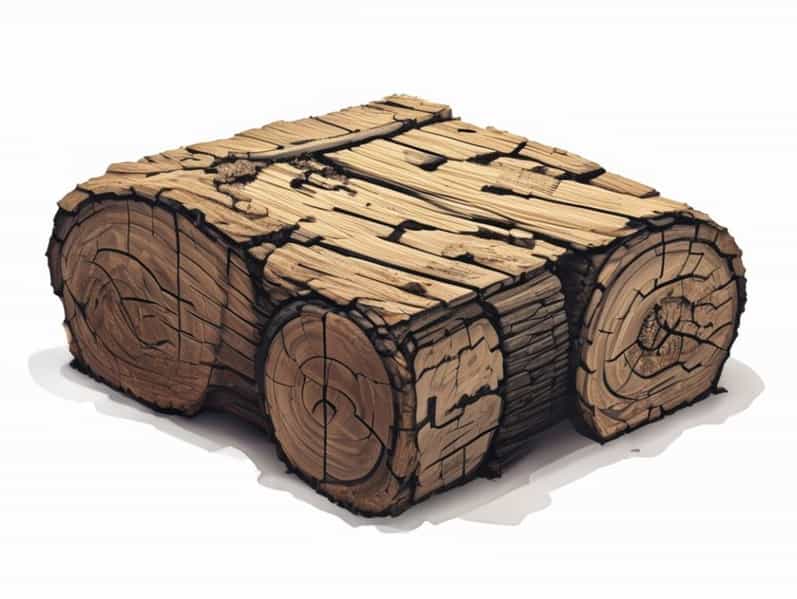
Crossword puzzles have long been a staple of newspapers and online puzzle platforms, challenging solvers to think critically, expand their vocabulary, and recognize wordplay. One clue that frequently appears in publications such as The New York Times is that rotted old log. This clue may seem straightforward at first, but it requires solvers to consider synonyms, descriptive language, and even idiomatic expressions. Understanding the meaning, context, and typical crossword-solving strategies is essential for identifying the correct answer, while also enhancing overall language skills and puzzle-solving abilities.
Understanding the Clue That Rotted Old Log
The clue that rotted old log is an example of a descriptive crossword clue. It often requires solvers to think of a single word or a concise phrase that encapsulates the essence of a decayed or deteriorated piece of wood. While the surface reading evokes a literal image of a log in nature that has decayed over time, the answer may also be influenced by common crossword vocabulary, letter count, and crossing words. Breaking down the clue into components helps solvers identify potential answers more efficiently.
Breaking Down the Components
To approach this clue effectively, it is helpful to analyze its individual elements
- ThatSuggests a specific item or object.
- RottedImplies decay, decomposition, or deterioration, providing a clue toward synonyms.
- Old logReinforces the idea of a decayed piece of wood, which might also relate to more general terms like timber or stump.
By combining these elements, solvers are directed toward words that describe decayed wood in nature, often used in literary, ecological, or colloquial contexts.
Common Answers for Crossword Puzzles
Crossword clues like that rotted old log often have short, precise answers that capture the essence of decay. Some possible solutions include
- STUMP
- SNAG
- DRIFTWOOD
- LOG
Among these, STUMP is frequently the correct answer in crosswords because it succinctly represents a decayed or remaining portion of a tree after the main trunk has deteriorated or been removed. It is concise, fits common grid lengths, and is widely recognized by solvers.
Why STUMP Fits
The word stump effectively conveys the idea of a rotted old log left in place, often partially decayed. In crosswords, brevity and clarity are crucial, and stump is a four-letter word that fits neatly into most grids. Additionally, stump can carry metaphorical meanings, such as obstacles or challenges, which adds a layer of versatility for crossword constructors. Its familiarity and simplicity make it an ideal solution for the clue.
Strategies for Solving Descriptive Clues
Descriptive clues like that rotted old log require careful observation, creative thinking, and familiarity with common crossword vocabulary. Effective strategies include
1. Focus on Synonyms
Identify words that convey decay, age, or deterioration. Terms like stump, snag, and driftwood may all capture aspects of the clue. Considering common synonyms first increases the likelihood of selecting the correct answer.
2. Consider Letter Count
Always check the number of letters required in the grid. Crossword editors typically choose words that fit neatly, which can eliminate options that are too long or too short.
3. Use Crossing Words
Letters from intersecting clues help confirm potential answers. If the other entries provide letters in the relevant positions, solvers can quickly verify whether stump or another synonym is appropriate.
4. Analyze Context
Consider the broader context of the puzzle. Some clues are themed, and understanding the theme can guide solvers toward the intended word choice.
5. Think Figuratively
Sometimes, descriptive clues carry metaphorical or idiomatic meaning. Stump can refer to both the literal tree remainder and challenges or obstacles, which may influence the constructor’s choice.
Examples of Usage
Understanding how stump is used in everyday language helps clarify why it is a suitable answer for that rotted old log. Examples include
- The hikers carefully navigated around the rotted stumps on the forest path.
- A fallen tree left behind a decayed stump, overgrown with moss.li>
- The old stump in the backyard had been there for decades, slowly decomposing.li>
These examples illustrate the literal and natural use of stump to describe a decayed portion of a tree, making it intuitive for crossword solvers.
Common Mistakes to Avoid
When solving descriptive clues like that rotted old log, solvers may make several mistakes, including
- Overthinking the clue and considering obscure or overly complex words.
- Choosing words that only partially fit the description, such as log or branch, without considering decay.
- Ignoring the letter count and forcing an answer that conflicts with crossing words.
- Failing to recognize familiar, simple words like stump as viable solutions.
Tips for Beginners
- Break down the clue into individual descriptive components to understand the essential meaning.
- Consider common four- to eight-letter words that describe objects in nature.
- Use crossing letters from other answers to narrow down possibilities.
- Think both literally and figuratively, especially with clues that may have dual meanings.
- Practice with themed crosswords to build familiarity with descriptive vocabulary.
Advanced Tips
Experienced solvers recognize patterns in crossword construction and frequently anticipate concise, common words for descriptive clues. Clues like that rotted old log are likely to have simple, intuitive answers such as stump or snag. Paying attention to context, common word choices, and natural descriptions of objects in nature increases accuracy and solving speed.
The crossword clue that rotted old log challenges solvers to identify a word that captures the essence of decay and a remaining portion of a tree. The answer, often stump, is concise, intuitive, and fits common grid constraints. By analyzing the clue, considering synonyms, checking letter counts, and using crossing letters, solvers can accurately determine the correct solution. Engaging with descriptive clues like this improves vocabulary, strengthens problem-solving skills, and enhances enjoyment of crossword puzzles. Mastering strategies for descriptive and thematic clues equips solvers to tackle future puzzles with confidence and efficiency, making the process both intellectually stimulating and rewarding.