Many people enjoy recorded music every day without thinking about how this technology first began. Long before streaming services, digital files, or even vinyl records, there was a single invention that changed how sound could be captured and replayed. When people ask, in what year was the phonograph invented, they are really asking about a turning point in human history. The phonograph marked the first time sound could be recorded and reproduced, transforming communication, entertainment, and culture in ways that still shape the modern world.
The Simple Answer and Why It Matters
The phonograph was invented in the year 1877. This invention is widely credited to Thomas Edison, one of the most influential inventors of the late nineteenth century. While the year itself may seem like a simple fact, its importance lies in what the invention made possible.
Before 1877, sound was fleeting. Once spoken or sung, it disappeared forever. The phonograph changed that reality by allowing sound to be preserved, replayed, and shared beyond the moment it was created.
Thomas Edison and the Birth of the Phonograph
Thomas Edison invented the phonograph while working on improvements to telegraph and telephone technology. His original goal was not to create a music device, but to record spoken messages. During his experiments, Edison discovered that sound vibrations could be captured mechanically and played back.
In late 1877, Edison successfully demonstrated a working phonograph that recorded sound onto a tinfoil-covered cylinder. This moment marked the first time in history that recorded sound was played back clearly enough to be recognized.
Key Figures Involved
- Thomas Edison as the primary inventor
- Laboratory assistants who helped refine the device
- Early engineers who improved sound clarity
How the Original Phonograph Worked
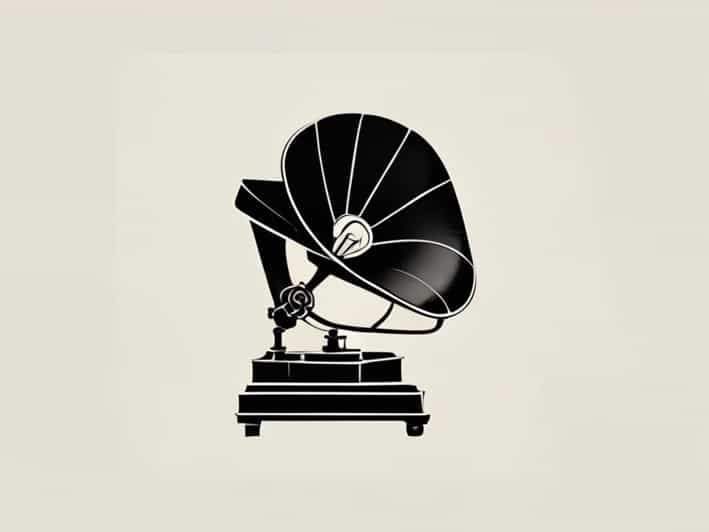
The original phonograph was a mechanical device with no electricity involved. Sound waves entered a horn and caused a diaphragm to vibrate. These vibrations moved a needle, which etched grooves into a rotating cylinder wrapped in tinfoil.
To play the sound back, the process was reversed. The needle followed the grooves, causing the diaphragm to vibrate again and reproduce the original sound. Although the audio quality was rough by modern standards, the result was astonishing for the time.
Public Reaction to the Invention
When Edison first presented the phonograph, audiences were amazed and skeptical at the same time. The idea that a machine could talk or sing seemed almost magical. Many people initially believed the demonstrations were tricks.
Once confirmed, the invention quickly gained attention in newspapers and public exhibitions. Edison himself became known as the Wizard of Menlo Park, and the phonograph was seen as one of his most remarkable achievements.
Early Uses of the Phonograph
In the early years after 1877, the phonograph was not immediately used for music. Edison imagined it as a tool for business and communication. He believed it could be used to record letters, dictate documents, and preserve speeches.
Only later did people realize its potential for entertainment. As sound quality improved, music recordings became more practical, paving the way for the recording industry.
Original Intended Uses
- Recording spoken messages
- Office dictation
- Preserving important speeches
- Educational recordings
Improvements After 1877
Although the phonograph was invented in 1877, it did not remain unchanged. Over the following decades, inventors improved the design, materials, and sound quality. Tinfoil cylinders were replaced with wax, which allowed for clearer recordings and repeated playback.
These improvements helped make phonographs more practical and appealing to the public. As production increased, phonographs became more accessible to households and businesses.
The Phonograph’s Role in Music History
The invention of the phonograph laid the foundation for the modern music industry. For the first time, musicians could reach audiences far beyond live performances. Songs could be recorded once and enjoyed repeatedly.
This shift changed how music was created, distributed, and consumed. It also influenced musical styles, as performers adapted to recording limitations and audience preferences.
Competition and Related Inventions
After the phonograph was invented in 1877, other inventors began working on similar technologies. Devices such as the graphophone and gramophone introduced variations in recording methods and formats.
These competing inventions helped refine sound recording technology and eventually led to flat discs replacing cylinders. However, Edison’s phonograph remains the original breakthrough that started it all.
Why the Year 1877 Is Historically Significant
The year 1877 stands out not only because of the phonograph, but because it reflects a period of rapid technological change. Innovations in electricity, communication, and transportation were transforming daily life.
The phonograph fit perfectly into this era, symbolizing humanity’s growing ability to capture and control natural phenomena, including sound itself.
Common Misconceptions About the Phonograph
Some people mistakenly believe that recorded music began with records or radios. Others confuse the phonograph with later devices such as record players. While related, these technologies developed over time from the original invention.
Understanding that the phonograph was invented in 1877 helps clarify the timeline of sound recording history.
Lasting Impact on Modern Technology
The basic principle behind the phonograph, converting sound waves into physical or digital representations, remains at the heart of modern audio technology. Microphones, speakers, and digital audio files all trace their origins back to this early invention.
Without the phonograph, the evolution of music, broadcasting, and audio communication would have followed a very different path.
Technologies Influenced by the Phonograph
- Vinyl record players
- Magnetic tape recorders
- Compact discs
- Digital audio formats
So, in what year was the phonograph invented? The answer is 1877, a year that marked the beginning of recorded sound. Thomas Edison’s invention changed how people communicated, preserved memories, and experienced music.
More than a historical fact, the invention of the phonograph represents a moment when sound became something that could be captured and shared across time. Its influence continues today, reminding us that many modern conveniences are built upon simple but revolutionary ideas from the past.