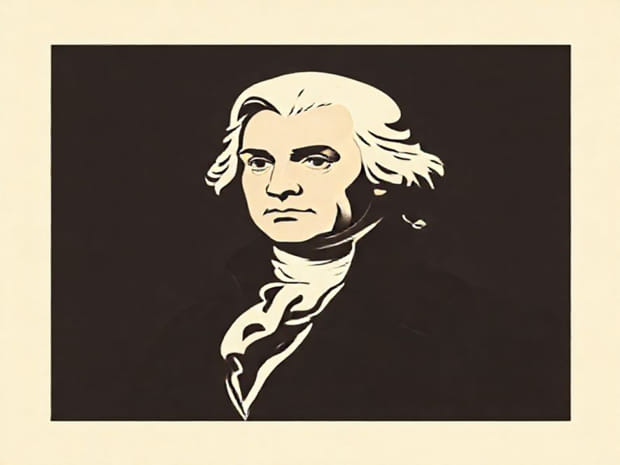
Thomas Jefferson, one of the founding fathers of the United States, is often associated with his advocacy for individual liberties, limited government, and states’ rights, which positioned him as a prominent anti-Federalist during the early years of the American republic. While Jefferson did not formally participate in the drafting of the U.S. Constitution, his political philosophy and writings reveal a deep skepticism of a strong central government, aligning with anti-Federalist principles. His influence shaped the debates surrounding federal authority, the balance of power, and the need for constitutional protections for citizens, which remain relevant in discussions of American democracy today.
The Context of Anti-Federalism
In the late 18th century, the United States faced the challenge of creating a new government following independence from Britain. The Constitution of 1787 proposed a stronger federal government than existed under the topics of Confederation, which alarmed many leaders who feared the concentration of power. Anti-Federalists emerged as a political force advocating for states’ rights, individual liberties, and limitations on federal authority. They argued that the proposed Constitution lacked sufficient safeguards to prevent governmental overreach.
Jefferson’s Skepticism of Centralized Power
Thomas Jefferson, although serving as the U.S. Minister to France during the Constitutional Convention, closely followed the debates and expressed concern about the potential for tyranny in a powerful federal government. Jefferson feared that a strong central authority could infringe on the freedoms of citizens and the autonomy of states. He championed the idea that government should be close to the people and that local governance was better suited to protect individual rights. This position reflects the core anti-Federalist concern about unchecked federal power.
Jefferson’s Writings and Correspondence
Jefferson communicated extensively with political allies and thinkers of the period, expressing his anti-Federalist views. His letters to figures such as James Madison and George Washington reveal his insistence on the necessity of a Bill of Rights to protect fundamental freedoms. Jefferson argued that without explicit protections, the Constitution could enable the federal government to encroach on personal liberties. His advocacy for the inclusion of a Bill of Rights directly influenced the eventual adoption of the first ten amendments.
Opposition to Federalist Policies
Jefferson’s opposition to the policies of Alexander Hamilton and other Federalists further demonstrated his anti-Federalist leanings. Hamilton’s vision of a strong national government, a centralized financial system, and a powerful executive branch contrasted sharply with Jefferson’s preference for agrarian democracy, decentralized governance, and limited federal intervention. Jefferson believed that Federalist policies favored elites and concentrated economic power, undermining the democratic principles that he valued.
Formation of the Democratic-Republican Party
Jefferson’s anti-Federalist ideology laid the foundation for the creation of the Democratic-Republican Party in the 1790s. Alongside James Madison, Jefferson sought to mobilize opposition to Federalist dominance, promoting policies that emphasized states’ rights, strict interpretation of the Constitution, and protection of civil liberties. The party’s platform reflected Jefferson’s commitment to limiting federal power and ensuring that ordinary citizens had a meaningful role in government, echoing the core principles of anti-Federalism.
Key Principles Advocated by Jefferson
- States’ RightsJefferson believed that state governments were best equipped to address local needs and protect individual freedoms, a fundamental anti-Federalist argument.
- Limited GovernmentHe emphasized that government powers should be narrowly defined to prevent abuse and ensure accountability to the people.
- Protection of Civil LibertiesJefferson consistently advocated for explicit protections for freedom of speech, religion, and the press, which he believed were at risk under a strong central government.
- Agrarian DemocracyHe idealized a society of independent farmers, arguing that agrarian citizens were virtuous and essential for sustaining democracy.
Jefferson’s Role in Shaping American Political Debate
By articulating anti-Federalist arguments and influencing public discourse, Jefferson played a crucial role in shaping the early political landscape of the United States. His insistence on a Bill of Rights, advocacy for limited federal power, and promotion of popular participation established enduring frameworks for democratic governance. While he eventually accepted the Constitution as the foundation of government, his interventions ensured that anti-Federalist concerns were incorporated, balancing the interests of states and citizens against central authority.
Legacy of Jefferson’s Anti-Federalism
Thomas Jefferson’s anti-Federalist stance continues to influence American political thought. His commitment to decentralization, individual liberties, and democratic participation resonates in contemporary debates over federal versus state authority, civil rights protections, and the scope of executive power. Historians often credit Jefferson with tempering the ambitions of Federalists and ensuring that the Constitution included mechanisms to protect citizens from potential government overreach.
Contemporary Relevance
Modern political discussions in the United States often reflect Jeffersonian anti-Federalist principles, particularly in debates over states’ rights, privacy, and federal intervention. Issues such as healthcare, education, and law enforcement frequently invoke the tension between centralized authority and local autonomy, echoing the concerns that Jefferson articulated more than two centuries ago. Understanding Jefferson’s anti-Federalist philosophy provides valuable context for interpreting ongoing conflicts over the balance of power in American governance.
Thomas Jefferson exemplified anti-Federalist thought through his advocacy for limited government, protection of individual liberties, and commitment to states’ rights. His writings, political actions, and leadership in forming the Democratic-Republican Party reflect a consistent skepticism of concentrated federal power. By championing these principles, Jefferson helped shape the trajectory of American democracy, ensuring that the Constitution addressed the concerns of those wary of centralized authority. His legacy as an anti-Federalist remains a significant influence on both historical interpretation and contemporary political discourse, demonstrating the enduring relevance of balancing power between the federal government and the people it serves.
In summary, Jefferson’s role as an anti-Federalist highlights the importance of vigilance, civic engagement, and constitutional safeguards in maintaining democratic governance. His vision underscores the necessity of ensuring that government remains accountable, responsive, and protective of the fundamental rights of citizens, principles that continue to guide political debate in the United States today.