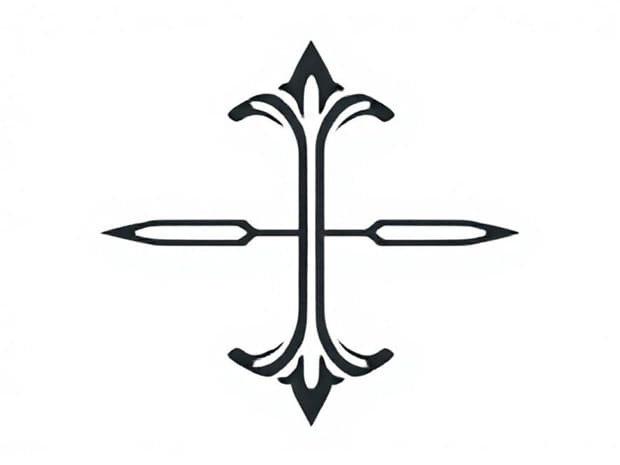
Symmetry and asymmetry are fundamental concepts that appear across various fields, including mathematics, physics, biology, art, and engineering. These terms describe the balance and proportion of shapes, patterns, and structures, and understanding the distinction between them is essential for analyzing natural forms, designing objects, and interpreting scientific phenomena. Symmetry refers to a balanced and proportional arrangement of components that mirror each other across an axis or center, whereas asymmetry describes a lack of such balance or correspondence. Recognizing the differences between symmetrical and asymmetrical forms helps in appreciating both aesthetic qualities and functional characteristics in nature and human-made designs.
Definition of Symmetrical
Symmetry is the property by which an object or system remains invariant under certain transformations, such as reflection, rotation, or translation. In simple terms, a symmetrical object can be divided into parts that are mirror images or identical in shape and size. Symmetry is often associated with harmony, order, and stability. In mathematics, symmetrical shapes like circles, squares, and equilateral triangles exhibit predictable patterns and balanced proportions, making them easier to analyze and model.
Types of Symmetry
There are several types of symmetry, each describing a different aspect of balance
- Reflective SymmetryAlso known as bilateral symmetry, where one half of an object mirrors the other half. This is common in human faces, animals, and leaves.
- Rotational SymmetryThe object can be rotated by a certain angle around a center point and still look the same. Examples include pinwheels and certain flowers.
- Translational SymmetryRepetition of a pattern at regular intervals, such as in wallpaper designs or tiled floors.
- Radial SymmetryComponents are arranged around a central axis, common in starfish, sunflowers, and some geometric designs.
Definition of Asymmetrical
Asymmetry refers to the absence of symmetry, where parts of an object or system are not identical or do not correspond in arrangement. Asymmetrical forms may appear irregular, uneven, or unbalanced, yet they often have their own aesthetic or functional appeal. In biology, asymmetry can be found in certain organs or body structures that evolve to perform specialized functions efficiently. In art and design, asymmetry is used deliberately to create dynamic compositions, visual interest, and contrast.
Characteristics of Asymmetry
Key characteristics of asymmetrical forms include
- Non-mirror image halves The two sides of an object do not reflect each other.
- Uneven distribution of elements Shapes, lines, or patterns may vary in size, position, or orientation.
- Dynamic appearance Asymmetry often conveys movement, irregularity, or uniqueness.
- Functional adaptation In nature, asymmetrical structures may enhance survival, such as uneven fins in certain fish for maneuverability.
Comparison Between Symmetrical and Asymmetrical
While both symmetry and asymmetry are common in nature and human design, they serve different purposes and evoke different perceptions. Understanding their comparison is crucial for fields ranging from biology and architecture to art and engineering.
Visual and Aesthetic Differences
Symmetrical designs are often perceived as harmonious, orderly, and aesthetically pleasing because of their balance and predictability. Human perception tends to favor symmetry in faces, objects, and patterns, associating it with beauty and stability. In contrast, asymmetrical designs are visually dynamic and can evoke tension, movement, and creativity. Asymmetry challenges the viewer’s eye, leading to a sense of uniqueness and interest that symmetrical forms may not provide.
Functional Differences
In biological systems, symmetry and asymmetry serve functional purposes. Symmetrical organisms often have predictable body plans that allow for efficient movement, reproduction, and sensory perception. Bilateral symmetry, for example, helps animals maintain balance and coordinate movements. Asymmetry, however, may offer evolutionary advantages by enhancing specialized functions. Certain plants and animals develop asymmetrical features that improve survival, such as flowers with irregular shapes to attract specific pollinators or shells that offer better protection against predators.
Mathematical and Scientific Differences
In mathematics and physics, symmetry simplifies analysis by reducing complexity. Symmetrical objects follow predictable rules, allowing for easier calculations and modeling. Asymmetry, on the other hand, introduces irregularity that may complicate mathematical descriptions but reflects real-world variability. In chemistry, molecular symmetry affects chemical properties and reactions, while asymmetrical molecules often display unique reactivity and behavior.
Applications of Symmetry
Symmetry is widely applied in various disciplines
- ArchitectureSymmetrical structures like temples, bridges, and monuments provide visual balance and structural stability.
- Art and DesignSymmetry is used to create patterns, mandalas, and decorative motifs that appeal to human perception.
- EngineeringSymmetrical components in machinery and vehicles ensure even load distribution and functional efficiency.
- BiologySymmetrical organisms benefit from balance in movement, organ placement, and reproductive structures.
Applications of Asymmetry
Asymmetry is equally important in practical and creative fields
- Art and Graphic DesignAsymmetrical compositions create visual interest, movement, and focus within a piece.
- Nature and BiologyAsymmetrical adaptations enhance survival, camouflage, and specialized functions.
- ArchitectureModern architecture often incorporates asymmetrical elements to break monotony and introduce innovation.
- Product DesignAsymmetry in tools, devices, and ergonomic designs improves usability and comfort.
Examples in Everyday Life
Symmetry and asymmetry are present in countless everyday objects and natural phenomena. Symmetrical examples include human faces, butterflies, circular clocks, and bridges. Asymmetrical examples include tree branches, abstract paintings, river paths, and certain seashells. Recognizing these patterns helps us understand design principles, evolutionary biology, and human perception.
Impact on Perception and Psychology
Symmetry and asymmetry also influence psychological responses. Symmetrical faces and objects are often rated as more attractive, trustworthy, and pleasing. Asymmetry, however, can stimulate curiosity, convey movement, and evoke stronger emotional reactions. Designers and artists exploit these responses to communicate ideas, create emphasis, and guide visual attention effectively.
Understanding the difference between symmetrical and asymmetrical forms is essential for appreciating the diversity and complexity of natural and human-made systems. Symmetry provides balance, predictability, and aesthetic appeal, while asymmetry introduces uniqueness, dynamism, and functional advantages. Both concepts are deeply interconnected and appear across various disciplines, from biology and mathematics to art, architecture, and engineering. By studying symmetry and asymmetry, we gain insight into the principles of design, the adaptations of living organisms, and the ways in which visual perception and functionality intersect. Recognizing and applying these concepts allows scientists, artists, and engineers to create innovative solutions, analyze natural patterns, and enhance both aesthetic and practical outcomes in everyday life.