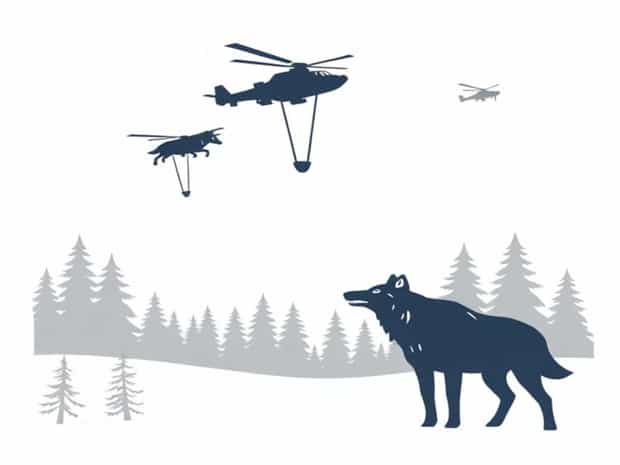
In recent years, an unusual wildlife management strategy in Canada has sparked both fascination and controversy wolves being airdropped into certain regions to control moose populations. This practice has drawn international attention because it combines ecological science with direct intervention, all in an effort to restore balance to fragile ecosystems. While many see it as an innovative solution, others question the ethics and long-term impact of relocating Canadian wolves to kill moose and regulate prey numbers. Exploring this subject means looking not only at the immediate results but also at the history, science, and broader consequences of this approach.
Why Moose Populations Became a Problem
Moose are iconic animals in Canada, but in some regions their numbers have grown beyond what local ecosystems can support. Without enough natural predators to keep them in check, moose overbrowse vegetation, particularly young trees and shrubs. This has ripple effects across the environment, making it difficult for forests to regenerate and reducing food availability for other species. The imbalance also affects the caribou, a threatened species, which suffers as moose indirectly change the landscape by altering food sources and increasing predator presence.
The Idea of Using Canadian Wolves
Wolves are natural predators of moose, and their reintroduction or relocation has been seen as a way to restore predator-prey dynamics. In areas where caribou were declining due to habitat changes and rising predator pressure, wildlife managers considered wolves as a potential tool to limit moose numbers. By reducing moose density, the hope was to relieve some of the environmental stress on caribou and other species.
Airdropping Wolves Explained
The concept of airdropping wolves may sound dramatic, but in reality it refers to capturing wolves from one area and releasing them, often by helicopter, into another. This ensures that wolves are introduced directly into the regions where they are needed most, bypassing natural barriers that would have otherwise prevented their arrival. While this method is effective in quickly placing predators into specific zones, it comes with challenges related to animal stress, adaptation, and public perception.
Ecological Goals Behind the Project
The main ecological objective of using Canadian wolves in this way is to balance predator-prey relationships. By increasing wolf presence, managers hoped to
- Reduce moose populations to sustainable levels.
- Encourage healthier vegetation recovery and forest regeneration.
- Support caribou populations by reducing indirect competition and predation risks.
- Restore natural cycles that had been disrupted by human influence and habitat changes.
Controversy and Ethical Concerns
Despite its scientific reasoning, the project has faced criticism. Animal welfare advocates question whether it is ethical to relocate wolves solely for the purpose of controlling moose populations. Some worry that the wolves may struggle to adapt, leading to unnecessary suffering. Others argue that this approach treats wildlife like tools rather than respecting them as part of a broader ecosystem. Moreover, critics point out that human activities, such as logging and road building, have contributed to caribou decline more than moose overpopulation.
Public Reactions
Reactions among the public have been mixed. Some support the idea, seeing it as an innovative, science-driven solution that relies on natural processes rather than human hunting or culling. Others view it as an unnatural interference, questioning whether airdropping wolves simply masks deeper issues caused by industrial development. This tension highlights the complexity of modern conservation efforts, where every choice comes with trade-offs.
Scientific Observations and Outcomes
Studies from regions where wolves were airdropped show that moose numbers did decrease. Vegetation recovery was noted in some areas, which aligns with the project’s goals. However, the impact on caribou populations has been less clear. In some cases, wolves did reduce moose, but they also continued to prey on caribou, raising questions about whether the strategy truly supports caribou recovery in the long term. The outcomes suggest that predator-prey relationships are far more intricate than anticipated.
Lessons Learned from the Experiment
One of the key lessons from these efforts is that ecosystems are interconnected in ways that defy simple fixes. While wolves are effective at limiting moose populations, they cannot solve broader issues such as habitat fragmentation and human development pressures. The Canadian wolf airdrop project has shown that while predator relocation can help, it is not a stand-alone solution to conservation challenges.
Comparison with Other Predator Reintroductions
This strategy is often compared to the famous reintroduction of wolves in Yellowstone National Park in the United States. In Yellowstone, wolves helped restore balance by reducing elk numbers, which allowed vegetation to recover and cascaded into broader ecological improvements. However, the Canadian case is different, as it involves direct relocation by helicopter and focuses specifically on moose management and caribou survival. These differences show that each ecosystem requires tailored approaches rather than one-size-fits-all solutions.
Future Directions in Wildlife Management
Looking ahead, Canadian wildlife managers are likely to combine predator management with habitat protection and restoration. While wolves may play a role, other strategies could include limiting human encroachment, creating safe migration corridors for caribou, and addressing the effects of industrial activity. Airdropping wolves may be remembered as a bold experiment, but future conservation may depend more on long-term planning and coexistence with nature.
Alternative Approaches
Instead of focusing solely on predator introduction, experts have suggested alternatives such as
- Expanding protected areas to safeguard caribou habitats.
- Implementing stricter controls on logging and development in sensitive regions.
- Enhancing monitoring of predator-prey dynamics to adapt management strategies more effectively.
- Engaging local communities and Indigenous groups in decision-making processes for balanced outcomes.
The Global Significance of the Canadian Wolf Project
The story of Canadian wolves airdropped to control moose has become a global talking point because it raises questions about how far humans should go in intervening in nature. It reflects the tension between scientific innovation and respect for natural processes, showing that even well-intentioned efforts can spark debate. For conservationists worldwide, it offers a case study on both the potential and the pitfalls of managing ecosystems through predator relocation.
The use of Canadian wolves airdropped to kill moose remains one of the most unique wildlife management strategies in recent history. It highlights the challenges of balancing ecological goals with ethical considerations, and it underscores the fact that ecosystems are far more complex than any single solution can address. While the project has demonstrated some success in reducing moose numbers and supporting vegetation recovery, it has also revealed the limits of predator management as a tool for conservation. Ultimately, the future of caribou, moose, and wolves in Canada will depend on comprehensive strategies that address habitat, climate, and human influence alongside predator-prey dynamics.