Trigonometry might sound like a topic reserved for math classrooms, but its influence stretches far beyond textbooks. From navigating roads and constructing buildings to predicting the movement of planets, trigonometric principles quietly shape our daily lives. Even people who do not realize it benefit from calculations based on angles, lengths, and ratios. Understanding how trigonometry works in real-world situations can make its abstract formulas more relatable and useful. It bridges the gap between mathematical theory and practical decision-making, proving that math is not just for mathematicians but for anyone who engages with the physical world.
Understanding Trigonometry Basics
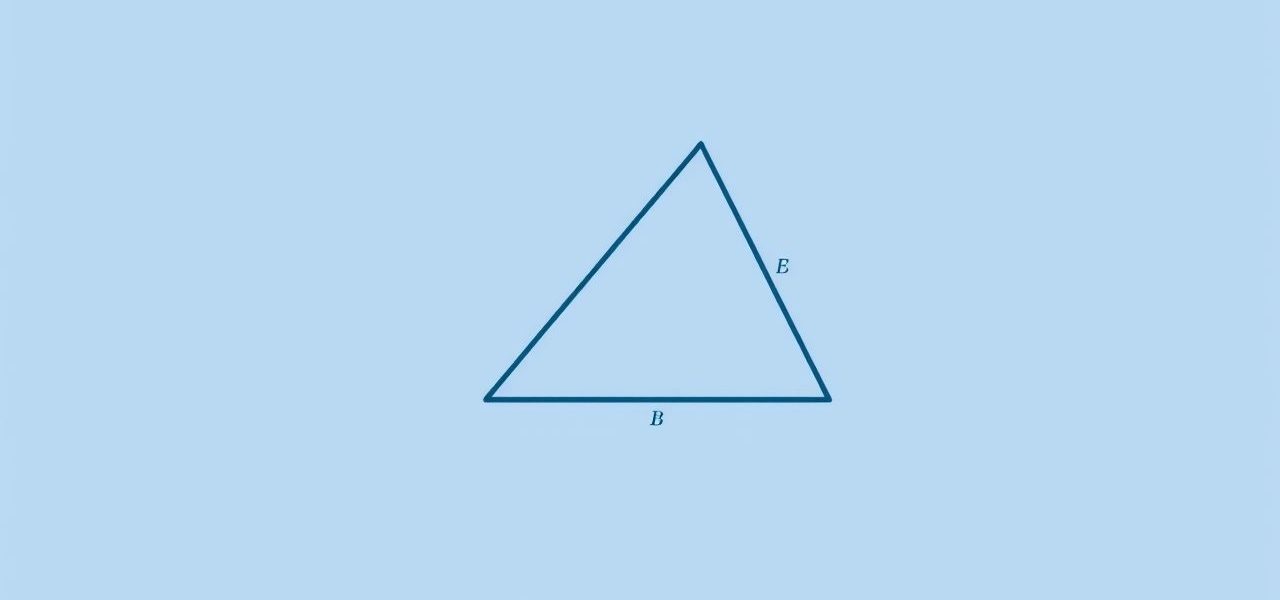
Trigonometry is the branch of mathematics concerned with the relationships between the sides and angles of triangles. At its core, it relies on functions such as sine, cosine, and tangent, which connect angles to side lengths. While the theory can seem technical, the concepts are applied in simple ways in daily life, often without people realizing it.
The most common setting for trigonometry is the right-angled triangle, where one angle is exactly 90 degrees. By knowing certain side lengths or angles, trigonometric ratios allow us to find unknown measurements. This fundamental idea forms the basis for its many practical uses.
Trigonometry in Navigation
Navigation, whether on land, sea, or air, depends heavily on trigonometric calculations. By measuring angles from known reference points and distances, navigators determine their position and chart routes efficiently.
Applications in Modern Travel
- Pilots calculate flight paths and adjust directions using angular measurements between landmarks or coordinates.
- Ship captains determine positions relative to lighthouses or celestial bodies using sextants, which rely on trigonometric principles.
- Hikers use compasses and triangulation to locate their position on a map.
Role in Construction and Architecture
Trigonometry is indispensable in designing and constructing buildings, bridges, and other structures. Engineers and architects use it to ensure that angles and measurements align correctly, resulting in stable and aesthetically pleasing designs.
Common Uses in Building
- Calculating roof slopes to ensure proper water drainage.
- Determining the correct height of walls or supports based on given angles.
- Measuring distances indirectly when direct measurement is impossible due to obstacles.
Trigonometry in Art and Design
Artists and designers often use trigonometric concepts to achieve perspective and proportion. By understanding how angles and distances work together, they can create realistic images or 3D models.
- Setting the correct viewpoint in paintings or digital renderings.
- Creating precise patterns in textile design.
- Designing stage sets that look proportionate from the audience’s perspective.
Surveying and Land Measurement
Surveyors use trigonometry to determine distances, heights, and boundaries without needing to physically measure every point. This method saves time and is particularly useful in rugged or inaccessible terrain.
Practical Surveying Tasks
- Measuring the height of a mountain using angles from two different points.
- Determining property boundaries accurately.
- Mapping the contour of land for construction or agricultural planning.
Trigonometry in Sports
Sports strategies and performance analysis often rely on trigonometric ideas. Coaches and players use angles and distances to improve accuracy and efficiency.
- In basketball, calculating the best angle for a shot.
- In soccer, determining passing angles to avoid defenders.
- In golf, estimating swing angles to reach the target distance.
Use in Physics and Engineering
Physics relies heavily on trigonometric functions to describe motion, waves, and forces. Engineers apply these principles to design machines, vehicles, and systems that operate efficiently.
- Analyzing the trajectory of projectiles.
- Designing mechanical components with precise angular movement.
- Calculating forces acting at different angles in structures or machinery.
Medical and Biological Applications
Trigonometry also appears in healthcare and biology. From imaging technology to biomechanics, the measurement of angles and distances is essential for accuracy.
- CT scans and MRI machines use trigonometric algorithms to produce accurate images.
- Orthopedics relies on angle measurements for joint replacement procedures.
- Studying animal movement patterns through angular tracking.
Trigonometry in Astronomy
Since ancient times, astronomers have used trigonometry to measure distances between stars and planets. Modern astronomy still uses these methods to map the universe.
- Calculating the distance to a star using parallax angles.
- Determining the position of planets relative to Earth.
- Mapping the surface features of celestial bodies.
Everyday Uses You Might Not Notice
Trigonometry sneaks into daily tasks in ways many people overlook. Even without solving equations, the underlying logic influences choices and designs.
- Determining the correct height of a ladder to safely reach a certain point.
- Adjusting satellite dishes for optimal signal reception.
- Estimating the shadow length of an object at a certain time of day.
Why Learning Trigonometry Matters
Learning trigonometry equips people with problem-solving tools that apply to various real-world scenarios. Beyond passing exams, understanding these concepts helps in making better decisions, whether in technical work, creative projects, or simple household tasks.
- Improves spatial awareness and reasoning.
- Enables more accurate measurements in different settings.
- Encourages logical thinking when approaching problems.
Trigonometry is far from being an abstract or distant field of mathematics. Its concepts are woven into the way we travel, build, create, and understand the world around us. By recognizing these applications, the subject becomes more than just a collection of formulas it transforms into a powerful tool for everyday problem-solving. Whether it’s guiding a ship across the ocean, designing a building, or calculating the perfect angle for a photograph, trigonometry plays a silent yet vital role in making our daily lives function smoothly.