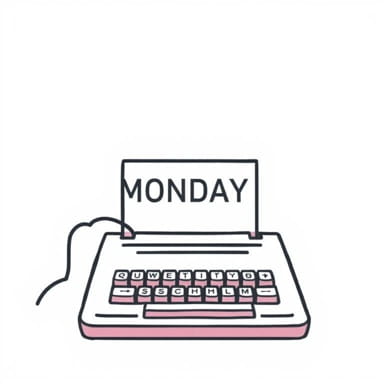
The world of indie games is often full of surprises, and ‘Mondays: A Sisyphean Typing Game’ is no exception. With its minimalist design, existential humor, and relentless typing mechanics, the game captures the dreariness and monotony of modern work life with startling accuracy. But what really makes players keep pressing forward letter after letter, task after task is the promise of something at the end. What lies at the end of this bizarre digital journey is a question that haunts many who dare to face the typing treadmill. The ending of Mondays: A Sisyphean Typing Game is as unique and thought-provoking as the game itself, and understanding it requires not just looking at what happens, but also what it means.
Understanding the Premise
Before diving into the ending, it’s important to understand the premise of the game. In Mondays: A Sisyphean Typing Game, players take on the role of an anonymous office worker trapped in an endless cycle of repetitive typing tasks. The gameplay loop is deliberately monotonous: type out nonsensical or bureaucratic text, complete arbitrary tasks, and start again. The experience is intentionally absurd and frustrating, mirroring the repetitive and soul-crushing routines many associate with the start of the workweek hence, ‘Mondays.’
A Typing Game with Existential Undertones
While it may appear to be just a typing game on the surface, the deeper message becomes clear as the hours drag on. The game references the myth of Sisyphus, the Greek figure doomed to push a boulder uphill for eternity. In the same way, players are pushing through an endless cascade of data entry. No matter how efficiently they type or how many levels they clear, the task resets, and the next Monday begins.
This cycle is the core of the game’s psychological effect. It invites players to question the nature of productivity, routine, and the search for meaning in systems designed to be unfulfilling. And it all builds up to an ending that is as much a philosophical commentary as it is a narrative conclusion.
Approaching the Ending
Unlike traditional games, Mondays does not have a conventional level progression. Instead, it uses subtle changes in the environment, dialogue (or lack thereof), and internal monologue to suggest that the game is nearing its conclusion. There’s no boss battle or climactic showdown instead, the game’s mechanics begin to glitch or unravel.
- Words you type begin to lose meaning.
- Sentences start repeating or contradicting themselves.
- The background office becomes distorted and surreal.
- Audio cues, if present, shift from ambient noise to unsettling distortions.
All of this signals that the end is near but not in the typical triumphant sense. The game leads players not toward escape, but confrontation: a reckoning with the futility of the labor they’ve been performing.
The Final Sequence
Eventually, after typing through what feels like the thousandth fake report or memo, the game begins its final sequence. In this moment, the typing becomes disconnected from results. Players type, but no words appear on screen. Commands are ignored. The interface begins to fall apart. For some, this might seem like a technical issue, but it’s a deliberate design choice. The message is clear: the player no longer has control. The machine symbolic of the corporate or bureaucratic system has taken over completely.
Then comes the quiet. The screen goes blank, or fades to gray. The cursor blinks. Nothing happens for a long time. And then, finally, a short sentence appears:
You have completed your task. Monday begins again.
And with that, the game restarts no credits, no rewards, just the loop beginning once more. This is the true ending of Mondays: A Sisyphean Typing Game.
Interpreting the Ending
The ending is deliberately ambiguous. To some, it’s a bleak reminder of the inescapable routines many face in their daily lives. To others, it’s a piece of dark comedy, poking fun at the absurdity of modern labor and digital productivity. But what most players agree on is that the ending leaves an impression.
The Message Behind the Loop
The game does not allow players to win or escape. Instead, it asks them to reflect on why they kept playing. Was it curiosity? Hope? The promise of something better at the end of the tunnel? These motivations mirror real-life decisions people make in workplaces that feel cyclical or meaningless.
In that sense, the game acts as a kind of interactive art piece. It forces players to engage not just with the mechanics, but with their own emotions and thoughts about labor, time, and purpose. The reward is not in-game currency or high scores it’s self-awareness.
Player Reactions to the Ending
The reception to the ending of Mondays: A Sisyphean Typing Game has been polarizing but passionate. Some users report feeling a sense of catharsis, even joy, at the poetic repetition of the final moment. Others express frustration or even anger that the game offers no escape or resolution.
Across forums and social media, players have described the ending as:
- Strangely beautiful in its hopelessness.
- The most honest depiction of a 9-to-5 I’ve ever seen in a game.
- A joke with no punchline but that’s the point.
Regardless of the personal reaction, it’s undeniable that the ending provokes thought and discussion. And that, perhaps, is the most powerful outcome of all.
Mondays: A Sisyphean Typing Game is more than just an indie curiosity. It’s a cleverly crafted reflection on work, repetition, and the human condition. Its ending, far from being a dramatic escape or a celebratory moment, is a quiet, looping whisper that mirrors the very real routines people live through each week. The typing never truly ends. Monday always returns. And in embracing that loop, the game finds its voice not in grand gestures, but in the quiet absurdity of doing the same task over and over again, hoping for something different.
By confronting players with a cycle they can’t break, the game invites them to ask why they started typing in the first place and what, if anything, they hope to find on the other side of the screen. That question lingers long after the game has been closed, making Mondays a truly memorable experience in the realm of narrative indie games.